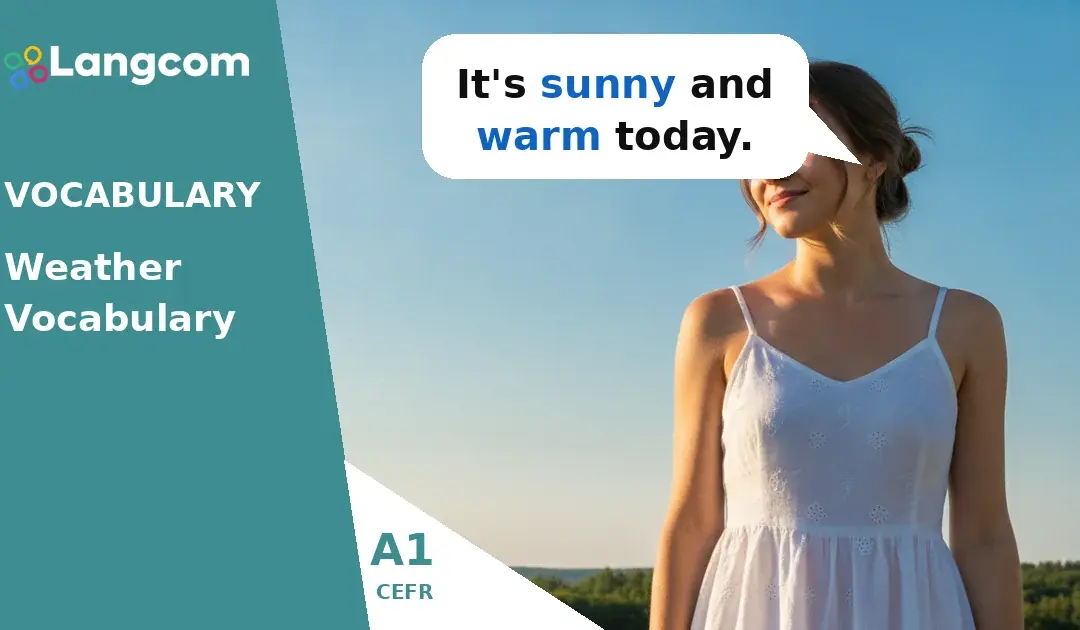
投稿者 ラウル | 2026年7月15日 | A1 英語(初級)
To talk about the weather in English, you often use the verb to be and an adjective. For example, you say It’s sunny or It’s cold. This lesson will help you learn essential words to describe different types of weather, like sunny, rainy, cloudy, hot, and...
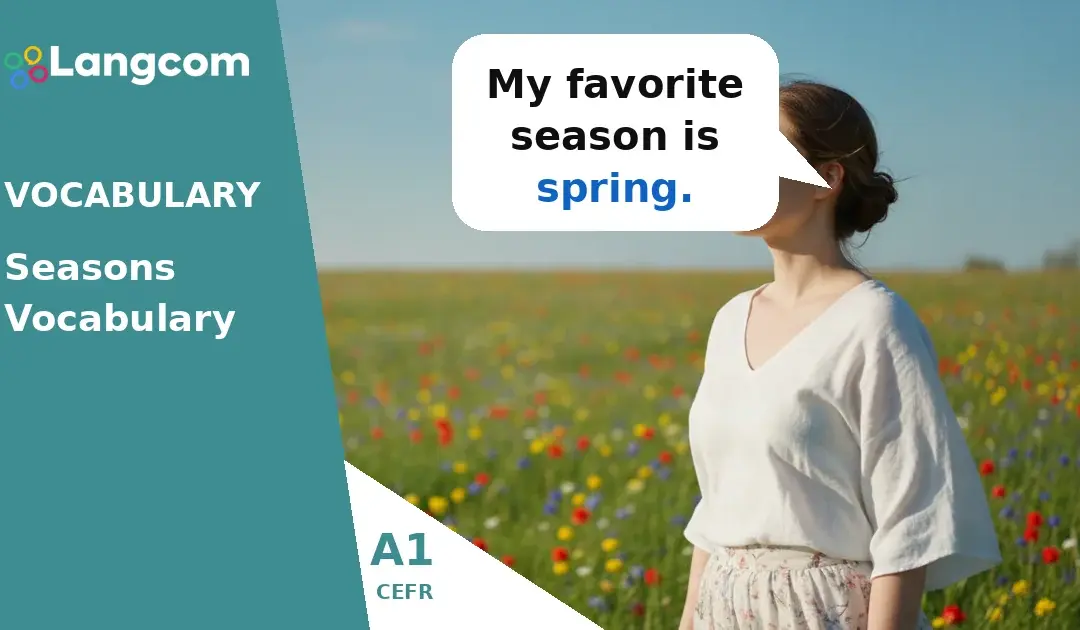
投稿者 ラウル | 2026年7月15日 | A1 英語(初級)
The four main seasons in English are spring, summer, autumn (or fall), and winter. Each season brings different weather and changes in nature. Learning these words helps you talk about the weather, your favorite time of year, and daily activities. For example, you can...

投稿者 ラウル | 2026年7月14日 | A1 英語(初級)
To talk about actions that *did not happen* in the past, we use the Past Simple Negative form. This is very common in English when you want to say something didn’t occur at a specific time before now. The structure is simple: you use did not (or the short form...

投稿者 ラウル | 2026年7月14日 | A1 英語(初級)
Learning basic transport vocabulary helps you talk about how you travel every day. Words like car, bus, train, and plane are very important for A1 English learners. You can use them to describe your daily commute, plan a trip, or understand simple conversations about...

投稿者 ラウル | 2026年7月14日 | A1 英語(初級)
Main stress is when one word in a sentence is spoken louder and longer than the others. This makes your English sound clearer and more natural to listeners. Think of it like a drum beat: some beats are stronger than others. In English, some words carry more importance...

投稿者 ラウル | 2026年7月14日 | A1レベル前の子供向け英語(初心者向け)
The English alphabet has 26 letters. Learning these letters is the first important step to speaking, reading, and writing in English. Each letter has a special name and a sound. You will use the alphabet to spell words, like your name or the name of a city. It helps...
