

What are Food Groups?
When we talk about food groups, we mean different categories of food. These categories help us understand what we eat.
They are useful for talking about healthy eating, planning meals, and shopping for food. Knowing these words helps you communicate clearly in English.
✍️ Non sai a quale livello ti trovi?
Fai il nostro test di livello gratuito e ricevi un feedback personalizzato da esaminatori certificati Cambridge.
Fai il nostro test di livello GRATUITOCommon English Food Groups
Here are some of the most common food groups you will use in English:
-
Fruit: These are sweet, often juicy foods that grow on trees or plants. Examples include apples, bananas, oranges, e strawberries.
-
Vegetables: These are parts of plants that we eat, like leaves, stems, or roots. Examples are carrots, broccoli, spinach, e potatoes.
-
Grains (oppure Carbohydrates): These foods give us energy. They come from plants like wheat, rice, and corn. Examples include bread, pasta, rice, e cereal.
-
Meat and Protein: This group includes foods that help our bodies grow and repair. Examples are chicken, beef, fish, eggs, e beans.
-
Dairy Products: These foods come from milk. Examples include milk, cheese, e yogurt.
-
Drinks: This group includes liquids we consume. Examples are water, juice, tea, e coffee.
-
Junk Food: This is a common term for food that is not very healthy, often high in sugar, salt, or fat. Examples include pizza, burgers, chips, e candy.
Why is Food Vocabulary Important for A2 Key?
For the A2 Key exam, you will often need to talk about food. You might describe pictures of food, discuss your favorite meals, or talk about what you like and dislike.
Knowing food group vocabulary helps you answer questions clearly. It also helps you understand conversations about daily life and healthy habits.
| Food Group | Esempi |
|---|---|
| Fruit | apples, oranges, grapes, berries |
| Vegetables | carrots, lettuce, tomatoes, onions |
| Grains | bread, rice, pasta, cereal |
| Meat and Protein | chicken, fish, eggs, beans, nuts |
| Dairy Products | milk, cheese, yogurt, butter |
| Junk Food | pizza, chips, chocolate, soda |
Esempi
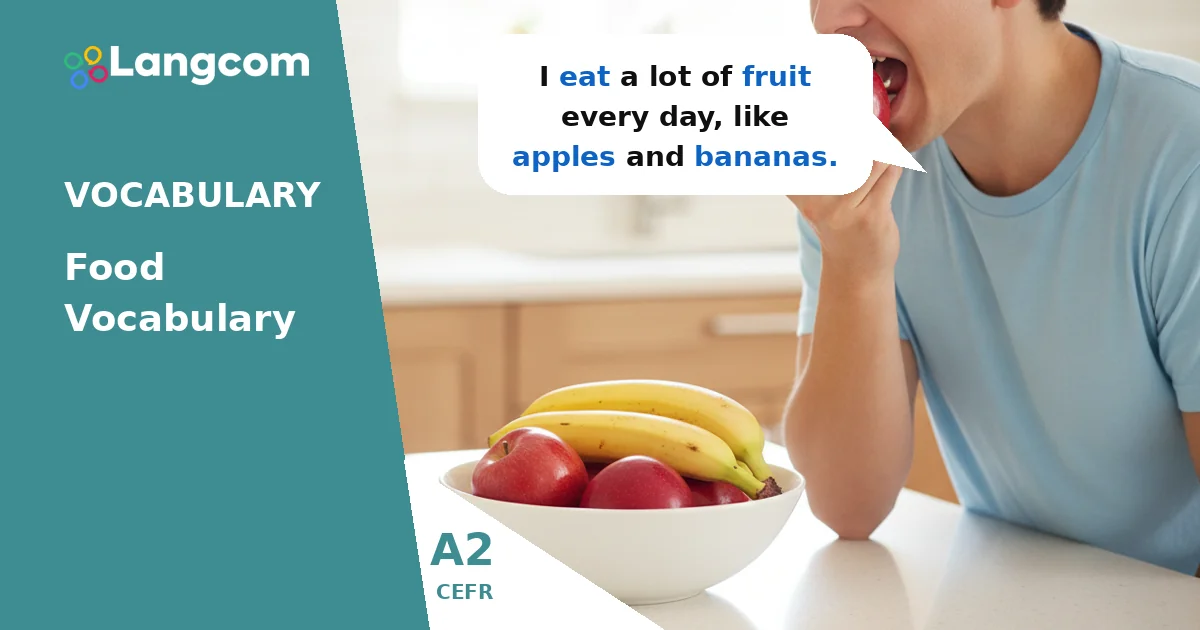
- I eat a lot of fruit every day, like apples and bananas.
- My favorite vegetables are carrots and broccoli.
- For lunch, I often have pasta, which is a type of grain.
- Chicken is a popular meat, and eggs are a good source of protein.
- I always have milk and cheese, which are dairy products, in my fridge.
- Water is the healthiest drink.
- Junk food like chips and candy is tasty but not good for you.
Esercitazione
Sei pronto a ottenere il tuo certificato?
Il corso Langcom prepara gli studenti agli esami Cambridge, IELTS, TOEFL, DELE, SIELE e Michigan.
Inizia a utilizzare LangcomErrori comuni per chi parla spagnolo
1. Confusing Groceries with a Food Group:
Many students confuse groceries with a food group. Groceries are all the items you buy at a supermarket, like food, drinks, and household items. It is not a category of food itself.
- I need to buy groceries. (Corretto)
- My favorite food group is groceries. (Errato)
2. Singular vs. Plural of Fruit e Vegetables:
Fruit can be singular or plural when talking about fruit in general (uncountable), like I love fruit. However, if you mean different *types* of fruit, you can say fruits, come There are many different fruits in the basket. Vegetables is almost always plural, like Eat your vegetables!
Domande frequenti
What are the main food groups in English?
The main food groups include fruit, vegetables, grains, meat and protein, e dairy products. We also often talk about drinks e junk food.
What does 'junk food' mean?
Junk food is a common term for food that is unhealthy. It usually has a lot of sugar, salt, or fat and little nutritional value. Examples are chips, candy, e soda.
What does 'dairy' mean?
Dairy refers to food products made from milk. Common dairy products are milk, cheese, e yogurt.
How can I practice this vocabulary for A2 Key?
For A2 Key, practice describing pictures of food, talking about your favorite food groups, and discussing healthy eating habits. You can also make shopping lists using these words or describe what you had for breakfast, lunch, and dinner.



0 Commenti