

Why Learn Food and Drink Words in English?
Learning English words for food and drink is important. You use these words every day. They help you talk about your meals, go shopping, or order in a restaurant.
With these words, you can:
- Talk about what you eat e drink.
- Ask for food at a store oppure cafe.
- Understand menus and recipes.
🎓 Impara l'inglese con il metodo misto
Piccoli gruppi · Tutor IA disponibile 24 ore su 24, 7 giorni su 7 · Preparazione agli esami di Cambridge
Piani da $39 $79 al mese
What Are Common Food Categories in English?
It is helpful to learn food words in groups. Here are some common categories for food and drink.
- Fruits: These are usually sweet. You can eat them raw.
- Esempi: apple, banana, mango, pear, lemon.
- Vegetables: These are parts of plants we eat. They can be cooked or raw.
- Esempi: carrot, onion, peas, beans.
- Meats and Proteins: These come from animals or other sources. They help your body grow strong.
- Esempi: chicken, fish, burger, egg.
- Drinks: These are liquids you drink.
- Esempi: water, juice, milk, coffee, tea.
- Grains and Staples: These are basic foods that give you energy.
- Esempi: bread, rice, pasta, noodles.
- Sweets and Snacks: These are often eaten between meals or as a treat.
- Esempi: chocolate, ice cream, pie, pancake.
How Do We Talk About Food We Like or Don't Like?
You can use simple phrases to talk about your food preferences.
- To say you enjoy something, use I like... oppure I love....
- Esempio: I like apples.
- Esempio: I love chocolate.
- To say you do not enjoy something, use I don't like....
- Esempio: I don't like onions.
- To ask someone, use Do you like...?
- Esempio: Do you like fish?
| Category | English Words |
|---|---|
| Fruits | apple, banana, kiwi, lemon, mango, pear, watermelon |
| Vegetables | beans, carrot, onion, peas |
| Meats & Proteins | burger, chicken, fish, meatballs, sausage, egg |
| Drinks | coffee, juice, lemonade, milk, milkshake, tea, water |
| Grains & Staples | bread, noodles, pasta, rice |
| Sweets & Snacks | chocolate, ice cream, pancake, pie |
Esempi
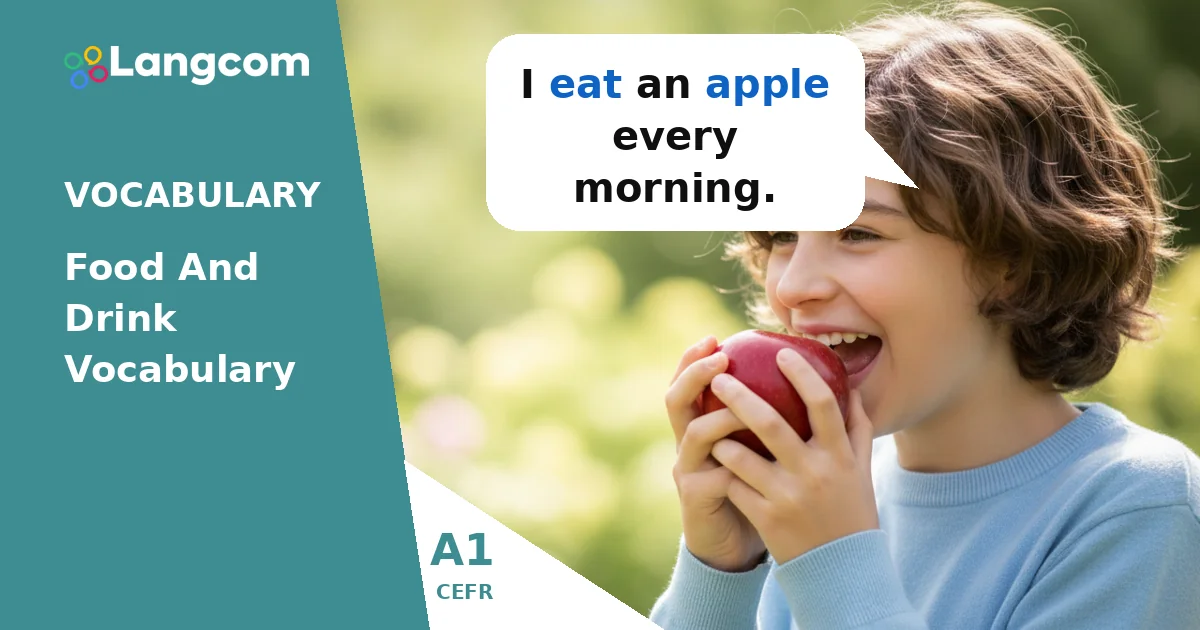
- I eat an apple every morning.
- My favorite drink is water.
- We need chicken and rice for dinner.
- Do you like carrots?
- She wants some milk in her coffee.
- He bought bread and cheese at the store.
Esercitazione
💬 Hai bisogno di una consulenza personalizzata?
In qualità di Centro autorizzato di preparazione agli esami Cambridge, possiamo aiutarti a scegliere il corso e la certificazione più adatti alle tue esigenze. Contatta oggi stesso i nostri consulenti.
Chatta con un consulente su WhatsAppErrori comuni per chi parla spagnolo
Spanish speakers sometimes make small mistakes with food words in English. Here are two common ones:
- Using "fruit" as plural: In inglese, fruit is usually uncountable when talking about fruit in general. If you mean different types of fruit, you can say fruits, but fruit is more common.
- Corretto: I eat a lot of fruit. (Meaning many types of fruit in general)
- Less common (but possible for specific types): There are many different fruits in the market.
- Confusing "vegetable" and "vegetables": Vegetable is singular, and vegetables is plural. Remember to add '-s' for more than one.
- Corretto: A carrot is a vegetable.
- Corretto: Carrots and peas are vegetables.
Domande frequenti
What is the difference between food and meal?
Food is anything you eat (e.g., apples, bread). A meal is a specific time when you eat food, like breakfast, lunch, oppure dinner. Ad esempio, chicken and rice is food, e dinner is a meal.
How do I ask for food in a restaurant?
For A1, you can use simple phrases like I would like... oppure Can I have...? For example, I would like a burger, please. oppure Can I have some water?
Are all fruits sweet?
Most fruits are sweet, like bananas e mangoes. But some can be sour, like lemons e limes. They are still fruits!
Why is chicken sometimes meat and sometimes an animal?
This is common in English! Chicken can mean the living animal on a farm. It can also mean the meat we eat from that animal. For example, The chicken is in the garden (animal) and I like to eat chicken for dinner (meat).



0 Commenti