

What Everyday Objects Do We See in the Living Room?
The living room is a central place in many homes. It has many common objects.
- sofa: A comfortable long seat for more than one person.
- armchair: A comfortable chair with supports for your arms.
- table: A piece of furniture with a flat top and one or more legs.
- television (oppure TV): An electronic device for watching programs.
- lamp: A device that produces light.
- book: A set of printed pages fastened together.
- window: An opening in a wall or door to let in light or air.
🎓 Impara l'inglese con il metodo misto
Piccoli gruppi · Tutor IA disponibile 24 ore su 24, 7 giorni su 7 · Preparazione agli esami di Cambridge
Piani da $39 $79 al mese
What Items Are Common in the Kitchen?
The kitchen is where we cook and eat. It has many useful items.
- cup: A small round container with a handle, for drinking.
- glass: A container made of glass, for drinking.
- plate: A flat, round dish for serving food.
- fork: A tool with two or more pointed parts, used for eating.
- knife: A tool with a sharp blade, used for cutting.
- spoon: A tool with a small bowl-shaped part, used for eating or stirring.
- fridge (oppure refrigerator): A large appliance that keeps food cold.
- oven: An appliance for cooking food with heat.
What Objects Do You Find in the Bedroom and Bathroom?
These rooms have items for sleeping and personal care.
- bed: A piece of furniture for sleeping.
- pillow: A soft support for your head when sleeping.
- blanket: A warm cover for a bed.
- mirror: A surface that reflects light, showing an image.
- toilet: A bowl that you sit on to get rid of body waste.
- shower: A device that sprays water for washing your body.
- towel: A piece of cloth used for drying.
| Room | Objects |
|---|---|
| Living Room | sofa, television, lamp |
| Kitchen | plate, cup, fridge |
| Bedroom | bed, pillow, blanket |
| Bathroom | mirror, towel, toilet |
Esempi
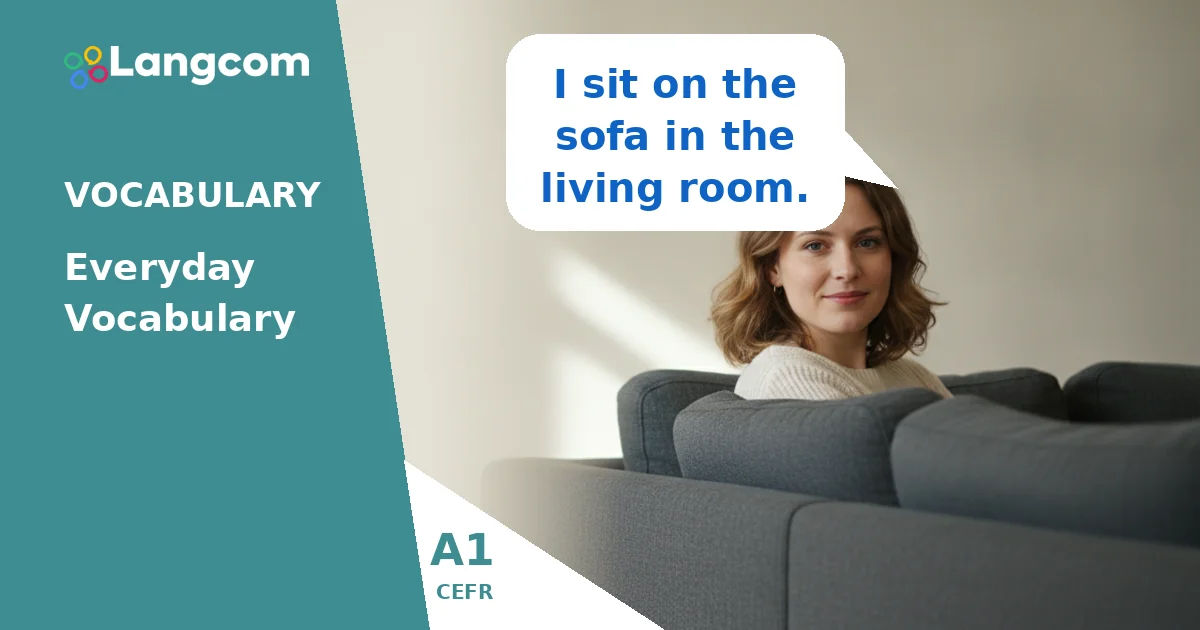
- I sit on the sofa in the living room.
- Please put the plate on the table.
- I drink water from a glass.
- My book is on the bed.
- The lamp gives light when it is dark.
- I need a towel after my shower.
Esercitazione
💬 Hai bisogno di una consulenza personalizzata?
In qualità di Centro autorizzato di preparazione agli esami Cambridge, possiamo aiutarti a scegliere il corso e la certificazione più adatti alle tue esigenze. Contatta oggi stesso i nostri consulenti.
Chatta con un consulente su WhatsAppErrori comuni per chi parla spagnolo
Confusing similar words
Sometimes, words in English can sound or look similar to words in your language but have different meanings. For example, in Spanish, 'carpeta' means 'folder'. But in English, a carpet is 'alfombra'. Be careful with these 'false friends'!
Forgetting 'a' or 'an'
In English, we often use a oppure an before a single object. For example, say "a chair", not just "chair". Use an before words that start with a vowel sound, like "an armchair".
Domande frequenti
Why is it important to learn everyday object vocabulary?
Learning these words helps you describe your home, understand simple questions, and ask for things you need. It's a basic step for everyday communication in English, for example, "Can I have a spoon?"
How can I remember new vocabulary words?
Try to label objects in your home with their English names, use flashcards, or draw pictures. Practice saying the words aloud, for example, "This is a mirror."
What is the difference between a 'cup' and a 'glass'?
A cup usually has a handle and is often used for hot drinks like tea or coffee. A glass is typically made of glass, has no handle, and is used for cold drinks like water or juice.
Are there other common objects not listed here?
Yes, there are many! This list covers very common A1 items. As you learn more, you will discover words like curtains, rug, microwave, e wardrobe.



0 Commenti