

Why is Advanced Food Vocabulary Important for C1 Learners?
At the C1 level, you need to discuss complex topics with precision. Food is not just about what we eat; it involves economics, health, environment, and culture.
Advanced vocabulary allows you to express nuanced ideas and understand sophisticated texts. This includes academic articles, news reports, and documentaries about global food systems.
- Discuss global issues like food security e sustainability.
- Understand reports on public health e nutrition.
- Analyze the agricultural industry e supply chains.
- Express opinions on dietary trends e food quality.
✍️ Non sai a quale livello ti trovi?
Fai il nostro test di livello gratuito e ricevi un feedback personalizzato da esaminatori certificati Cambridge.
Fai il nostro test di livello GRATUITOKey C1 Food Vocabulary Terms Explained
Food Types and Categories
appetite
Il tuo appetite is your natural desire to eat food. It can also refer to a strong desire for something else, not just food.
- Literal use: I have a big appetite after my run.
- Figurative use: She has an appetite for learning.
cereal
Cereal refers to grain used for food, such as wheat, oats, or rice. It also means a breakfast food made from these grains, often eaten with milk.
- Agricultural: Farmers grow various cereals like corn and barley.
- Breakfast food: Many children enjoy a bowl of cereal in the morning.
foodstuffs
Foodstuffs is a formal term for any substance that can be used as food. It often refers to raw ingredients or basic processed food products.
- Esempio: The country imports essential foodstuffs to feed its population.
- Context: This word is common in discussions about trade, aid, and food production.
grain
A grain is a small, hard seed of a food plant, especially a cereal plant like wheat or rice. It can also refer to the plant itself.
- Seed: Whole grain bread is made from unrefined grains.
- Crop: The harvest of grains was excellent this year.
superfood
A superfood is a nutrient-rich food considered to be especially beneficial for health and well-being. This term is often used in marketing and health discussions.
- Esempio: Blueberries and kale are often called superfoods.
- Benefit: They are believed to offer significant health advantages due to high vitamin and antioxidant content.
Agriculture and Animals
cattle
Cattle refers specifically to large ruminant animals, such as cows and bulls, kept for meat or milk. It is a plural noun and does not have a singular form like "cattles."
- Usage: The farmer has a herd of cattle.
- Product: Beef comes from cattle.
livestock
Livestock is a broader term for farm animals kept for use or profit. This includes cattle, sheep, pigs, and poultry.
- Esempio: Many farmers raise various types of livestock.
- Industry: The livestock industry faces environmental challenges.
Health and Quality
fiber
In food, fiber refers to the part of plant food that your body cannot digest. It is important for a healthy digestive system.
- Dietary: Foods rich in fiber include fruits, vegetables, and whole grains.
- Benefit: Eating enough fiber helps maintain good gut health.
nutritious
If food is nutritious, it provides the substances that your body needs to be healthy and grow. It means "full of nutrients."
- Esempio: A balanced diet should include nutritious meals.
- Synonym: Healthy, wholesome.
wholesome
Wholesome food is healthy and good for you. The word also suggests something that is morally good or beneficial for your well-being in a general sense.
- Food: We prefer wholesome, home-cooked food.
- General: The film offered a wholesome message for families.
Systems and Economics
consumption
Consumption is the act of eating, drinking, or using something. It often refers to the total amount of a product or resource used by a group or country.
- Food: Meat consumption has increased globally.
- Resource: Reducing energy consumption is vital for the environment.
shortage
A shortage is a situation where there is not enough of something that is needed. This word is crucial for discussing resource availability and crises.
- Esempio: There is a severe food shortage in some regions due to drought.
- Consequence: A shortage of clean water can lead to health problems.
supply
Supply refers to the amount of something available for use. It can also be a verb meaning to provide something.
- Noun: The fresh water supply is limited.
- Verb: Local farms supply fresh produce to the market.
- Concept: Supply and demand is a basic economic principle.
Esempi
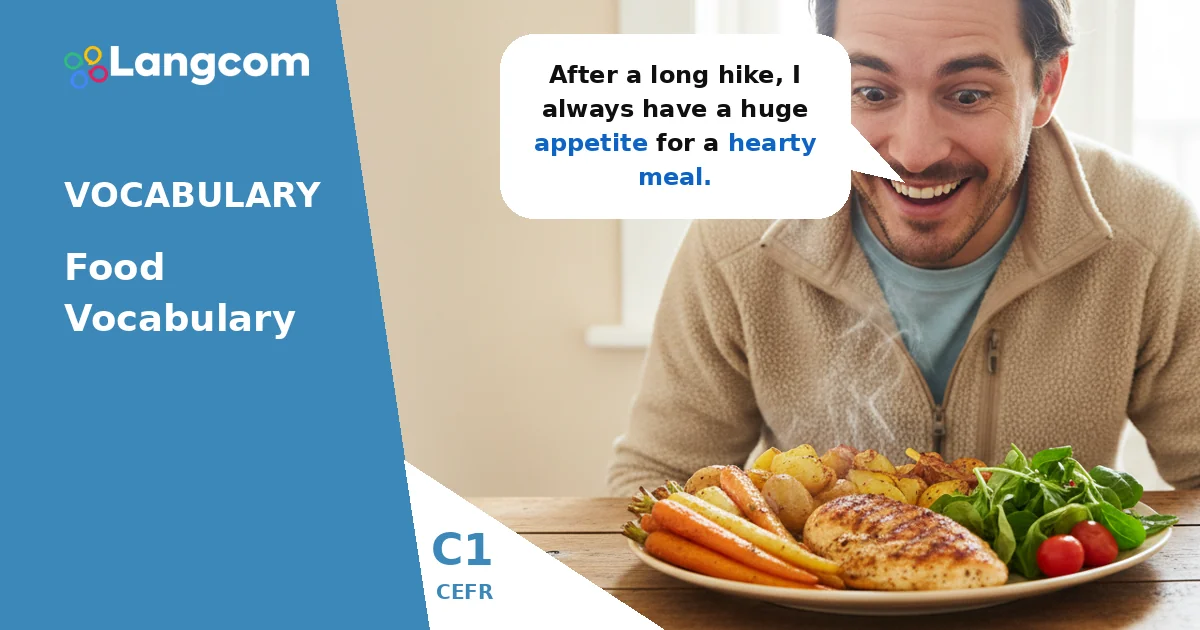
- After a long hike, I always have a huge appetite for a hearty meal.
- The global consumption of processed foods continues to rise, raising health concerns.
- Farmers are concerned about the impact of climate change on their grain crops.
- The government is working to address the food shortage in affected areas.
- Eating a diet rich in fiber is essential for good digestive health.
- Organic foodstuffs are becoming more popular among health-conscious consumers.
- The ranch specializes in raising cattle for high-quality beef.
- Many traditional diets are considered wholesome and highly nutritious.
- Quinoa is often touted as a superfood due to its complete protein content.
- Ensuring a stable supply of fresh water is a major challenge for many cities.
- The livestock industry is under pressure to adopt more sustainable practices.
- Breakfast cereal is a quick and easy option for many busy mornings.
Esercitazione
Sei pronto a ottenere il tuo certificato?
Il corso Langcom prepara gli studenti agli esami Cambridge, IELTS, TOEFL, DELE, SIELE e Michigan.
Inizia a utilizzare LangcomErrori comuni per chi parla spagnolo
Confuso Cattle e Livestock:
Spanish speakers might sometimes use "cattle" too broadly. Remember, cattle refers only to cows and bulls.
- Corretto: The farm has cattle, sheep, and pigs. (Here, "cattle" is correct for cows).
- Errato: The farm has many cattles. (Incorrect plural and usage for mixed animals).
- Corretto: The farm has various types of livestock. (This is the correct general term).
Utilizzo di Appetite only for food:
While appetite commonly means hunger, it also has a broader, figurative sense.
- Corretto: He has a strong appetite for success. (Not just food).
- Less precise: He has a hunger for success. (While "hunger" can be figurative, "appetite" is a more C1-level, nuanced choice in many contexts).
Misusing Wholesome:
Wholesome implies both health and goodness. It's not just "healthy."
- Corretto: This movie is wholesome family entertainment. (Good and morally sound).
- Less precise: This movie is healthy family entertainment. (Sounds unnatural; "healthy" usually refers to physical health or food).
Domande frequenti
What is the difference between food and foodstuffs?
Food is a general term for anything edible. Foodstuffs is a more formal or technical term, often used for raw or basic ingredients, especially in discussions about trade, production, or supply. For example, wheat is a basic foodstuff, but pizza is a type of food.
Can supply be a verb and a noun?
Sì, supply can be both. As a noun, it means the amount available, like the water supply. As a verb, it means to provide something, as in to supply goods to a store.
Is superfood a scientific term?
No, superfood is primarily a marketing term, not a scientific one. While foods labeled as superfoods are often rich in nutrients, the term itself is not officially recognized in nutritional science.
How can I remember the difference between nutritious and wholesome?
Nutritious specifically means "full of nutrients" and good for physical health. Wholesome also means healthy for the body, but it often carries an additional meaning of being good, pure, or morally sound, applying to food, activities, or content.
How does this vocabulary help me with C1 exams?
Mastering these C1 food vocabulary terms will significantly improve your ability to understand and produce complex texts for exam tasks. For instance, in writing tasks, you can use words like consumption oppure shortage to discuss global issues, demonstrating a higher level of lexical resource.




0 Commenti