

Why Learn English Words for Clothes?
Learning words for clothes is very important for English learners at the Pre-A1 level. Clothes are a big part of our daily life.
- You use these words to describe what you wear.
- You use them when you go shopping for new items.
- You use them to talk about other people’s clothes.
- You use them to talk about clothes for different weather.
🎓 Aprende inglés con el método mixto
Grupos reducidos · Tutor de IA disponible las 24 horas del día, los 7 días de la semana · Preparación para los exámenes de Cambridge
Planes de $39 $79 al mes
What Are Common Clothes Items?
Let's learn some basic words for clothes. These are things people wear often. Knowing these words will help you talk about your day and understand simple descriptions.
Clothes for Your Upper Body and Whole Body
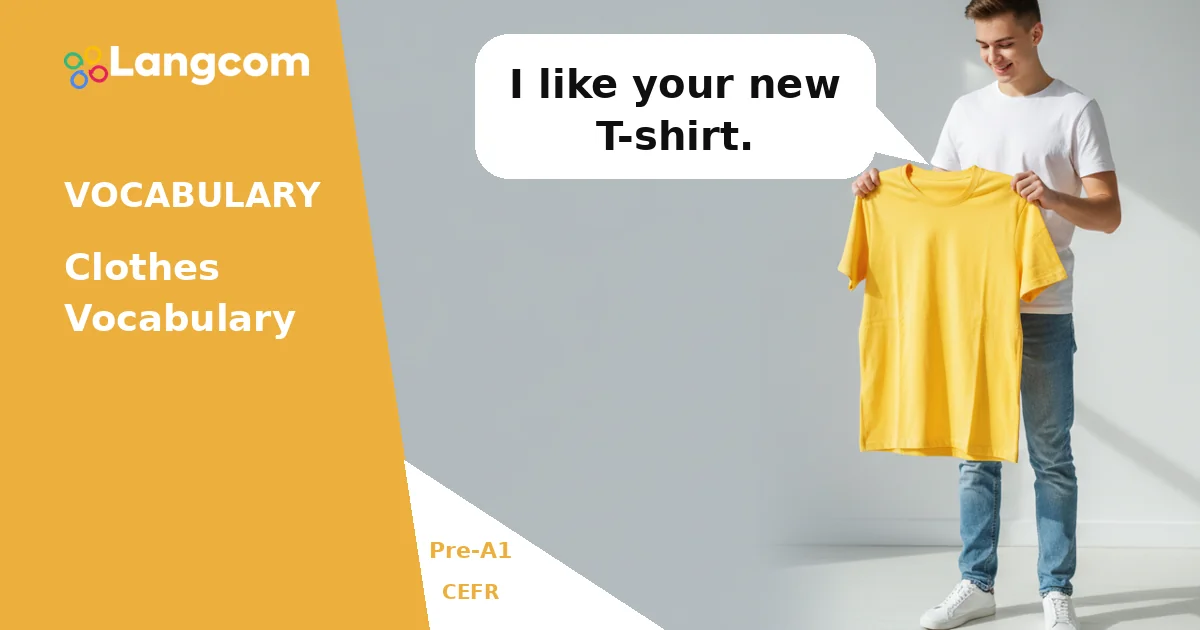
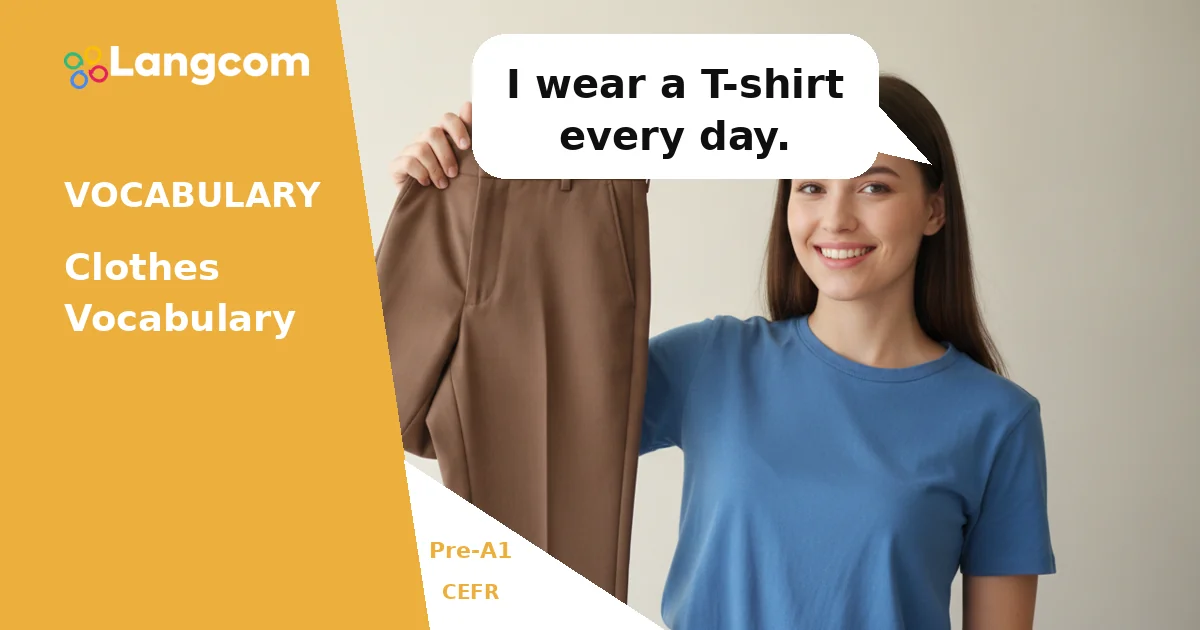
- T-shirt: This is a light shirt, usually with short sleeves, for warm weather. I wear a T-shirt in summer.
- Jumper: This is a warm top, often made of wool, for cold weather. He needs a jumper when it's cold. (In American English, people often say sweater.)
- Dress: This is one piece of clothing, usually for women or girls. It covers the body and the legs. She bought a new dress for the party.
- Swimsuit: These are special clothes you wear for swimming in the pool or at the beach. I need my swimsuit for the beach.
Clothes for Your Lower Body and Feet
- Shorts: These are short trousers, usually worn in warm weather. Remember, shorts is always plural in English. He wears shorts to play football.
- Trousers: These are long clothes for your legs. Like shorts, trousers is always plural. She wears trousers to work. (In American English, people often say pants.)
- Shoes: These are what you wear on your feet. Shoes is also always plural. My shoes are comfortable.
Clothes for Your Head
- Hat: You wear this on your head. It can protect you from the sun or keep you warm. He wears a hat to protect from the sun.
How to Use Clothes Words in Sentences
When you talk about clothes, remember these simple rules:
- Uso a o an for singular items:
- She has a new dress.
- I wear a hat.
- Uso some o my/your for plural items like shorts, trousers, y shoes:
- He needs some shorts.
- Where are my shoes?
- You can also use a pair of for plural items:
- I bought a pair of trousers.
- He has a new pair of shoes.
| English Word | What it is |
|---|---|
| T-shirt | A light shirt for warm days. |
| Dress | A single piece of clothing for women, covering body and legs. |
| Jumper | A warm top for cold weather. |
| Shorts | Short trousers for warm weather (always plural). |
| Trousers | Long clothes for your legs (always plural). |
| Swimsuit | Clothes for swimming. |
| Hat | Something you wear on your head. |
| Shoes | What you wear on your feet (always plural). |
Ejemplos
- I like your new T-shirt.
- She is wearing a beautiful dress.
- He needs a warm jumper for winter.
- We wear shorts in summer.
- My trousers are blue.
- Don't forget your swimsuit for the pool.
- She has a big hat.
- These shoes are too small.
Práctica
💬 ¿Necesitas asesoramiento personalizado?
Como centro autorizado de preparación para los exámenes de Cambridge, podemos orientarte para que elijas el curso y la certificación más adecuados. Habla hoy mismo con nuestros asesores.
Chatea con un asesor por WhatsAppErrores habituales de los hispanohablantes
For Spanish speakers, some common mistakes with clothes vocabulary include:
- Singular frente a plural: In Spanish, words like "pantalón" (trousers) are singular. But in English, trousers, shorts, y shoes are always plural. You cannot say "a trouser" or "a short" (when meaning clothing).
- Wrong: I need a trouser.
- Right: I need some trousers. O I need a pair of trousers.
- Wrong: Where is my shoe? (if you mean both shoes)
- Right: Where are my shoes?
- "Jumper" vs. "Sweater": Both words are correct and mean the same thing. Jumper is more common in British English, and sweater is more common in American English. For this lesson, we use jumper.
Preguntas más frecuentes
What is the difference between trousers and shorts?
Trousers are long and cover your whole leg. Shorts are short and only cover part of your leg, usually for warm weather.
Can I say 'a trousers'?
No, trousers is always a plural noun in English. You can say some trousers o a pair of trousers.
Is 'jumper' the same as 'sweater'?
Yes, they mean the same type of warm clothing. Jumper is more common in British English, and sweater is more common in American English.



0 Comentarios