
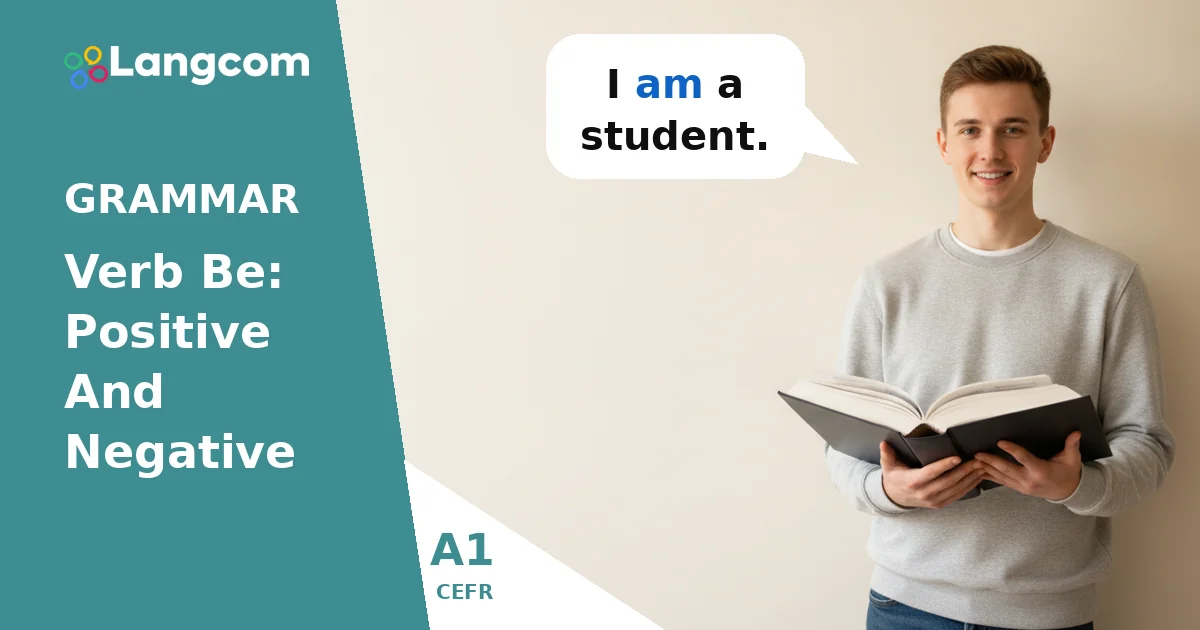

Was bedeutet das Verb “be” im Englischen?
Das Verb be ist im Englischen von grundlegender Bedeutung. Es entspricht in etwa ‘ser’ und ‘estar’ im Spanischen, d. h., es deckt beide Konzepte ab.
Wir verwenden be um über viele Dinge zu sprechen:
- Identität: Wer jemand ist oder was etwas ist.
- Standort: Wo sich jemand oder etwas befindet.
- Beschreibung: Wie jemand oder etwas ist (seine Eigenschaften oder Gefühle).
🎓 Englisch lernen mit der Blended-Methode
Kleingruppen · KI-Tutor rund um die Uhr · Vorbereitung auf die Cambridge-Prüfungen
Pläne von $39 $79 pro Monat
Wie verwendet man "be" in positiven Sätzen?
Das Verb be ändert seine Form je nach Subjekt (der Person oder Sache, die die Handlung ausführt).
- Für I, wir verwenden am.
- Für he, she, it (Singularsubjekte) verwenden wir is.
- Für you, we, they (Pluralformen), verwenden wir are.
Im gesprochenen Englisch und in informellen Texten verwenden wir häufig Kontraktionen (Kurzformen). Zum Beispiel:, I am wird zu I'm.
Wie bildet man die Verneinung von "be"?
Einen Satz mit dem Verb bilden be Wenn nicht, fügen wir einfach das Wort hinzu not danach am, is, oder are.
- I am not
- He is not
- They are not
Es gibt auch negative Kontraktionen. Zum Beispiel:, is not wird zu isn't. Für I am not, die Verkürzung lautet in der Regel I'm not.
Wann verwenden wir Kontraktionen mit "be"?
Kontraktionen kommen im alltäglichen Englisch sehr häufig vor. Man hört sie ständig, wenn Menschen sprechen.
- Sprechen: Verwende beim Sprechen immer Kontraktionen. Das klingt natürlicher.
- Informelles Schreiben: Verwende Kurzformen in E-Mails an Freunde, in SMS oder in informellen Notizen.
- Formelles Schreiben: In formellen Texten, wie beispielsweise wissenschaftlichen Aufsätzen oder offiziellen Berichten, ist es besser, die vollständigen Bezeichnungen zu verwenden (I am, she is not).
| Betreff | Positivform | Negativform | Positive Kontraktion | Negative Kontraktion |
|---|---|---|---|---|
| I | am | am not | I'm | I'm not |
| You | are | are not | You're | You aren't |
| He | is | is not | He's | He isn't |
| She | is | is not | She's | She isn't |
| It | is | is not | It's | It isn't |
| We | are | are not | We're | We aren't |
| They | are | are not | They're | They aren't |
Beispiele
- I am a student.
- She is from Spain.
- They are happy.
- It is cold today.
- I'm not tired.
- He isn't here.
- We aren't doctors.
- You're a good friend.
- They're not at home.
- It's not a big problem.
Übung
💬 Benötigen Sie eine individuelle Beratung?
Als autorisiertes Cambridge-Vorbereitungszentrum können wir Ihnen helfen, den richtigen Kurs und die passende Zertifizierung zu finden. Chatten Sie noch heute mit unseren Beratern.
Chatten Sie mit einem Berater auf WhatsAppHäufige Fehler bei Spanischsprechern
Spanischsprachige vergessen manchmal, das Verb zu verwenden be. Auf Spanisch würde man vielleicht 'Yo feliz' sagen, aber auf Englisch muss man sagen I am happy. Denken Sie immer daran, Folgendes anzugeben: am, is, oder are.
Ein weiterer häufiger Fehler ist die Verwechslung von ser und estar. Auf Englisch, be deckt beides ab. Zum Beispiel:, I am a student (ser) und I am in the classroom (estar) verwenden beide am.
Achte außerdem darauf, dass das Verb zum Subjekt passt. Es lautet She is, nicht She are. Überprüfen Sie stets das Thema, um die richtige Form von be.
Häufig gestellte Fragen
Was bedeutet das Verb "be" im Englischen?
Das Verb be Im Englischen entspricht es sowohl dem spanischen 'ser' als auch dem spanischen 'estar'. Es wird verwendet, um über Identität, Ort und Beschreibungen zu sprechen.
Warum gibt es drei Formen: „am“, „is“ und „are“?
Das Verb be passt seine Form an das Subjekt des Satzes an. Am steht für I, is gilt für Subjekte im Singular (he, she, it), und are gilt für Subjekte im Plural (you, we, they).
Kann ich beim Verb "be" immer Kontraktionen verwenden?
Man kann fast immer Kontraktionen verwenden (I'm, isn't, aren't) im gesprochenen Englisch und in informellen Texten. In formellen Texten ist es besser, die vollständigen Formen zu verwenden (I am, is not, are not).
Ist 'be' ein unregelmäßiges Verb?
Ja, be ist ein unregelmäßiges Verb. Seine Formen im Präsens (am, is, are) folgen im Gegensatz zu den meisten anderen Verben keinem regelmäßigen Muster.


0 Kommentare