


What is will for?
Wir verwenden will to talk about the future.
- We use it for predictions: things we think or believe will happen.
- We also use it for decisions we make at the moment of speaking (spontaneous decisions).
The form is simple: Subject + will + base form of the verb.
- I will call you later. (A decision made now)
- It will be sunny tomorrow. (A prediction)
You can use a short form for will. Wir sagen ‘ll.
- I’ll help you. (Same as I will help you.)
- She’ll arrive soon. (Same as She will arrive soon.)
🎓 Englisch lernen mit der Blended-Methode
Kleingruppen · KI-Tutor rund um die Uhr · Vorbereitung auf die Cambridge-Prüfungen
Pläne von $39 $79 pro Monat
How do we use won't?
Won't is the short form of will not.
- Wir verwenden won't to talk about things we believe will not happen in the future.
- It can also show a refusal, meaning someone does not want to do something.
The form is: Subject + won't + base form of the verb.
- He won't come to the party. (A negative prediction)
- My car won't start. (It refuses to start)
How do we ask questions with will?
To ask a question about the future with will, we change the word order.
- We put will at the beginning of the sentence, before the subject.
The form is: Will + subject + base form of the verb?
- Will you visit your family next month?
- Will it snow tomorrow?
For short answers, we say:
- Yes, I will.
- No, I won't.
Beispiele
- I think I will buy a new phone soon.
- She won't forget your birthday.
- Will they travel by train?
- It'll be cold later, so take a jacket.
- We won't have time for a break.
Übung
💬 Benötigen Sie eine individuelle Beratung?
Als autorisiertes Cambridge-Vorbereitungszentrum können wir Ihnen helfen, den richtigen Kurs und die passende Zertifizierung zu finden. Chatten Sie noch heute mit unseren Beratern.
Chatten Sie mit einem Berater auf WhatsAppHäufige Fehler bei Spanischsprechern
- Adding -s to the verb: Remember, after will oder won't, the verb is always in its base form. Do not add -s für he/she/it.
✗ He will goes.
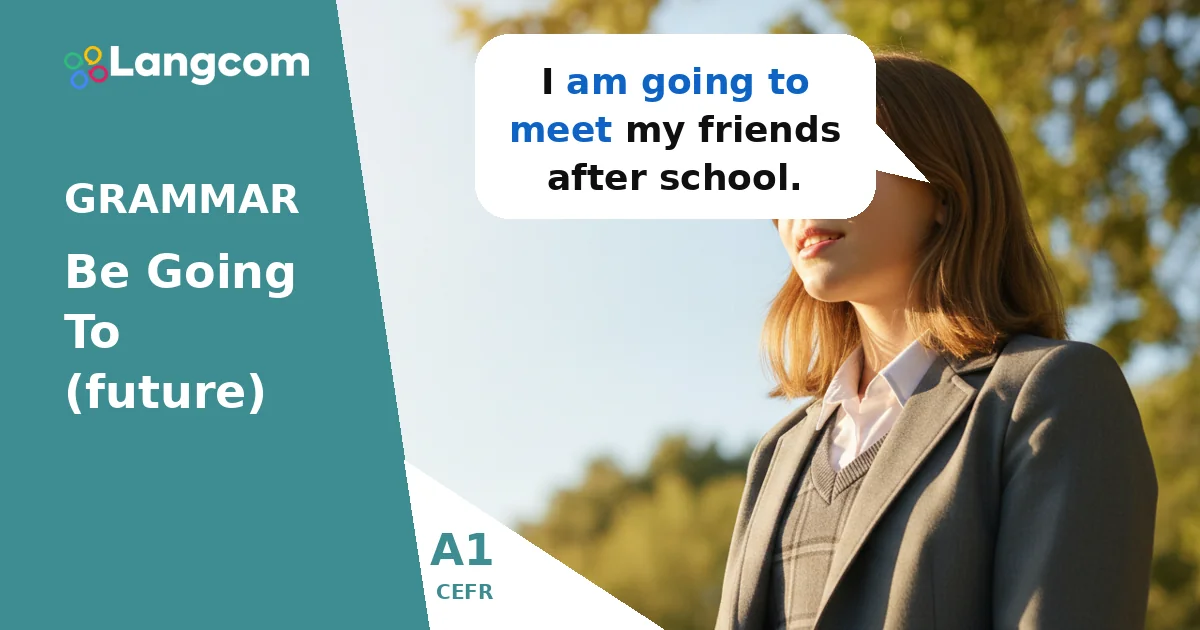
✓ He will go. - Verwirrend will mit going to: For A1, focus on will for predictions and spontaneous decisions. Going to is often for plans you made before speaking.
✗ (You decide now) I am going to help you.
✓ (You decide now) I will help you. - Forgetting will: Sometimes, Spanish speakers might translate directly and forget will.
✗ I go to the cinema tomorrow.
✓ I will go to the cinema tomorrow.
Häufig gestellte Fragen
What is the main use of 'will'?
Die Hauptanwendung von will is to talk about future predictions (things you think will happen) and spontaneous decisions (decisions made at the moment of speaking).
Can I use 'will' for future plans?
Ja, du kannst will for plans, especially if they are spontaneous or decided at the moment. For plans made earlier, be going to is also common, but will is perfectly fine for A1 learners to express future actions.
Is 'won't' formal or informal?
Won't is a contraction of will not. It is commonly used in everyday spoken English and informal writing. It is not considered informal in a negative way; it is standard.
What is the short form of 'will'?
Die Kurzform von will ist 'll. Zum Beispiel:, I will wird zu I'll, und she will wird zu she'll.


0 Kommentare