

What Does ‘Remote’ Mean in English?
When we talk about a remote place, we mean it is far away from where most people live. It is often difficult to reach.
- Remote places are usually isolated, meaning they are separated from others.
- They can be beautiful, dangerous, or simply untouched by human activity.
✍️ لست متأكدًا من مستواك؟
خُذ اختبار تحديد المستوى المجاني الخاص بنا واحصل على تعليقات مخصصة من ممتحنين معتمدين من كامبريدج.
قم بإجراء اختبار تحديد المستوى المجانيHow Do We Describe Places Without People?
Some adjectives focus on the absence of human presence in a place.
- Deserted: This means a place is empty of people. It suggests that people once lived there or visited, but now it is abandoned. The old mining town was completely deserted.
- Nameless: This describes a place that has no official name, often because it is so unknown or unexplored. They discovered a nameless peak deep in the mountains.
Words for Natural Beauty and Size
Many remote places are known for their natural beauty or impressive scale.
- Unspoiled: This is a positive word meaning a place is beautiful and natural, not damaged or changed by humans. The island's beaches remain unspoiled by tourism.
- Scenic: This adjective describes a place with beautiful natural views or scenery. The drive through the national park was incredibly scenic.
- Lush: Used for places with a lot of healthy, green vegetation. It suggests abundance and fertility. The rainforest was lush and full of life.
- Immense: This means extremely large or vast. It emphasizes the great size of a place. The desert stretched out, an immense expanse of sand.
Describing Challenging or Difficult Environments
Not all remote places are welcoming. Some are difficult or dangerous.
- Bare: This describes land with little or no vegetation, often exposed. It can suggest emptiness or harshness. The bare hills offered no shelter from the wind.
- Hostile: This means an environment is difficult, dangerous, or unfriendly to life. It suggests a threat. Survival in the hostile Arctic wilderness is a challenge.
| Adjective | Meaning & Connotation | Example Usage |
|---|---|---|
| Deserted | Empty of people; abandoned (Neutral to Negative) | The old fort stood deserted for centuries. |
| Unspoiled | Beautiful and natural; not damaged by humans (Positive) | We visited an unspoiled stretch of coastline. |
| Immense | Extremely large; vast (Neutral, can be impressive) | The immense forest seemed to go on forever. |
| Nameless | Having no official name; unknown (Neutral) | They discovered a nameless river in the jungle. |
| Scenic | Having beautiful natural views (Positive) | The road offered scenic views of the valley. |
| Lush | Rich in healthy, green vegetation (Positive) | The hills were lush after the heavy rains. |
| Bare | Without vegetation; exposed (Neutral to Negative) | The bare mountains were covered in snow. |
| Hostile | Difficult, dangerous, or unfriendly to life (Negative) | Only a few plants can survive in this hostile environment. |
أمثلة
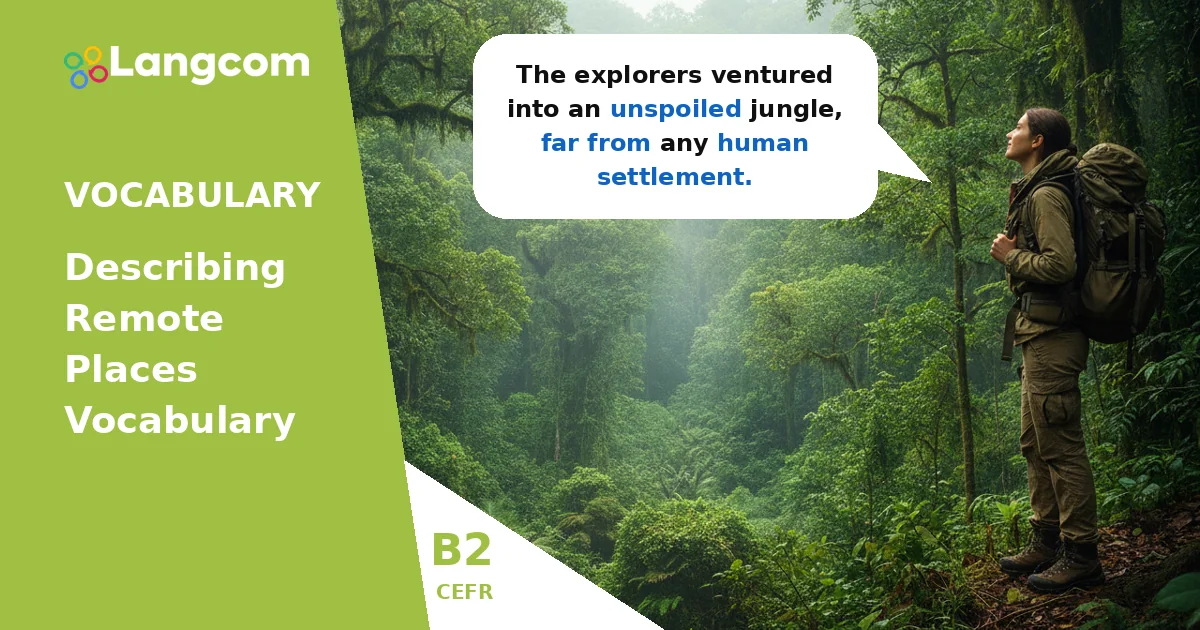
- The explorers ventured into an unspoiled jungle, far from any human settlement.
- We hiked for days through the immense, nameless plains.
- The abandoned village was completely deserted after the earthquake.
- Despite the bare landscape, the scenic views from the mountain were breathtaking.
- The lush valley was a welcome sight after crossing the hostile desert.
التدريب
هل أنت مستعد للحصول على شهادتك؟
يُعد برنامج Langcom الطلاب لامتحانات كامبريدج وIELTS وTOEFL وDELE وSIELE وMichigan.
ابدأ مع Langcomالأخطاء الشائعة لدى المتحدثين باللغة الإسبانية
Common Mistakes When Describing Remote Places
- مربك Deserted و Empty: While similar, deserted specifically means 'abandoned by people'. A place can be empty of things or people, but deserted implies previous human presence.
خطأ: The room was deserted. (Unless people left it permanently)
الصحيح: The room was empty. أو The town was deserted. - استخدام Immense for Small Things: Immense is for very large, often vast, spaces or concepts, not small objects.
خطأ: She had an immense coffee cup.
الصحيح: They explored an immense cave system. - Overusing Bad for Difficult Environments: Instead of general words like 'bad', use more precise adjectives like hostile أو harsh to describe challenging conditions.
خطأ: The weather in the mountains was bad.
الصحيح: The weather in the mountains was hostile.
الأسئلة الشائعة
What is the difference between 'remote' and 'isolated'?
Both words mean far away. Remote often describes a place's distance from populated areas. Isolated emphasizes being separated or cut off from others, which can apply to places or even people. A remote village is usually isolated.
Can 'bare' be a positive word?
عادةً،, bare is neutral or slightly negative, suggesting a lack of something (like vegetation). However, it can sometimes be used positively to describe a simple, natural beauty, like the bare beauty of the winter trees.
How can I remember the meaning of 'unspoiled'?
Think of 'spoil' meaning to damage or ruin something. So, unspoiled means 'not damaged' or 'not ruined', especially by human activity. It describes a place that is still in its natural, beautiful state.
Are these words useful for English exams?
Yes, mastering these B2 adjectives is very useful for exams like Cambridge FCE or IELTS. They help you describe images, write essays about environmental topics, or discuss travel experiences with greater precision and sophistication.




0 تعليق