
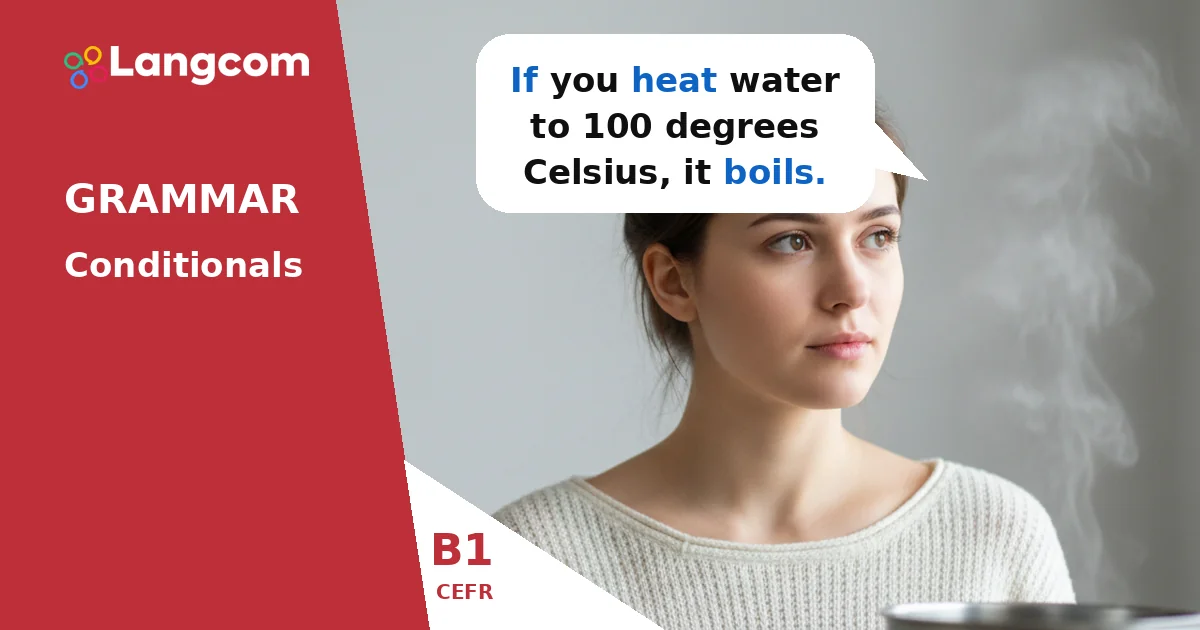

What is the Zero Conditional?
The zero conditional is used to talk about general truths, scientific facts, and things that always happen under certain conditions.
- It describes a cause-and-effect relationship that is always true.
- The result is certain every time the condition is met.
The structure for the zero conditional is simple:
- If + present simple, present simple
🎓 تعلم اللغة الإنجليزية باستخدام الطريقة المختلطة
مجموعات صغيرة · مدرس ذكاء اصطناعي متاح على مدار الساعة · التحضير لامتحانات كامبريدج
خطط من $39 $79 في الشهر
When Do We Use the Zero Conditional?
We use the zero conditional for:
- General truths: Things that are always true in the world.
- Scientific facts: Laws of nature or proven scientific principles.
- Habits and routines: What you or others always do in specific situations.
You can often replace if مع when in zero conditional sentences without changing the meaning. This is because the result is always the same.
What is the First Conditional?
The first conditional is used to talk about real or possible situations in the future and their likely results.
- It describes a specific condition and a probable outcome.
- The result is not 100% certain, but it is very likely to happen.
The structure for the first conditional is:
- If + present simple, will + base verb
When Do We Use the First Conditional?
We use the first conditional for:
- Future possibilities: Things that might happen in the future.
- Plans and predictions: What we expect to happen if a condition is met.
- Warnings and advice: To tell someone what will happen if they do or don't do something.
In the first conditional, we usually use if because the situation is a possibility, not a certainty. Using when here would imply the condition is definite.
If vs. When: A Closer Look
Both if و when can introduce conditional clauses, but they have different implications:
- الاستخدام if for things that are possible or might happen. The condition is not certain.
- الاستخدام when for things that are certain to happen. The condition is definite.
For example, you know the sun will rise tomorrow, so you might say When the sun rises, I will go for a walk. But if you're not sure about the weather, you'd say If it rains, I will stay home.
| ميزة | Zero Conditional | First Conditional |
|---|---|---|
| Use | General truths, scientific facts, habits | Real or possible future situations |
| 'If' Clause Form | If + present simple | If + present simple |
| Main Clause Form | present simple | will + base verb |
| Certainty | Always true, 100% certain result | Probable, likely to happen (not 100% certain) |
| Example | If you freeze water, it turns to ice. | If it snows, we will build a snowman. |
| 'When' usage | Often interchangeable with if | Generally not interchangeable with if (unless the condition is certain) |
أمثلة
- If you heat water to 100 degrees Celsius, it boils. (Zero Conditional - Scientific fact)
- When I'm tired, I go to bed early. (Zero Conditional - General truth/habit)
- If you mix blue and yellow, you get green. (Zero Conditional - General truth)
- If it rains tomorrow, we will stay at home. (First Conditional - Future possibility)
- If she studies hard, she will pass the exam. (First Conditional - Probable future outcome)
- If I find your keys, I will call you immediately. (First Conditional - Specific future action)
التدريب
✍️ لست متأكدًا من مستواك؟
خُذ اختبار تحديد المستوى المجاني الخاص بنا واحصل على تعليقات مخصصة من ممتحنين معتمدين من كامبريدج.
قم بإجراء اختبار تحديد المستوى المجانيالأخطاء الشائعة لدى المتحدثين باللغة الإسبانية
الأخطاء الشائعة لدى المتحدثين باللغة الإسبانية
Spanish speakers often make a few common mistakes when using the zero and first conditional:
- Using 'will' after 'if' in the first conditional: In Spanish, you might use a future tense in both parts of the conditional. However, in English, the 'if' clause always uses the present simple for the first conditional.
خطأ: If it will rain, I will stay home.
الصحيح: If it rains, I will stay home. - Using 'will' in the zero conditional: Remember that the zero conditional is for things that are always true, not future possibilities. Both clauses need the present simple.
خطأ: If you will heat ice, it will melt.
الصحيح: If you heat ice, it melts. - Confusing 'if' and 'when': While sometimes interchangeable in the zero conditional, they are not in the first conditional. Use if for possibilities and when for certainties.
خطأ: When I win the lottery, I will buy a house. (Winning is not certain)
الصحيح: If I win the lottery, I will buy a house.
الأسئلة الشائعة
What is the main difference between the zero and first conditional?
The zero conditional describes things that are always true or always happen (If you heat water, it boils.). The first conditional describes a real possibility in the future and its likely result (If it rains, we will cancel the picnic.).
Can I use 'when' instead of 'if' in conditional sentences?
Yes, in the zero conditional, you can often use when بدلاً من if because the result is always true. For example, When I eat too much, I feel sick. However, for the first conditional, use if because the situation is a possibility, not a certainty.
What tenses are used in the zero conditional?
In the zero conditional, both the 'if' clause and the main clause use the present simple tense. For example, If you don't water plants, they die.
What tenses are used in the first conditional?
In the first conditional, the 'if' clause uses the present simple, and the main clause uses will + base verb. على سبيل المثال،, If I have time, I will help you.

0 تعليق