

What is the Past Simple of ‘To Be’?
The verb ‘to be’ changes in the past simple. It has two forms: was و were.
- نحن نستخدم was for singular subjects: I, he, she, it.
- نحن نستخدم were for plural subjects: you, we, they.
These forms help us talk about how things were in the past.
🎓 تعلم اللغة الإنجليزية باستخدام الطريقة المختلطة
مجموعات صغيرة · مدرس ذكاء اصطناعي متاح على مدار الساعة · التحضير لامتحانات كامبريدج
خطط من $39 $79 في الشهر
How Do We Make Negative Sentences?
To make a negative sentence with 'to be' in the past simple, we add not بعد was أو were.
- The full forms are was not و were not.
- The common short forms are wasn't و weren't.
These short forms are very common in everyday spoken English.
How Do We Ask Questions?
To ask a question with 'to be' in the past simple, we change the word order. We put Was أو Were at the beginning of the sentence, before the subject.
- For example, instead of You were happy, we ask Were you happy?
- بالنسبة للإجابات المختصرة، نستخدم Yes, I was أو No, I wasn't.
This structure is important for asking about past situations.
When Do We Use the Past Simple of 'To Be'?
We use the past simple of 'to be' to talk about:
- Past states or conditions: She was tired yesterday.
- Past locations: They were at the park.
- Past descriptions: The weather was cold.
- Past facts: It was my birthday last week.
It helps us describe situations that are now finished.
أمثلة
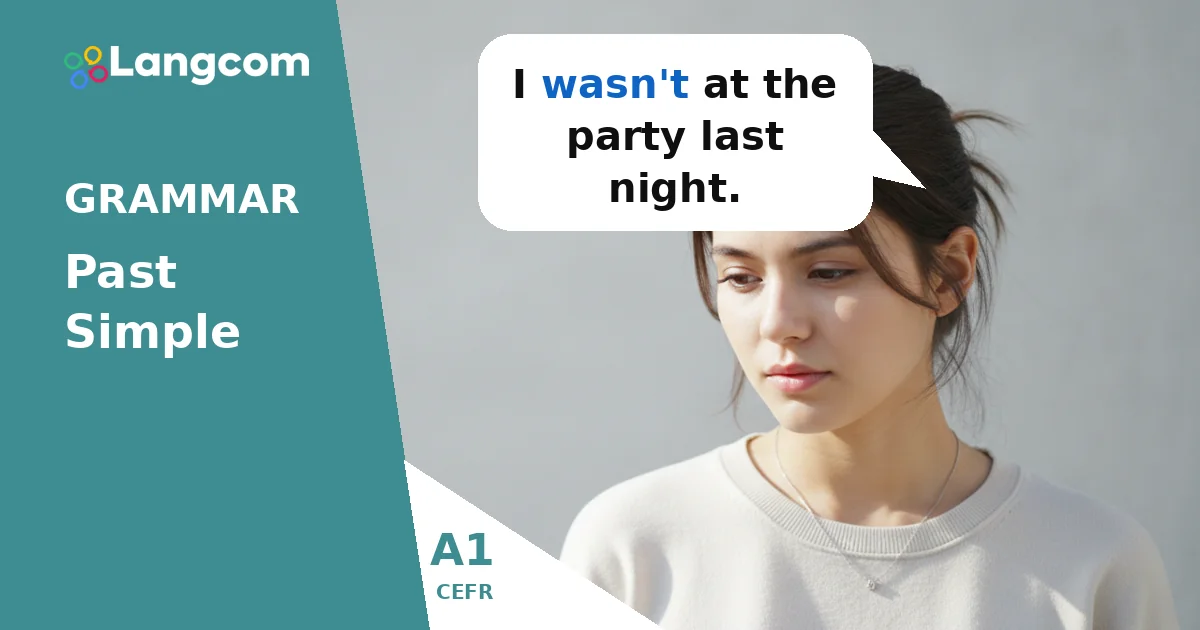
- I wasn't at the party last night.
- She wasn't happy with the food.
- We weren't friends in high school.
- They weren't ready for the exam.
- Was he busy on Monday?
- Were you at home yesterday afternoon?
- Was it a good movie?
- Were they late for the meeting?
التدريب
💬 هل تحتاج إلى إرشادات مخصصة؟
بصفتنا مركزًا معتمدًا للتحضير لاختبارات كامبريدج، يمكننا توجيهك نحو الدورة والشهادة المناسبتين لك. تحدث مع مستشارينا اليوم.
دردش مع مستشار على واتسابالأخطاء الشائعة لدى المتحدثين باللغة الإسبانية
Spanish speakers sometimes make mistakes when using 'to be' in the past simple, especially with negatives and questions.
- Using 'did not be': A common error is to say I didn't be happy. This is incorrect. The correct form is I wasn't happy. Remember, 'to be' does not use 'do' in the past simple for negatives or questions.
- ترتيب الكلمات غير الصحيح في الأسئلة: Another mistake is to say You were tired? بدلاً من Were you tired? In English questions, 'was' or 'were' must come before the subject.
- Confusing 'was' and 'were': Ensure you use was من أجل I, he, she, it و were من أجل you, we, they. على سبيل المثال،, We was late is wrong; it should be We were late.
الأسئلة الشائعة
What is the difference between 'was' and 'were'?
نحن نستخدم was for singular subjects (I, he, she, it) و were for plural subjects (you, we, they) when talking about the past.
Can I use 'was not' instead of 'wasn't'?
Yes, you can. Was not is the full form, and wasn't is the contracted (short) form. Both are correct, but wasn't is more common in spoken English and informal writing.
How do I answer 'yes/no' questions with 'to be' in the past?
You use short answers. For example, if someone asks Was she at home?, you can say Yes, she was أو No, she wasn't. If they ask Were they busy?, ، كما تقول Yes, they were أو No, they weren't.


0 تعليق