

What Do Should and Shouldn’t Mean?
Should 和 shouldn’t are modal verbs. We use them to talk about what is a good idea or what is the correct thing to do.
They are not as strong as must 或 have to. They express advice, recommendations, or suggestions.
- 使用 should for positive advice: You should study for the exam.
- 使用 shouldn’t for negative advice or warnings: You shouldn’t worry too much.
How Do We Form Sentences with Should and Shouldn't?
用于 should 和 shouldn't is very easy. You always use the base form of the main verb after them.
- Positive sentences: Subject + should + base verb.
- I should call my mother.
- He should rest.
- Negative sentences: Subject + shouldn't + base verb. (Shouldn't is short for should not.)
- You shouldn't eat so much sugar.
- They shouldn't go out late.
- Questions: Should + subject + base verb?
- Should I wear a jacket?
- Should we tell him?
- Short answers: Yes, subject + should. / No, subject + shouldn't.
- Yes, you should.
- No, you shouldn't.
When to Use Should for Good Ideas
我们使用 should when we think something is a good idea or the right thing to do. It's like giving friendly advice.
- For general advice:
- People should drink plenty of water every day.
- You should always be kind to others.
- For recommendations:
- This movie is great; you should watch it!
- If you visit London, you should see Big Ben.
- For suggestions about what is correct or expected:
- Students should arrive on time for class.
- You should apologize when you make a mistake.
When to Use Shouldn't for Bad Ideas or Warnings
我们使用 shouldn't when we think something is a bad idea, not correct, or could cause problems. It's a gentle warning or negative advice.
- For negative advice:
- You shouldn't spend all your money on clothes.
- He shouldn't work so many hours.
- For warnings or to advise against something:
- You shouldn't touch that hot pan.
- Children shouldn't play with sharp objects.
- For expressing what is not expected or appropriate:
- You shouldn't talk loudly in the library.
- They shouldn't interrupt when someone is speaking.
示例
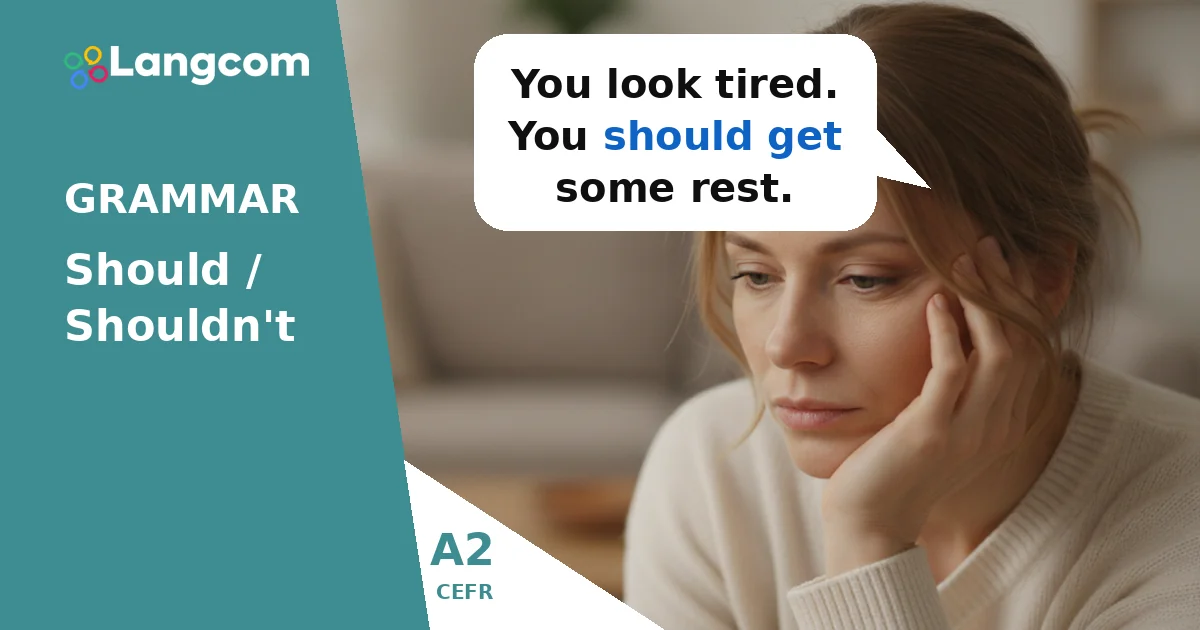
- You look tired. You should get some rest.
- It's raining. You shouldn't forget your umbrella.
- Should I call him now or later?
- Yes, you should call him now.
- No, you shouldn't call him now; he's busy.
- We should eat more vegetables for our health.
- They shouldn't waste so much food.
- He should apologize for his mistake.
- You shouldn't worry about small things.
- She should try that new restaurant.
练习
西班牙语母语者常犯的错误
Spanish speakers sometimes make a few common mistakes with should 和 shouldn't:
- Using "to" after should: 请记住,, should is a modal verb. It is always followed by the base form of the verb without to.
- Incorrect: You should to study for the exam.
- Correct: You should study for the exam.
- 令人困惑 should 与 must: Should is for advice or recommendations. Must is for strong obligations or necessities, like rules or laws.
- You should eat more fruit. (Good advice)
- You must wear a seatbelt in the car. (A law, strong obligation)
常见问题
What is the difference between should and ought to?
For A2 level, should 和 ought to have a very similar meaning. Should is much more common in everyday English. You can usually use should 而不是 ought to. 例如,, You should study is the same as You ought to study.
Can I use should for questions?
Yes, you can. To ask for advice or a suggestion, you put should at the beginning of the question. For example, "Should I bring a gift?" 或 "What should I do?"
Is should used for the past?
At A2 level, we use should for advice about the present or future. For example, You should go to bed early tonight. For talking about past regrets or what was a good idea in the past (but didn't happen), we use should have + past participle, but this is for higher levels.
How might should appear in the A2 Key (KET) exam?
In the A2 Key exam, you might see should 和 shouldn't in tasks where you need to complete sentences, choose the correct word, or write short messages giving advice. For example, you might need to complete a sentence like "If you want to pass, you ____ study hard." (Answer: should).




0 条评论