
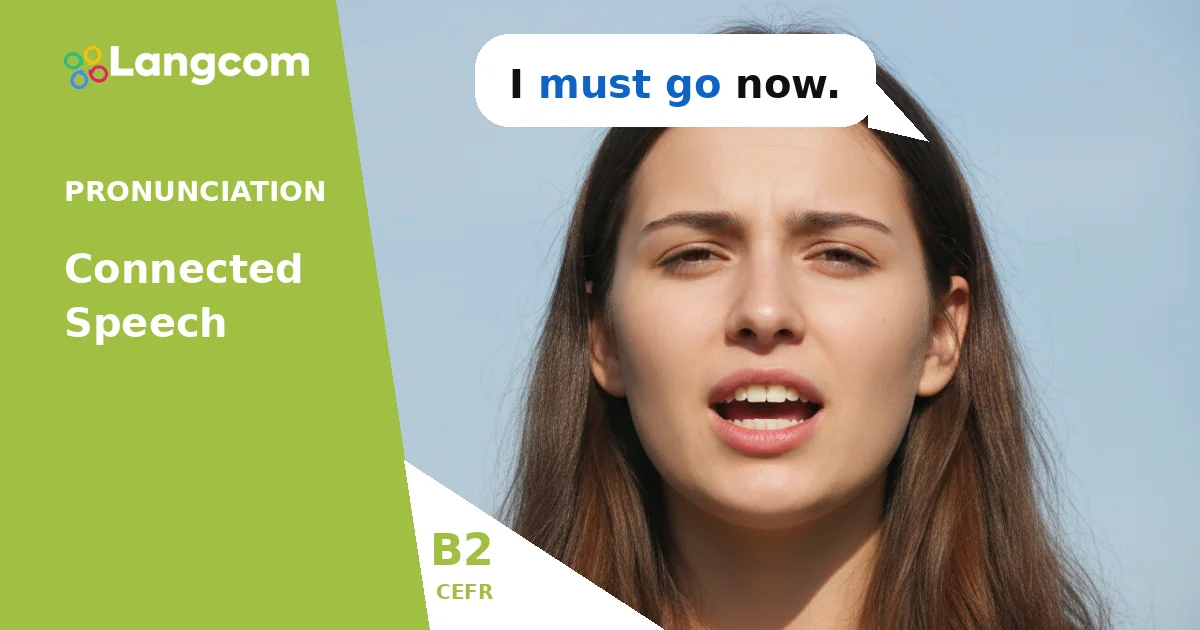

What is Connected Speech in English?
When we speak naturally, words do not always sound separate. Instead, they connect and blend together. Sounds can change, disappear, or join with other sounds. This natural process is called connected speech.
- Connected speech makes English sound fast and smooth.
- It includes different phenomena like linking, assimilation, , 和 elision.
- Understanding connected speech is very important for understanding native speakers, especially in rapid conversation.
What is Elision? Dropping Sounds in English
Elision is a specific type of connected speech. It means that a sound is completely removed or 'dropped' from a word or phrase when spoken quickly.
- Elision happens to make words flow together more easily and with less effort.
- It is very common with certain consonant sounds, especially /t/ and /d/, when they appear next to other consonants.
- Sometimes, even whole syllables can be elided in very fast, informal speech.
Why Do English Speakers Use Elision?
English speakers use elision for several important reasons. It makes communication more efficient and natural.
- Speed: It helps speakers to pronounce words and sentences faster without sounding unclear.
- Rhythm: It contributes to the natural rhythm and stress patterns of spoken English.
- Ease: It reduces the muscular effort needed to articulate every single sound clearly, making speech less tiring.
- Naturalness: Native speakers use it unconsciously. Using elision makes your English sound more authentic and less robotic.
Common Examples of Elision in English
Many common words and phrases show elision. Paying attention to these examples will help you recognize and use them.
- Dropping /t/ or /d/ at the end of a word before another consonant:
- must go (often sounds like mus' go)
- can't talk (often sounds like can' talk)
- next day (often sounds like nex' day)
- old man (often sounds like ol' man)
- Dropping /h/ in unstressed pronouns:
- Tell him (often sounds like Tell 'im)
- Ask her (often sounds like Ask 'er)
- Common phrases with reduced forms:
- got to (often becomes gotta)
- want to (often becomes wanna)
- going to (often becomes gonna)
How to Practice Elision for Better Pronunciation
Improving your understanding and use of elision requires consistent practice. Here are some tips:
- Listen actively: Pay very close attention to how native speakers pronounce words in movies, TV shows, podcasts, and real conversations. Notice which sounds seem to disappear.
- Mimic and repeat: Try to imitate exactly what you hear. Don't be afraid to drop sounds where native speakers do.
- Record yourself: Use a voice recorder to compare your pronunciation with that of native speakers. This helps you identify areas for improvement.
- Focus on common phrases: Practice phrases like gotta go, wanna eat, 或 I'll tell 'im until they feel natural.
示例
- I must go now. (The 't' in must is often dropped, sounding like mus' go.)
- She can't talk right now. (The 't' in can't is often dropped, sounding like can' talk.)
- We've got to leave soon. (Often pronounced We've gotta leave soon.)
- Tell him I'll be late. (The 'h' in him is often dropped, sounding like Tell 'im.)
- It's next door. (The 't' in next can be dropped, sounding like nex' door.)
练习
西班牙语母语者常犯的错误
Spanish speakers often pronounce every letter very clearly. In English, this can sometimes sound unnatural or too formal in rapid, everyday speech.
- Over-pronouncing every sound:
Incorrect (too clear): I musT go. (Pronouncing the final 't' strongly)
Correct (natural elision): I mus' go. (Dropping the final 't') - Not recognizing elided words when listening:
Learners might not understand words like gonna 或 wanna because they expect to hear the full forms going to 或 want to.
Mistake: Not understanding I wanna drink water.
Correction: Recognize wanna as the elided form of want to.
常见问题
Is elision correct English?
是的,, elision is a natural and correct part of spoken English. It's how native speakers communicate efficiently, especially in informal and rapid speech. It is not a mistake.
Should I always use elision when I speak?
Not always. In very formal situations or when speaking slowly for clarity, you might pronounce all sounds. However, using elision in natural conversation will make your English sound more authentic and fluent.
Does elision change the meaning of words?
不,, elision does not change the meaning of words or sentences. It only affects how the words sound when spoken quickly together. The context usually makes the meaning clear.
How is elision different from linking?
Elision is about dropping a sound completely. Linking is about joining the end of one word to the beginning of the next, often by adding a sound or extending a sound. For example, in turn on, the /n/ sound links to the /ɒn/ sound, but no sound is dropped.


0 条评论