

Why is this vocabulary important for C1 English?
At the C1 level, you need to discuss complex global topics with accuracy and detail. Food issues are often in the news and are part of academic and professional conversations.
Using precise vocabulary helps you express nuanced ideas about challenges like food waste, climate change’s impact on agriculture, and public health initiatives related to diet.
Understanding Food Production and Availability
These words help you talk about how food is grown, raised, and made available to people.
- Supply (noun): The amount of something that is available for use. It refers to the quantity of goods or resources that producers are willing and able to offer to the market.
- Shortage (noun): A situation where there is not enough of something that is needed. This often happens when demand is higher than supply.
- Grains (noun): The small, hard seeds of food plants like wheat, rice, or corn. They are a staple food for many cultures.
- Cereals (noun): Plants that produce grains (like wheat, oats, barley) or the food made from these grains, often eaten for breakfast.
- Livestock (noun): Farm animals, such as cows, sheep, and pigs, that are kept for their meat, milk, wool, or other products.
- Cattle (noun): A specific type of large farm animal, including cows and bulls, raised for meat or milk. It is a type of livestock.
- Foodstuffs (noun): Any substance that can be used as food. This is a more formal or collective term for food items.
Describing Food Quality and Health
These terms are used to discuss the nutritional value and overall health benefits of food.
- Fiber (noun): A substance found in plant-based foods (like fruits, vegetables, whole grains) that helps digestion and keeps the body healthy.
- Wholesome (adjective): Good for your health and well-being, often implying naturalness, purity, and a lack of artificial ingredients.
- Nutritious (adjective): Containing many of the natural substances that your body needs to be healthy and grow. It focuses on the specific nutrients present.
- Superfood (noun): A food (such as salmon, blueberries, or kale) considered to be especially beneficial for health and well-being due to its high nutrient density.
Discussing Food Habits and Impact
These words help you talk about how people eat and the broader implications of food choices.
- Consumption (noun): The act of eating or drinking something, or the amount of something that is eaten or used. It can refer to individuals or populations.
- Appetite (noun): A natural desire to satisfy a bodily need, especially for food. It can also refer to a strong desire for something non-food related.
| Term | Meaning and Usage |
|---|---|
| Grains | The small, hard seeds of plants like wheat, rice, corn. Focuses on the edible seed itself. |
| Cereals | Plants that produce grains (e.g., wheat, oats) OR breakfast foods made from grains (e.g., cornflakes). Broader term. |
| Livestock | A collective term for farm animals (cows, sheep, pigs, chickens) kept for use or profit. General category. |
| Cattle | Specifically refers to cows and bulls, raised for meat or milk. A type of livestock. |
| Nutritious | Full of natural substances (nutrients) that your body needs to be healthy. Focuses on specific health benefits. |
| Wholesome | Good for your health and well-being, often implying naturalness, purity, and overall goodness. Broader, more holistic meaning. |
示例
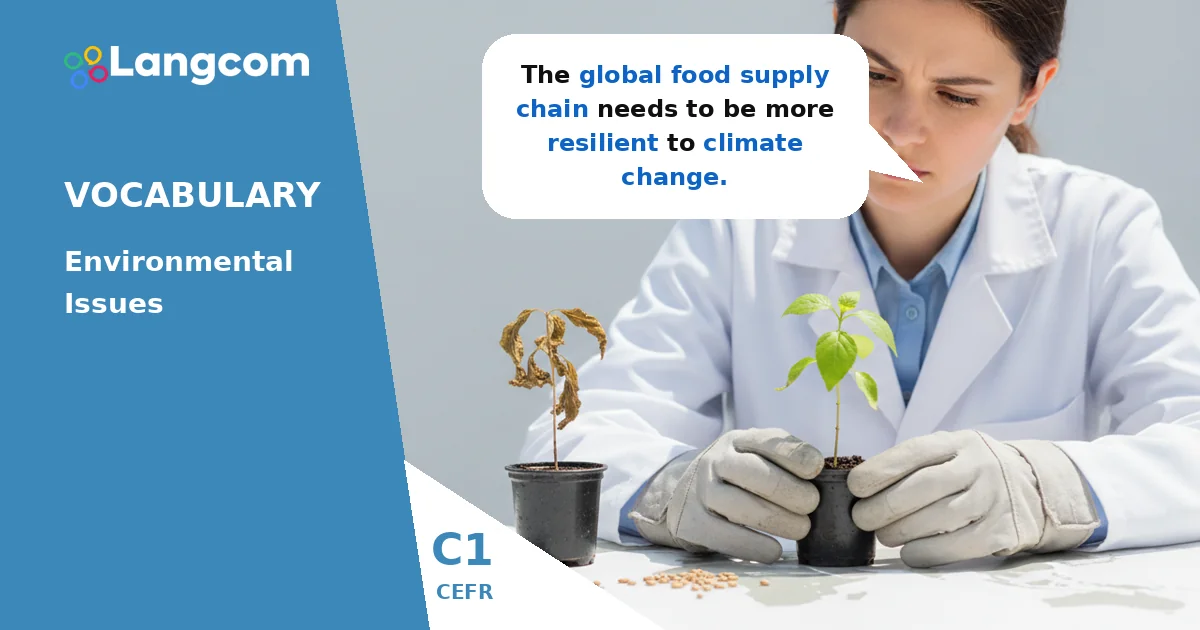
- The global food supply chain needs to be more resilient to climate change.
- Many developing countries face a severe food shortage due to drought.
- Wheat and rice are essential grains in the human diet.
- Breakfast cereals are often fortified with vitamins and minerals.
- Eating enough fiber is crucial for a healthy digestive system.
- She prefers wholesome, home-cooked meals over fast food.
- Spinach is a highly nutritious vegetable, rich in iron.
- Raising livestock contributes significantly to greenhouse gas emissions.
- The farmer has a large herd of cattle that produces milk for cheese.
- Emergency aid included basic foodstuffs like flour and cooking oil.
- Avocado is often marketed as a superfood due to its healthy fats.
- Reducing meat consumption can have positive environmental impacts.
- After a long hike, I had a huge appetite for dinner.
练习
西班牙语母语者常犯的错误
Spanish speakers sometimes confuse similar concepts or use direct translations that don't quite fit in English at a C1 level.
- Grains vs. Cereals: In Spanish, 'cereales' can refer to both the plants (like wheat) and breakfast cereals. In English, grains specifically means the seeds (like rice, wheat, corn kernels). Cereals can mean the plants that produce grains, or the processed food eaten for breakfast. So, 'wheat' is a grain, and 'cornflakes' are a cereal.
- Wholesome vs. Nutritious: Both relate to health, but nutritious (similar to 'nutritivo') focuses on specific nutrients. Wholesome (similar to 'sano' or 'saludable' but with a broader sense) implies naturalness, purity, and overall goodness for health and well-being, often without artificial additives. A nutritious meal might not always feel wholesome if it's highly processed, but a wholesome meal is usually nutritious.
- Livestock vs. Cattle: 'Ganado' in Spanish covers all farm animals, which is livestock in English. 'Vacuno' in Spanish specifically refers to cows/bulls, which is cattle in English. Remember, cattle is a type of livestock.
常见问题
两者之间的主要区别是什么? grains 和 cereals?
Grains refers specifically to the small, hard seeds of plants like wheat, rice, and corn. Cereals can refer to the plants themselves (like cereal crops) or to processed food products made from grains, often eaten for breakfast.
Can appetite refer to more than just food?
是的,, appetite can be used metaphorically. For example, you can talk about a country's appetite for oil, or a student's appetite for knowledge, meaning a strong desire or craving for something.
Why is wholesome considered a C1 word?
Wholesome is a C1 word because it conveys a nuanced meaning beyond simply 'healthy'. It implies a sense of naturalness, purity, and overall goodness, often in contrast to processed or artificial things. Its usage requires a deeper understanding of connotations.
How can I practice using these new words?
To practice, try to integrate these words into your daily English conversations or writing. Read articles about global food issues and identify how these words are used. You can also try summarizing news reports using this new vocabulary.




0 条评论