

Why Is Environmental Vocabulary Important?
Environmental issues are often in the news and are a common topic for discussions. Learning the right vocabulary helps you understand these important global topics.
With this vocabulary, you can express your opinions clearly and participate in conversations about how we can care for our planet.
Understanding Key Environmental Terms
-
The environment: This refers to the natural world around us, including the land, air, and water, and all the plants and animals.
-
Pollution: This is the presence of harmful substances or things in the environment. It can be air pollution (from cars or factories), water pollution (from waste), or even noise pollution.
-
Climate change: This describes long-term shifts in temperatures and weather patterns globally. It is mainly caused by human activities.
-
Wildlife: This term refers to animals, birds, and plants living in their natural habitat.
-
Endangered: When an animal or plant species is endangered, it means there are very few of them left, and they are at risk of disappearing forever.
Actions to Help Our Planet
-
Protect: To protect something means to keep it safe from harm or danger. For example, we protect forests.
-
Save: This word is similar to protect, often meaning to rescue something from danger or to prevent it from being lost. We can save endangered animals.
-
Prevent: To prevent something means to stop it from happening. We try to prevent pollution.
-
Recycle: This means to process used materials (like paper, plastic, or glass) so they can be used again. It helps reduce waste.
-
Damage: This verb means to cause harm or injury to something, making it less good or useful. For example, litter can damage the environment.
-
Conservation projects: These are organized activities or plans designed to protect natural resources, wildlife, or the environment.
Being Environmentally Friendly
When someone or something is environmentally friendly, it means they do not harm the environment, or they even help it. For example, using less water or walking instead of driving are environmentally friendly actions.
| Word | 类型 | Simple Meaning |
|---|---|---|
| The environment | Noun | Our natural world |
| Pollution | Noun | Harmful substances in nature |
| Climate change | Noun | Long-term weather shifts |
| Wildlife | Noun | Animals and plants in nature |
| Endangered | Adjective | At risk of disappearing |
| Protect | Verb | Keep safe from harm |
| Save | Verb | Keep safe; rescue |
| Prevent | Verb | Stop something from happening |
| Recycle | Verb | Process materials for reuse |
| Damage | Verb | Cause harm to |
| Environmentally friendly | Adjective | Good for the environment |
示例
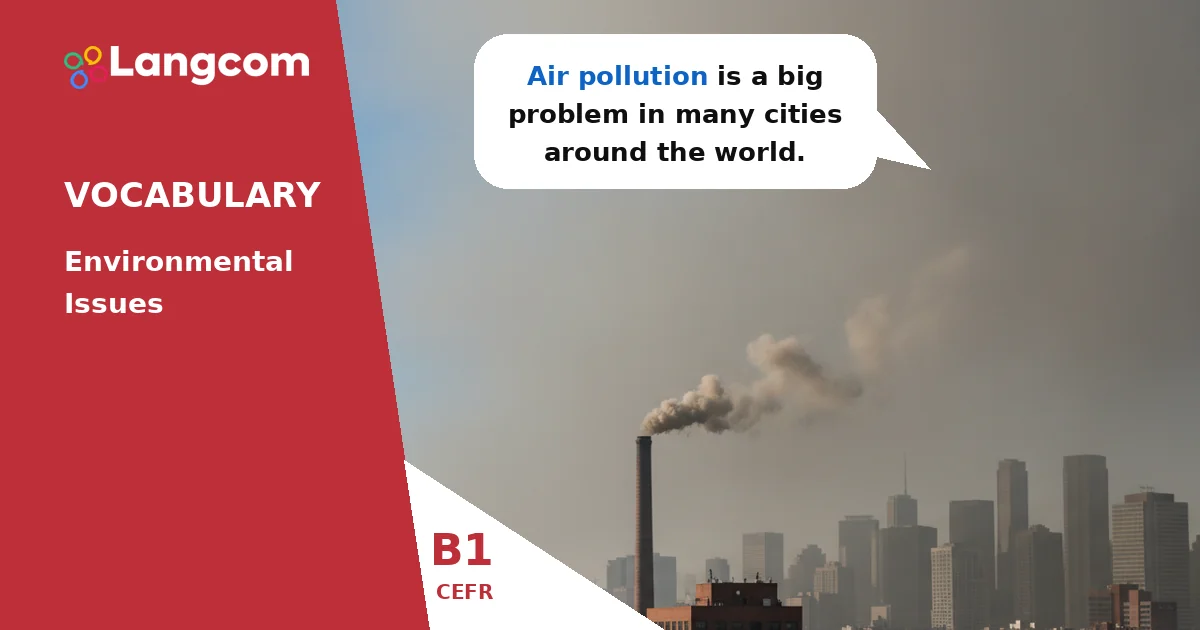
- Air pollution is a big problem in many cities around the world.
- Many organizations work hard to protect endangered wildlife.
- We can help prevent climate change by using less energy.
- It's important to recycle plastic, glass, and paper to save the environment.
- New roads can sometimes damage the natural environment.
- Being environmentally friendly means making choices that don't harm the planet.
练习
西班牙语母语者常犯的错误
1. Save for 'to keep' vs. 'to rescue/preserve': 讲西班牙语的人有时会使用 save when they mean 'to keep' an object. In English, for objects, use keep. For the environment, save means to rescue or preserve.
-
错误: I save my old clothes in a box.
-
右: I keep my old clothes in a box.
-
右: We need to save the rainforests from destruction.
2. Environmental vs. Environmentally friendly:
-
Environmental is an adjective meaning 'relating to the environment'. For example, environmental problems.
-
Environmentally friendly is an adjective phrase meaning 'good for the environment' or 'not harmful to the environment'.
-
错误: This car is environmental.
-
右: This car is environmentally friendly.
-
右: Environmental laws help protect nature.
常见问题
What does endangered mean?
Endangered means that a type of animal or plant is at serious risk of disappearing completely from the world. There are very few of them left.
Why is this vocabulary important for B1 learners?
At B1 level, you should be able to discuss a wider range of topics, including global issues. This vocabulary allows you to understand and talk about environmental news, documentaries, and conversations with native speakers.
How can I use these words in an English exam?
Many B1 English exams include tasks where you might need to write or speak about current events or social issues. Using this vocabulary correctly will help you express complex ideas about climate change, pollution, , 和 conservation effectively.
What is the difference between protect 和 prevent?
Protect means to keep something safe from harm that already exists or is possible. Prevent means to stop something from happening in the first place. For example, we prevent pollution from starting, and we protect animals from hunters.



0 条评论