

英语中的问题主要有哪两种类型?
在英语中,我们通过提问来获取信息或确认某事。主要分为两种类型:
-
Yes/No Questions: 这些问题要求回答“是”或“否”。例如, Do you like pizza? (答案: Yes, I do. 或 No, I don’t.)
-
Wh- Questions: 这些问题要求提供具体信息。它们通常以“疑问词”开头,例如 What, Where, When, Why, Who, Whose, 或 How. 例如,, Where do you live? (答案: I live in Madrid.)
如何构成“是/否”问题?
要制作一个 Yes/No question, 我们通常会改变句子的词序。我们将助动词(如 do, does, have, has) 或动词 be (am, is, are) 放在主语前面。
-
与动词 be (am, is, are):
-
声明: You are happy.
-
问题: Are you happy?
-
声明: She is a student.
-
问题: Is she a student?
-
-
使用 have got:
-
声明: You have got a car.
-
问题: Have you got a car?
-
声明: He has got a new phone.
-
问题: Has he got a new phone?
-
-
关于情态动词(can, must, should, (等):
-
声明: You can speak English.
-
问题: Can you speak English?
-
声明: I must go now.
-
问题: Must I go now?
-
-
与其他动词搭配时(使用 do/does):
-
对于其他大多数现在简单时态的动词,我们使用 do 或 does 在主语之前。主要动词保持原形。
-
声明: You like coffee.
-
问题: Do you like coffee?
-
声明: She works here.
-
问题: Does she work here?
-
如何构成“Wh-”疑问句?
Wh- questions 询问具体细节。这些问题总是以"疑问词"开头(或者 How),后接助动词或 be,然后是主语,最后是主要动词(如果有的话)。
-
常见的“Wh-”开头的词: What (事物、行为), Where (地点), When (时间), Why (原因), Who (人), How (方式、状况)。
-
结构: Wh- word + auxiliary verb / be + subject + main verb?
-
包含以下内容的示例: be:
-
What is your name?
-
Where are you from?
-
How old is he?
-
-
包含以下内容的示例: have got:
-
What have you got in your bag?
-
Who has got my pen?
-
-
带情态动词的例句(can):
-
What can I do for you?
-
Where can we meet?
-
-
其他动词的例句(使用 do/does):
-
What do you do?
-
Where does she work?
-
When do they finish?
-
如何通过提问来提出建议?
有时我们提出问题并非为了获取信息,而是为了提出一个想法或建议一项活动。这类问题在日常英语中很常见。
-
Why don't we...? (后接动词的原形)
-
Why don't we go to the cinema tonight?
-
Why don't you ask your teacher?
-
-
How about...? (后接一个以……结尾的名词或动词) -ing)
-
How about a coffee?
-
How about going for a walk?
-
-
What about...? (类似于 How about...?)
-
What about tomorrow morning?
-
What about watching a movie?
-
| 题目类型 | 动词 | 结构 | 示例 |
|---|---|---|---|
| Yes/No | Be | Be + Subject + ...? | Are you busy? |
| Yes/No | Have got | Have/Has + Subject + got + ...? | Have you got a pen? |
| Yes/No | Modal (can) | Modal + Subject + Base Verb + ...? | Can I help you? |
| Yes/No | Other verbs | Do/Does + Subject + Base Verb + ...? | Do you play sports? |
| Wh- | Be | Wh- word + Be + Subject + ...? | Where is he? |
| Wh- | Have got | Wh- word + Have/Has + Subject + got + ...? | What has she got? |
| Wh- | Modal (can) | Wh- word + Modal + Subject + Base Verb + ...? | When can we meet? |
| Wh- | Other verbs | Wh- word + Do/Does + Subject + Base Verb + ...? | Why do you study English? |
示例
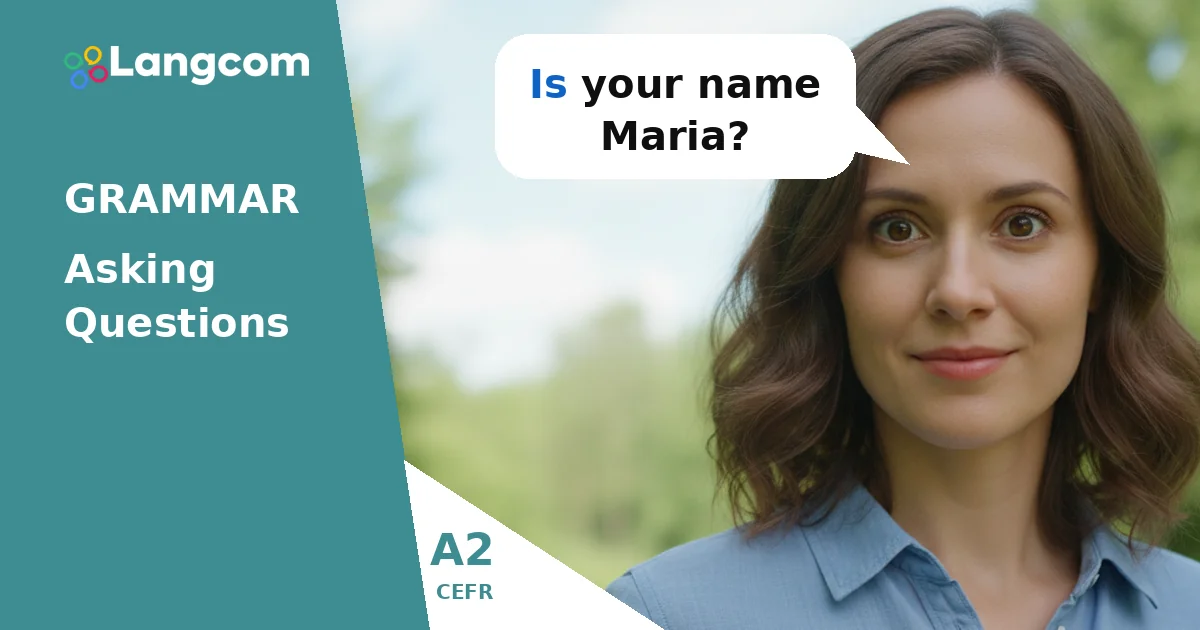
- Is your name Maria?
- Do you live in a big city?
- Has he got a pet?
- Can she play the guitar?
- What time is it?
- Where do you usually go on holiday?
- When does the shop open?
- Why are you learning English?
- How about visiting the museum?
练习
西班牙语母语者常犯的错误
讲西班牙语的人在用英语提问时,有时会在词序上出错。请记住以下关键区别:
-
词序错误(直接从西班牙语翻译而来): 在西班牙语中,人们常会用上扬的语调说"你开心吗?"。而在英语中,则必须改变词序。
-
错误: You are happy?
-
右: Are you happy?
-
-
Missing do/does: For most verbs in the present simple (except be, have got, and modal verbs), you need do 或 does.
-
错误: You like coffee?
-
右: Do you like coffee?
-
错误: She works here?
-
右: Does she work here?
-
-
Incorrect placement of auxiliary verb in Wh- questions: The auxiliary verb always comes 之后 the Wh-word and 之前 the subject.
-
错误: Where you live?
-
右: Where do you live?
-
错误: What is your name is? (Redundant 'is')
-
右: What is your name?
-
常见问题
“是/否”问题和“疑问词”问题的主要区别是什么?
Yes/No questions ask for a simple "yes" or "no" answer, like Are you ready? Wh- questions 询问具体信息时,可以先用以下词语开头: What, Where, 或 When, ,例如,, What is your favourite colour?
为什么在某些问题中需要使用'do'或'does'?
我们使用 do 或 does as auxiliary verbs for most verbs in the present simple tense when forming questions (and negatives). For example, Do you like chocolate? 或 Does she speak French? We do not use them with be, have got, or modal verbs like can.
学习这些问题将如何帮助我备考A2 Key考试?
在 A2 Key(KET)考试中,你需要在口语部分正确地提问和回答问题。 在第2部分(合作任务)或第1部分(个人问题)中,你可能需要询问信息(“谁、什么、哪里、什么时候、为什么、如何”等疑问句)或确认细节(是/否问题)。良好的提问能力能体现你具备有效的沟通能力。
我应该掌握哪些常见的“Wh-”词?
The most common Wh- words 是 What (for things/actions), Where (for places), When (for time), Why (for reasons), Who (for people), and How (for manner or condition).



0 条评论