

学习基本的交通词汇,有助于你谈论自己的日常出行方式。. 诸如……之类的词 car, bus, train, , 和 plane 对于A1级英语学习者来说,这些内容非常重要。你可以用它们来描述日常通勤、计划旅行,或者理解关于出行方式的简单对话。例如,你可以这样说:, I go to work by bus 或 We travel by plane for holidays. 掌握这些词汇,将有助于你更轻松地表达旅行计划并理解路线指引。本课将教你七个常见的交通词汇,并演示如何在简单句中使用它们。让我们出发吧!
常见的出行方式有哪些?
出行方式多种多样。我们用不同的词语来指代不同的交通方式。.
- A car 是一种有四个轮子的车辆。许多人使用一辆 car 去上班或拜访朋友。.
- A bus 是一种可搭载众多乘客的大型车辆,通常沿固定路线行驶。你可以乘坐一辆 bus 在城市里出行。.
- A train 是一种在铁轨上行驶的长型车辆。人们使用一种 train 适用于城市间的长途旅行。.
- A plane 是一种能在天空中飞行的交通工具。我们乘坐它出行 plane 去其他国家。.
- A boat 是一种在水面上行驶的交通工具。你可以乘坐一艘 boat 在湖上或海上。.
- A bike 是一辆自行车。用脚蹬它。它适合短途出行和锻炼身体。.
- A motorbike 是一种带有两个车轮和发动机的车辆。它的速度比……更快 bike.
这些词在句子中该怎么用?
我们经常使用介词 by 用表示交通方式的词语来描述我们的出行方式。.
- 当你开车出行时,你会说 by car, by bus, by train, by plane, by boat, 或 by motorbike.
- 对于一个 bike (自行车),我们通常说 by bike 或 on my bike.
- 如果你走路,你会说 on foot.
请记住,针对每种交通工具都要使用正确的词汇。.
谈谈你的日常出行
你可以用这些词来谈论你的日常生活或计划。.
- 询问某人如何出行: How do you go to school?
- 回答如下: I go to school by bus. 或 I go to school on my bike.
- 谈谈一次旅行: We will travel by train to the mountains.
- 谈谈一个假期: They went to Spain by plane.
| 英语单词 | 含义 / 传播方式 |
|---|---|
| car | A vehicle with four wheels, travels on roads. |
| bus | A large vehicle for many people, travels on roads. |
| train | A vehicle on railway tracks, travels on land. |
| plane | A vehicle that flies in the air. |
| boat | A vehicle that travels on water. |
| bike | A bicycle, you pedal it, travels on roads/paths. |
| motorbike | A two-wheeled vehicle with an engine, travels on roads. |
示例
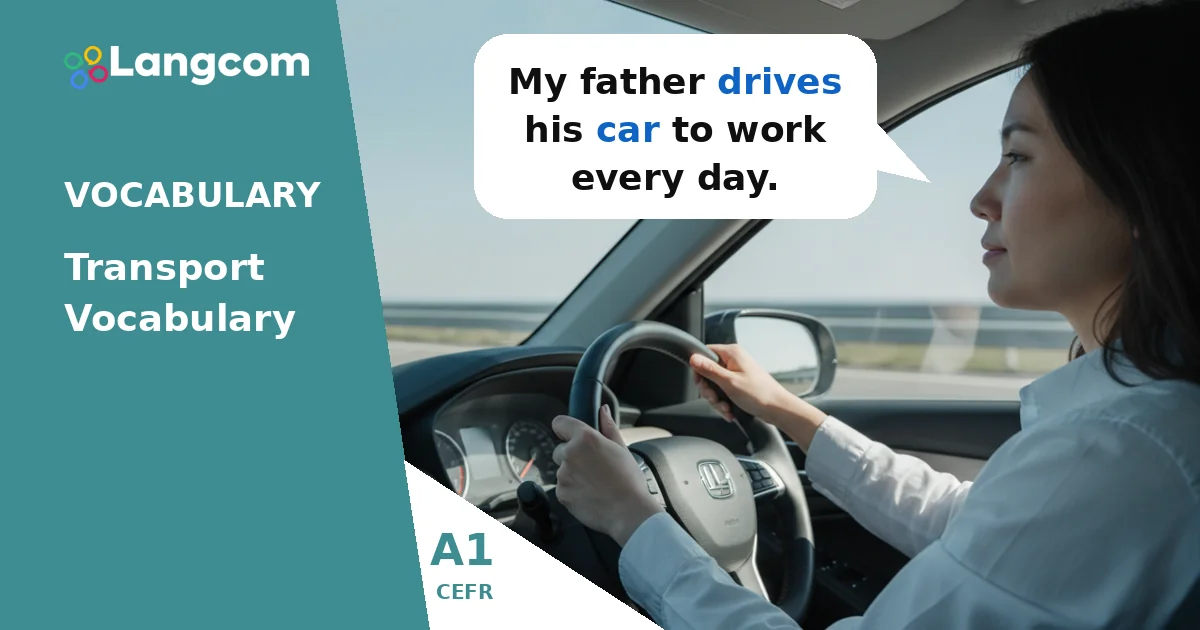
- My father drives his car to work every day.
- I take the bus to the city center.
- The train leaves at 7 o'clock in the morning.
- We fly by plane when we visit my grandparents.
- Let's take a boat trip on the lake.
- She rides her bike to the park.
- He has a fast motorbike.
练习
西班牙语母语者常犯的错误
讲西班牙语的人有时会犯以下错误:
- 令人困惑 bike 和 motorbike: A bike 是一辆自行车(需要踩踏板)。A motorbike 装有发动机。.
正确: I ride my bike to school.
错误: I ride my motorbike to school (如果你指的是自行车的话)。. - Using 'auto' instead of car: While 'auto' is understood, car 在日常英语中要常见得多。.
正确: I bought a new car.
较少见: I bought a new auto.
常见问题
'自行车'和'摩托车'有什么区别?
A bike 是一种用脚蹬的自行车。A motorbike 这是一种带有两个车轮和发动机的交通工具,因此速度要快得多,而且无需踩踏板。.
“我靠步行旅行”该怎么说?
当你步行去某个地方时,你会说 on foot. 例如,, I go to the shop on foot.
我可以用'在公交车上'来代替'坐公交车'吗?
是的,你可以这么说 on the bus 或 by bus. 这两种说法都是正确的。. On the bus 侧重于在公交车内的场景,而 by bus 侧重于运输方式。.




0 条评论