

Why is Animal Vocabulary Important for B2 English?
Expanding your vocabulary, especially in specific topics like animals, is vital for reaching a B2 level.
- It helps you understand a wider range of English texts and conversations.
- You can describe animals in detail, which is useful for speaking and writing tasks.
- This vocabulary is often found in B2 First (FCE) exam sections, such as Reading and Use of English, or in Speaking Part 2.
What are Common Animal Coverings?
Animals have different coverings to protect them and help them survive. Here are some key terms:
- Fur: This is the soft, thick hair that covers the bodies of many mammals, like cats, dogs, and bears. The cat's soft fur felt warm.
- Feathers: These are the light, flat growths that cover a bird's body, helping it to fly and stay warm. The bird preened its colourful feathers.
- Scales: These are small, thin, hard plates that cover the skin of fish, reptiles (like snakes and lizards), and some insects. The fish had shiny, silver scales.
- Skin: This is the outer layer of tissue that covers the body of an animal or human. While all animals have skin, we use this term especially for animals without fur, feathers, 或 scales, like amphibians. The frog's skin was smooth and green.
What are Specialized Animal Limbs and Appendages?
Animals have various body parts adapted for movement and other functions:
- Wings: These are the parts that birds, bats, and insects use for flying. The eagle spread its powerful wings and soared.
- Tail: This is the part that extends from the rear of an animal's body. It can be used for balance, communication, or even grasping. The dog wagged its tail happily.
- Paw: This is the foot of an animal, especially a mammal with claws or nails, like a cat, dog, or bear. The bear left large paw prints in the snow.
- Web (或 webbed foot): This refers to the skin connecting the toes of some animals, like ducks, frogs, or otters, which helps them swim. Ducks have webbed feet for swimming efficiently.
What are Unique Animal Features?
Some animals have very distinct features:
- Beak: This is the hard, pointed mouth of a bird or turtle. It is used for eating, grooming, and defense. The parrot used its strong beak to crack the nut.
- Horn: This is a hard, pointed growth on the head of some animals, such as cows, rhinos, or deer. The bull lowered its horns before charging.
| Vocabulary Item | Definition and Example Animal |
|---|---|
| Fur | Soft, thick hair covering mammals (e.g., cats, bears) |
| Feathers | Light growths covering birds (e.g., eagles, parrots) |
| Scales | Small, hard plates covering fish and reptiles (e.g., fish, snakes) |
| Skin | Outer layer of tissue for all animals (e.g., elephants, frogs) |
| Wings | Parts used for flying (e.g., birds, bats, insects) |
| Tail | Rear appendage for balance or communication (e.g., dogs, monkeys) |
| Paw | Foot of a mammal with claws/nails (e.g., dogs, bears) |
| Web (webbed foot) | Skin between toes for swimming (e.g., ducks, frogs) |
| Beak | Hard, pointed mouth of a bird or turtle (e.g., parrots, eagles) |
| Horn | Hard growth on the head of some animals (e.g., cows, rhinos) |
示例
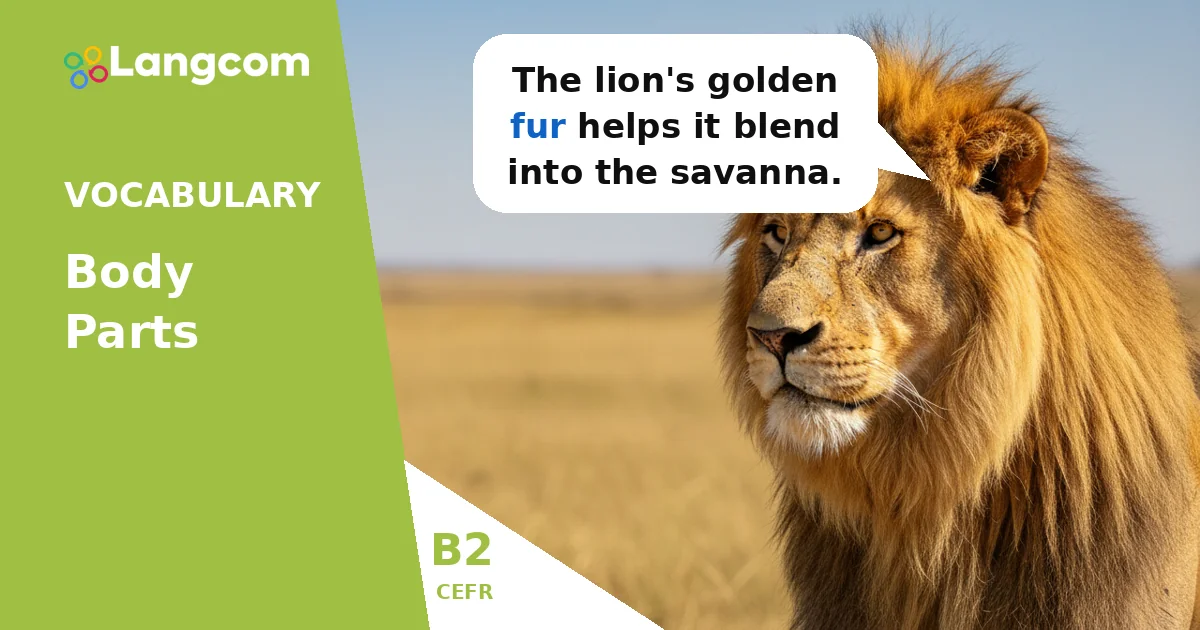
- The lion's golden fur helps it blend into the savanna.
- Many birds migrate using their strong wings.
- A snake's scales allow it to move smoothly across the ground.
- The monkey used its long tail to hang from the branch.
- The duck paddled quickly with its webbed feet.
- The owl turned its head, its feathers ruffled by the wind.
- Rhinos are known for the large horn on their snout.
- The dog offered its paw to shake hands.
- The eagle uses its sharp beak to tear its prey.
- Elephants have thick skin to protect them from the sun.
练习
西班牙语母语者常犯的错误
令人困惑 Skin, Fur, , 和 Hair
Spanish speakers might use 'piel' for both human and animal skin, and 'pelo' for both human hair and animal fur. In English, we make a distinction:
- 使用 skin for the outer covering of humans and animals (e.g., human skin, elephant skin).
- 使用 fur specifically for the dense, soft hair on many mammals (e.g., cat's fur, bear's fur).
- 使用 hair for human hair, and sometimes for individual strands on animals, but not the whole covering (e.g., my hair, a single hair from the dog).
使用 Legs 而不是 Paws
While animals do have legs, the term paw refers specifically to the foot of certain animals like dogs, cats, and bears.
- 正确: The dog hurt its paw. (referring to the foot)
- Less precise: The dog hurt its leg. (could be any part of the leg, not specifically the foot)
常见问题
What is the difference between 'fur' and 'hair' for animals?
For animals, fur refers to the dense, soft covering of hair on mammals like cats or rabbits. Hair can refer to individual strands or the general covering of animals that don't have fur, like horses (mane and tail hair). Generally, use fur for the soft, thick coat.
Do all animals have 'skin'?
Yes, all animals have skin as their outer protective layer. However, we often use more specific terms like fur, feathers, 或 scales to describe what covers the skin of different animal types.
Why is this vocabulary important for the B2 First (FCE) exam?
This vocabulary is important for the B2 First (FCE) exam because it can appear in various sections. For example, in the Reading and Use of English paper, you might encounter texts about nature or animals. In the Speaking paper, you might need to describe an animal or discuss environmental topics, where using precise vocabulary like wings, beak, 或 scales demonstrates a higher level of fluency and accuracy.
What is a 'webbed foot'?
A webbed foot is a foot with webs, which are pieces of skin connecting the toes. Animals like ducks, frogs, and otters have webbed feet, which help them swim more effectively in water.




0 条评论