

What Are Collocations and Why Are They Important?
Collocations are like word friends. Certain words prefer to be together. When you use these natural combinations, your English sounds correct and fluent.
- Using collocations makes your English sound more natural, like a native speaker.
- They help you understand and express ideas more clearly.
- For the B2 First (FCE) exam, knowing collocations is vital for the Use of English paper, especially for tasks like multiple-choice cloze and key word transformations.
- Learning them expands your vocabulary in a practical way.
Common Types of Collocations
Collocations come in many forms. Here are some of the most common types you will encounter at B2 level:
- Verb + Noun: A verb and a noun that frequently appear together. For example, “make a mistake” 或 “take a break”.
- Adjective + Noun: An adjective that describes a specific noun. For instance, “heavy traffic” 或 “strong accent”.
- Adverb + Adjective: An adverb that intensifies or modifies an adjective. For example, “fully aware” 或 “perfectly normal”.
- Noun + Noun: Two nouns that often go together to form a common phrase. For example, “a round of applause” 或 “a sense of humour”.
- Verb + Adverb: A verb followed by an adverb that describes how the action is performed. For example, “speak fluently” 或 “drive carefully”.
Verb Collocations: Do, Make, Have, Keep, Break, Spend, Taste
Many common verbs combine with specific nouns to create collocations. It is important to learn these as fixed phrases.
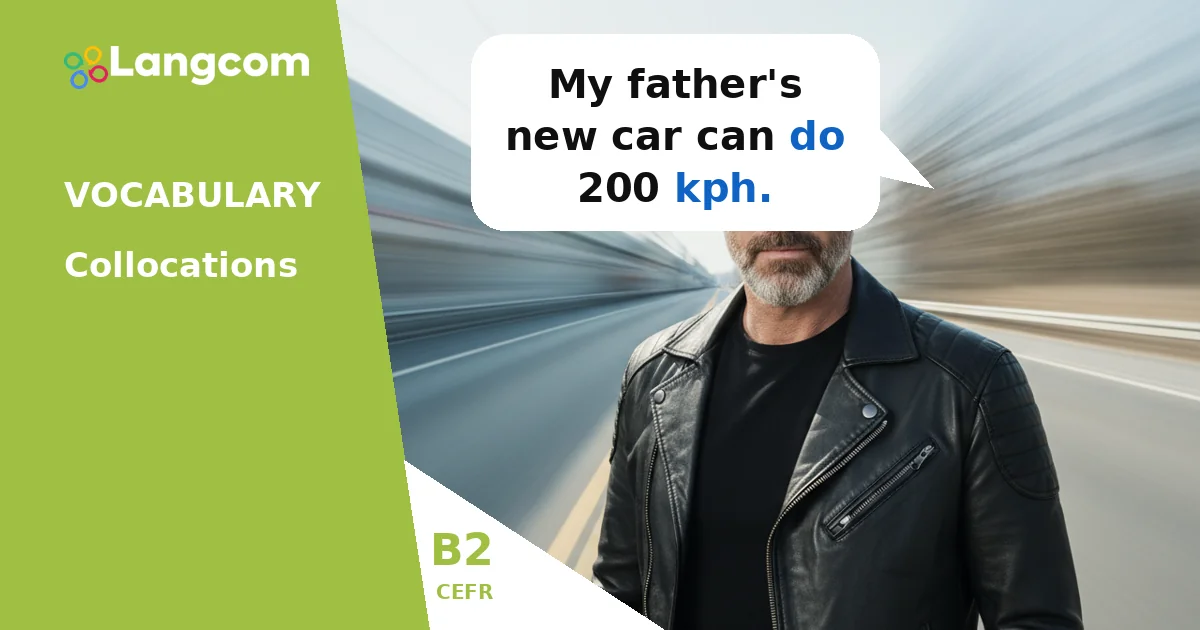
- Do: 我们使用 do for activities, tasks, or general actions. For example, “do homework”, “do business”, “do a favour”. Also, for speed or distance, like “My car does 200 kph.”
- Make: 我们使用 make for creating, producing, or causing something. For example, “make a decision”, “make a noise”, “make a fortune”.
- Have: 我们使用 have for experiences, meals, or relationships. For example, “have a holiday”, “have lunch”, “have a good time”.
- Keep: This verb often means to continue or to hold. For example, “keep a secret”, “keep a promise”, “keep awake”.
- Break: This verb often means to not follow a rule or agreement. For example, “break a promise”, “break the law”.
- Spend: 我们使用 spend for time or money. For example, “spend time”, “spend money”, “spend a fortune”.
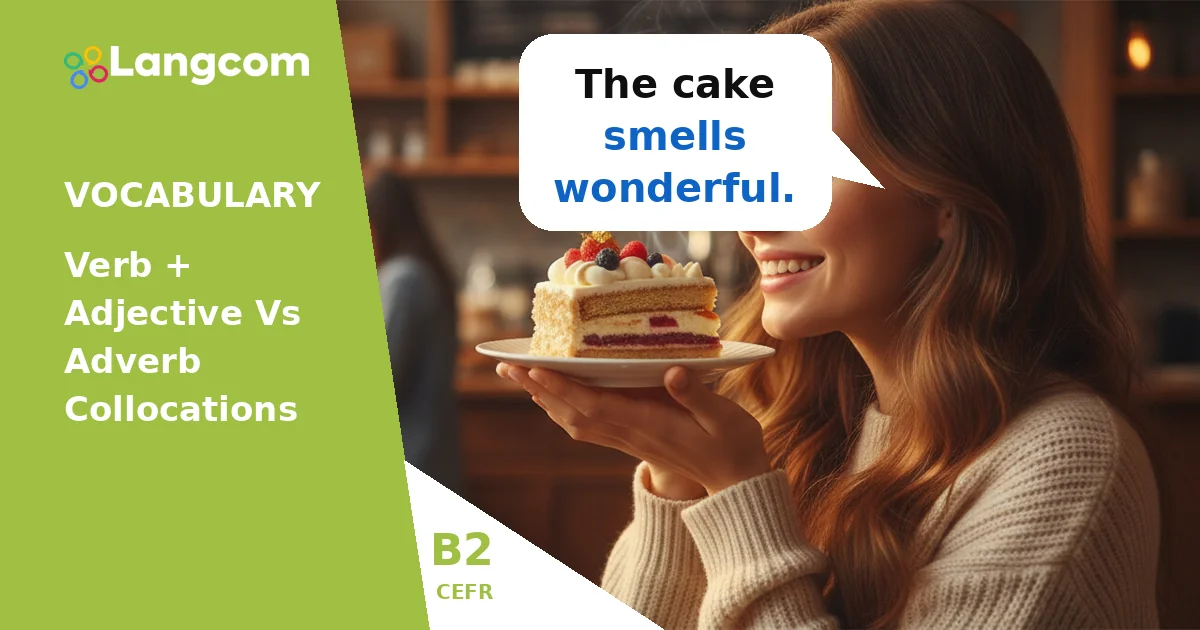
- Taste: This verb refers to the flavour of food or drink. For example, “This ice cream tastes good.”
Adverb-Adjective Collocations
These collocations use an adverb to give more information about an adjective. They add intensity or precision.
- Perfectly: Often used with adjectives like “normal”, “acceptable”, “hideous”. 例如,, “The house was a perfectly hideous pink colour.”
- Highly: Used with adjectives like “recommended”, “unlikely”, “successful”. 例如,, “This restaurant is highly recommended.”
- Completely: Used with adjectives like “different”, “satisfied”, “wrong”. 例如,, “I am completely satisfied with the service.”
- Bitterly: Often used with negative adjectives related to feelings, like “disappointed”, “cold”. 例如,, “She was bitterly disappointed by the news.”
| 类型 | Collocation | Meaning/Example |
|---|---|---|
| Verb + Noun | make an effort | To try hard: You need to make an effort to pass the exam. |
| Verb + Noun | take a risk | To do something dangerous: He took a big risk by starting his own business. |
| Adjective + Noun | strong accent | A very noticeable way of speaking: She has a very strong accent. |
| Adjective + Noun | heavy rain | A lot of rain: We had heavy rain all day. |
| Adverb + Adjective | fully aware | Knowing completely: I am fully aware of the risks. |
| Adverb + Adjective | bitterly cold | Extremely cold: It was bitterly cold outside. |
| Noun + Noun | traffic jam | Many cars stopped on the road: I was stuck in a traffic jam for an hour. |
| Noun + Noun | sense of humour | Ability to find things funny: He has a great sense of humour. |
示例
- My father's new car can do 200 kph.
- I don't like people who break their promises.
- We're having a holiday in South America this year.
- Maximo made a fortune from computer software.
- The music from the festival kept me awake for ages last night.
- This ice cream tastes really good.
- Liliana spends too much time at her friend's house.
- It's perfectly normal to feel nervous before an exam.
练习
西班牙语母语者常犯的错误
Spanish speakers often make mistakes with collocations by translating directly from Spanish. This can lead to unnatural-sounding English.
- Do vs. Make: This is a very common area for errors.
- 错误: I need to do a decision.
- 正确: I need to make a decision. (Spanish: tomar una decisión)
- 错误: Can you make me a favour?
- 正确: Can you do me a favour? (Spanish: hacer un favor)
- Ask vs. Make a question:
- 错误: I want to make a question.
- 正确: I want to ask a question. (Spanish: hacer una pregunta)
- Adjective + Noun combinations:
- 错误: I like strong tea. (Meaning: tea with a lot of sugar or milk, not necessarily strong in flavour)
- 正确: I like strong coffee. (Meaning: coffee with intense flavour) / I like black coffee. (If referring to coffee without milk)
- 错误: Heavy wind.
- 正确: Strong wind. (Spanish: viento fuerte)
常见问题
What is the easiest way to learn collocations?
The easiest way is to learn words in phrases, not individually. When you learn a new noun, always try to find a verb or adjective that commonly goes with it. For example, don't just learn “rain”; learn “heavy rain” 或 “light rain”. Read a lot and pay attention to how words are used together.
Are collocations important for the B2 First (FCE) exam?
Yes, collocations are very important for the B2 First (FCE) exam. You will find them in the Use of English paper, especially in Part 1 (Multiple-choice cloze) and Part 4 (Key word transformations). Knowing common collocations helps you choose the correct word and transform sentences accurately, showing a higher level of English proficiency.
Can I just translate collocations from my native language?
No, direct translation is usually a bad idea for collocations. Words that go together in Spanish might not go together in English. For example, in Spanish you “take a decision” (tomar una decisión), but in English, you “make a decision”. Always learn the English collocation as a complete unit.
How can I practice collocations effectively?
Practice by reading English texts, listening to podcasts, and watching movies. Pay attention to how words combine. Keep a notebook for new collocations you find. Try to use them in your speaking and writing. Online exercises and flashcards can also be very helpful.


0 条评论