

Что такое глаголы, выражающие отчет, и почему они важны?
Глаголы пересказа — это слова, которые мы используем, чтобы передать то, что кто-то сказал, подумал или почувствовал. Они позволяют нам делиться информацией, не прибегая к прямой речи.
Например, вместо того, чтобы сказать: Maria said, ‘I’m very happy.’, можно использовать глагол, обозначающий действие по составлению отчёта: Maria said that she was very happy.
- Благодаря им ваш английский звучит более естественно и изысканно.
- Они помогают вам подготовить краткое изложение длинных разговоров или текстов.
- Они необходимы для написания научных работ и официального общения.
✍️ Не знаете, на каком уровне вы находитесь?
Пройдите наш бесплатный тест на определение уровня и получите индивидуальные рекомендации от сертифицированных экзаменаторов Кембриджского университета.
Пройдите наш БЕСПЛАТНЫЙ тест на определение местаРаспространенные конструкции с глаголами сообщения
Различные глаголы, выражающие действие, требуют разных грамматических конструкций после себя. Важно выучить эти конструкции, чтобы правильно их использовать.
- Verb + (that) + clause
После многих глаголов может следовать that и предложное словосочетание (подлежащее + сказуемое). Слово that часто является необязательным.
Примеры: agree, believe, complain, discover, find out, insist, promise, realise, say, state.
He stated that he would stay with us.
She complained that the service was slow. - Verb + object + (that) + clause
Некоторые глаголы требуют дополнения (например, me, him, her) перед that-clause.
Примеры: inform, tell, warn, assume.
We informed them that it was ready.
He warned me that the road was dangerous. - Verb + to + infinitive
После некоторых глаголов стоит to и основная форма глагола.
Примеры: agree, promise, refuse.
They refused to speak with us.
I promised to call her later. - Verb + object + to + infinitive
Эти глаголы требуют наличия дополнения перед to-infinitive.
Примеры: ask, order, tell, remind.
She ordered me to leave.
He reminded us to bring our passports. - Verb + gerund (-ing)
Герундий (то есть -ing (форма глагола) стоит после этих глаголов.
Примеры: admit, deny, regret, suggest.
He admitted taking the money.
They suggested going for a walk. - Verb + preposition + gerund (-ing)
После некоторых глаголов следует определённый предлог, а затем герундий.
Примеры: apologise for, insist on.
She apologised for being late.
He insisted on paying for dinner.
Выбор подходящего глагола отчета
Выбор глагола, с помощью которого вы передаете информацию, может изменить нюанс или смысл исходного сообщения.
- Например, He said he would help. является нейтральным.
- He promised to help. свидетельствует о приверженности делу.
- He offered to help. позволяет предположить, что он вызвался добровольцем.
При выборе глагола пересказа всегда учитывайте намерение исходного говорящего. Это сделает вашу косвенную речь более точной и выразительной.
| Глагол | Шаблон | Пример |
|---|---|---|
| Say | + (that) clause | She said that she was busy. |
| Tell | + object + (that) clause | He told me that he would be late. |
| Agree | + to infinitive / + (that) clause | They agreed to help. / They agreed that it was a good idea. |
| Suggest | + gerund / + (that) clause | I suggested going out. / I suggested that we go out. |
| Admit | + gerund | He admitted breaking the vase. |
| Ask | + object + to infinitive | She asked him to wait. |
| Apologise for | + gerund | They apologised for the delay. |
Примеры
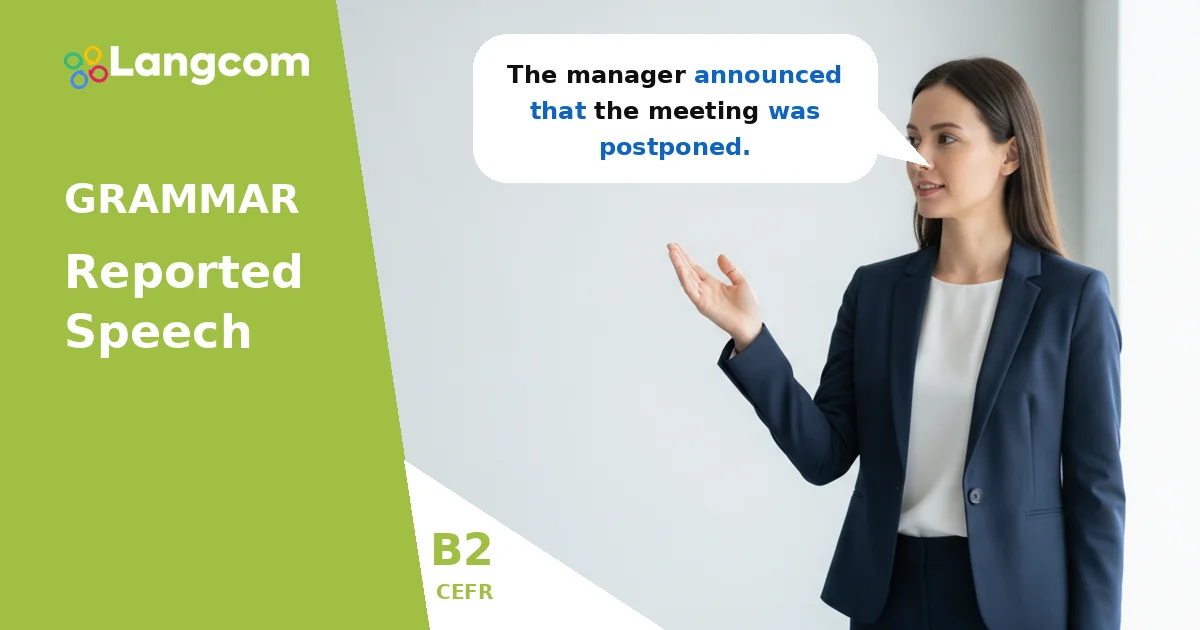
- The manager announced that the meeting was postponed.
- My friend advised me to study harder for the exam.
- She denied stealing the documents from the office.
- They agreed to meet at the cafe at 3 PM.
- He confessed to having eaten all the chocolate.
Практика
Готовы получить сертификат?
Курс Langcom готовит студентов к сдаче экзаменов Cambridge, IELTS, TOEFL, DELE, SIELE и Michigan.
Начните работу с LangcomРаспространенные ошибки у носителей испанского языка
Люди, говорящие по-испански, часто допускают определённые ошибки при использовании глаголов, обозначающих действие:
- Использование tell без дополнения: В испанском языке глагол 'decir' может употребляться без косвенного дополнения. В английском языке, tell почти всегда требует объекта.
Неправильно: She told that she was tired.
Правильно: She told me that she was tired. - Использование to + infinitive после suggest:
Неправильно: He suggested to go out.
Правильно: He suggested going out. или He suggested that we go out. - Сбивающее с толку say и tell: Помните, say за которым обычно следует that + clause или to + object. Tell за которым обычно следует object + that + clause или object + to + infinitive.
Неправильно: She said me that she was busy.
Правильно: She told me that she was busy. или She said that she was busy.
Часто задаваемые вопросы
В чём заключается основное различие между глаголами 'say' и 'tell'?
Основное различие заключается в их грамматической структуре. Say за которым обычно следует that-clause (например, She said that she was happy.) или to + object (например, He said to me that...). Tell почти всегда требует наличия объекта сразу после него (например, He told me that he was happy.).
Меняются ли времена глаголов всегда в косвенной речи?
Нет, не всегда. Времена глаголов обычно 'сдвигаются назад' (например, от простого настоящего времени к простому прошедшему), когда глагол пересказа стоит в прошедшем времени (например, He said...). Однако если глагол, передающий чужую речь, стоит в настоящем времени (например, He says...) или если высказывание, о котором идет речь, является общей истиной или по-прежнему верно, время глагола может не измениться. Например, She said that water boils at 100°C.
Как глаголы отчета помогут мне при сдаче экзаменов по английскому языку уровня B2?
На уровне B2 глаголы пересказа играют ключевую роль при выполнении таких заданий, как написание сочинений, составление кратких изложений и устная речь. Они позволяют вам четко и лаконично излагать информацию, полученную из источников или в ходе бесед. Например, при выполнении письменного задания вам может потребоваться изложить выводы или мнения, используя такие глаголы, как suggested, argued, или claimed чтобы эффективно показать различные точки зрения.




0 Комментариев