
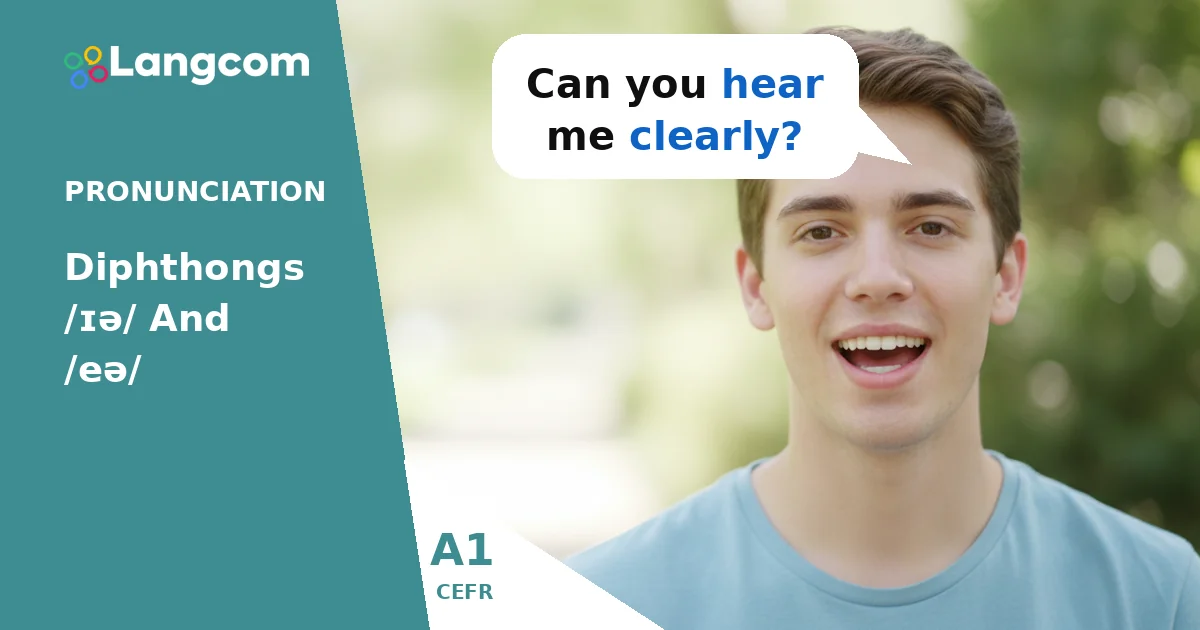

Дифтонги — это особые гласные звуки, в которых два гласных звука объединяются в один плавный звук. Для учащихся уровня A1: понимание английских дифтонгов /ɪə/ (как в here) и /eə/ (как в bear) имеет важное значение для четкого произношения. Эти звуки не являются отдельными гласными, а представляют собой плавный переход от одного гласного звука к другому в пределах одного слога. Например, /ɪə/, слово «your mouth» начинается с буквы «a» /ɪ/ звук и переходит к /ə/. Для /eə/, это начинается с /e/ и переходит к /ə/. Освоение этих навыков поможет вам лучше говорить и понимать английский язык.
Что такое дифтонг?
Дифтонг — это гласный звук, который изменяется. Он начинается с одного гласного звука, а затем переходит в другой гласный звук в том же слоге.
- Представьте себе, что это два звука, которые звучат вместе.
- В английском языке много дифтонгов. Сегодня мы рассмотрим два важных дифтонга для учащихся уровня A1: /ɪə/ и /eə/.
🎓 Изучайте английский по смешанной методике
Небольшие группы · ИИ-репетитор 24/7 · Подготовка к экзаменам Кембриджского университета
Планы от $39 $79 в месяц
Как произносить звук /ɪə/?
Сайт /ɪə/ sound is like saying 'ih' then 'uh' very quickly together.
- Начните с короткого /ɪ/ звук, как в sit.
- Затем переместите рот к /ə/ Звук (шва), как в about.
- Когда вы произносите этот звук, ваши губы слегка шевелятся.
Распространенные варианты написания слова /ɪə/ включают:
- ear: hear, fear, clear
- ere: here, mere
- eer: beer, deer
- ea: idea (в конце)
Как произносить звук /eə/?
Сайт /eə/ sound is like saying 'eh' then 'uh' very quickly together.
- Начните с /e/ звук, как в bed.
- Затем переместите рот к /ə/ Звук (шва), как в about.
- И снова ваши губы плавно переходят от первого звука ко второму.
Распространенные варианты написания слова /eə/ включают:
- air: hair, chair, fair
- are: care, share, rare
- ear: bear, pear, wear
- ere: there, where
Сравнение звуков /ɪə/ и /eə/
Основное различие между /ɪə/ и /eə/ — это первый звук, который ты произносишь.
- Для /ɪə/, you start with a higher, shorter 'ih' sound.
- Для /eə/, you start with a more open 'eh' sound.
- Оба звука заканчиваются одинаковым расслабленным /ə/ звук.
| Звук | Распространенные варианты написания | Примеры слов |
|---|---|---|
| /ɪə/ | ear, ere, eer, ea | hear, here, beer, idea, clear, fear, mere, deer |
| /eə/ | air, are, ear, ere | hair, care, bear, there, chair, share, pear, where |
Примеры
- Can you hear me clearly?
- I live near here.
- There is a chair over there.
- Be careful with that pear.
- I have an idea for a career.
- The air is fresh here.
Практика
💬 Нужна индивидуальная консультация?
Являясь официальным центром подготовки к экзаменам Кембриджского университета, мы поможем вам выбрать подходящий курс и программу сертификации. Свяжитесь с нашими консультантами уже сегодня.
Общайтесь с консультантом в WhatsAppРаспространенные ошибки у носителей испанского языка
Люди, говорящие по-испански, часто допускают следующие ошибки:
- Произносится как одна гласная: Иногда учащиеся произносят here как /hi:/ (like 'hee') instead of /hɪə/. Запомните эти два звука.
- Схожие слова, которые часто путают: Такие слова, как bear (/eə/) и beer (/ɪə/) звучат в английском языке совершенно по-разному. Обратите внимание на начальный гласный звук.
- Не двигать ртом: Чтобы произнести дифтонг, рот должен слегка двигаться. Не держите рот неподвижно.
Часто задаваемые вопросы
В чём заключается разница между монофтоном и дифтоном?
Монофтонг — это отдельный, чистый гласный звук, например /i:/ в sheep. Дифтонг — это сочетание двух гласных звуков, плавно переходящих один в другой в пределах одного слога, например: /ɪə/ в here.
Как я могу попрактиковаться в произношении этих дифтонгов?
Внимательно слушайте носителей языка. Повторяйте такие слова, как here и hair несколько раз. Запишите свой голос и сравните его с речью носителя языка. Обратите внимание на движения губ.
Есть ли в английском языке другие дифтонги?
Да, в английском языке есть ещё несколько дифтонгов, таких как /aɪ/ (как в my), /oʊ/ (как в go), и /aʊ/ (как в now). Для A1, уделяя особое внимание /ɪə/ и /eə/ — это отличное начало.



0 Комментариев