от Рауль | Июл 28, 2026 | Английский язык B2 Upper Intermediate
Adjectives with negative prefixes like un-, in-, dis-, im-, il-, and ir- change the meaning of a word, often making it the opposite. These prefixes attach to the beginning of an adjective to create a new word with a contrasting sense. For example, happy becomes...
от Рауль | Июл 26, 2026 | A1 Английский для начинающих
Have got is a very common way to talk about possession, family, and characteristics in English. It means ‘to possess’ or ‘to own’. You use it to say what you have, what someone else has, or to describe people and things. For example, I’ve...
от Рауль | Июл 26, 2026 | A1 Английский для начинающих
Learning technology vocabulary helps you talk about the devices you use every day. Knowing these words is very useful for A1 English learners. You can describe your phone, your computer, or the device you use to read books. This vocabulary helps you understand...
от Рауль | 25 июля 2026 года | A1 Английский для начинающих
To talk about age in English, you always use the verb to be, not to have. This is a common mistake for Spanish speakers. For example, you say I am 30 years old, not I have 30 years old. To ask someone’s age, use the question How old…?, like How old are...
от Рауль | 25 июля 2026 года | A1 Английский для начинающих
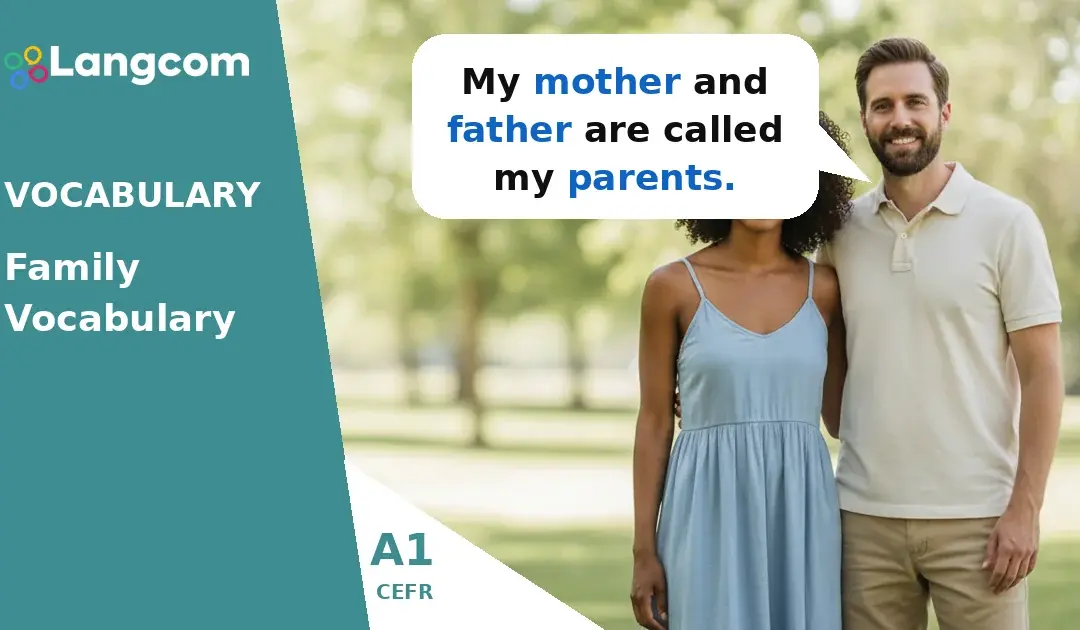
Learning family vocabulary helps you talk about the most important people in your life. In English, we have specific words for each family member, like mother, father, brother, and sister. Understanding these words is a key step for A1 English learners to describe...
от Рауль | 25 июля 2026 года | A1 Английский для начинающих
Wh- questions ask for specific information in English and always start with a ‘Wh- word’ like What, Where, When, Who, or Why. These questions help you learn more details than a simple ‘yes’ or ‘no’ answer. For example, instead of...
