
投稿者 ラウル | 8月 2, 2026 | B1 中級英語
The pronunciation of the -ed ending in English past tense verbs and past participles depends on the final sound of the base verb. There are three possible sounds: /ɪd/, /t/, and /d/. You say /ɪd/ when the verb ends in a /t/ or /d/ sound, making an extra syllable, as...

投稿者 ラウル | 2026年7月30日 | B1 中級英語
The -ed ending in regular past tense verbs and past participles has three different pronunciations: /ɪd/, /t/, or /d/. The sound depends on the final sound of the base verb before -ed is added. The most important rule to remember is that you only add an extra syllable...

投稿者 ラウル | 2026年7月30日 | B1 中級英語
To form negative sentences and questions in the Past Simple, we use the auxiliary verb did. This is a key rule for most verbs in English. For negative statements, you combine did with not (or didn’t) and the base form of the main verb. For questions, did comes...

投稿者 ラウル | 2026年7月30日 | B1 中級英語
The Past Simple positive describes actions that started and finished at a specific time in the past. It is one of the most common tenses in English, used to talk about completed events, stories, and past habits. To form it, we use the base form of regular verbs and...
投稿者 ラウル | 2026年7月30日 | B1 中級英語
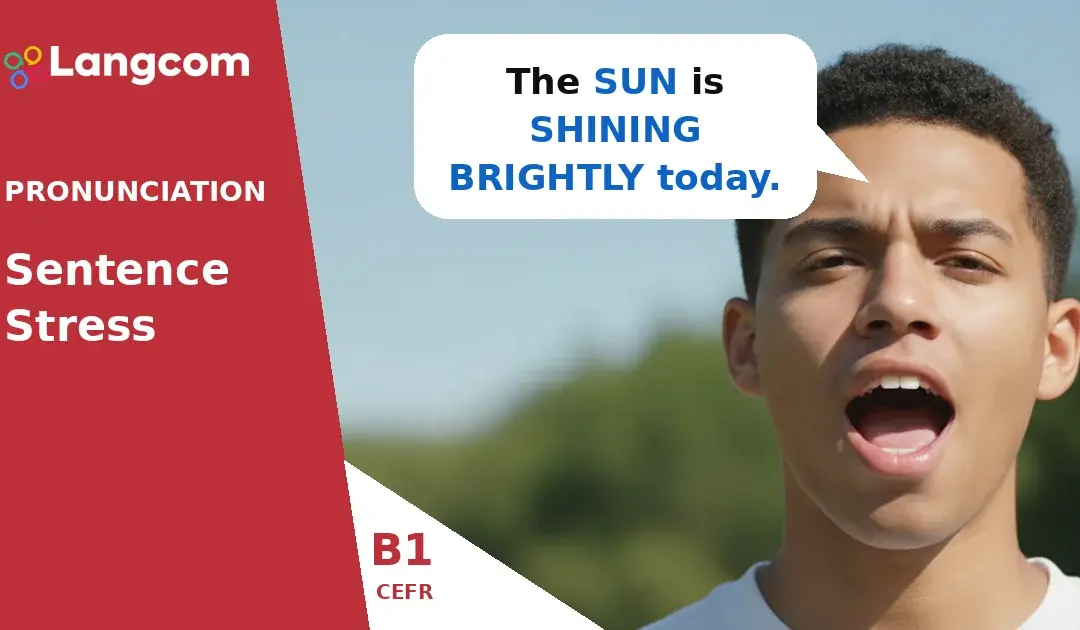
Sentence stress is the rhythm of spoken English, where some words are pronounced more strongly and clearly than others. This natural pattern helps listeners understand your message easily. In English, we usually stress ‘content words’ – words that carry...

投稿者 ラウル | 2026年7月30日 | B1 中級英語
The Present Simple describes habits, routines, and general truths, while the Present Continuous describes actions happening right now or temporary situations. Use the Present Simple for things that happen regularly, like I wake up early every day. It also states...
