
投稿者 ラウル | 2026年9月11日 | B1 中級英語
Multi-word verbs are combinations of a verb and one or two small words (prepositions or adverbs) that create a new meaning, often very different from the original verb alone. They are essential for speaking and understanding natural English, especially at B1 level and...
投稿者 ラウル | 2026年9月11日 | B1 中級英語
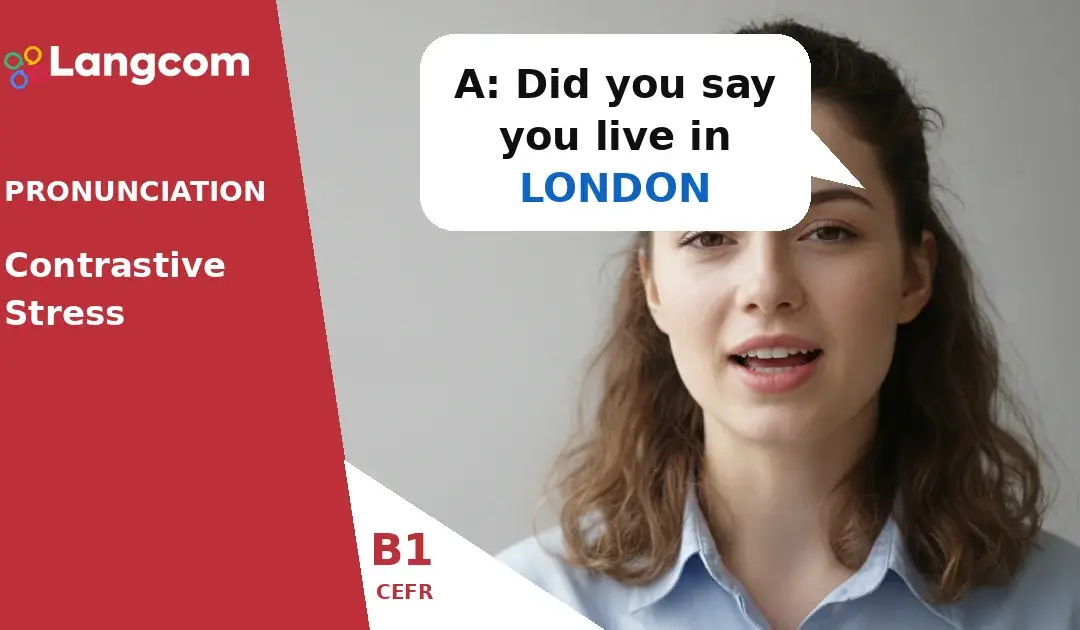
Contrastive stress is when you put extra emphasis on a specific word in a sentence to correct information or show a difference. This type of stress helps you make your meaning very clear, especially when you are disagreeing with someone or providing new, important...

投稿者 ラウル | 2026年9月10日 | B1 中級英語
Many English verbs are followed by another verb in a specific form: either the to + infinitive (e.g., to go) or the verb + -ing (e.g., going), also known as the gerund. This choice is not random; it depends entirely on the first verb in the sentence. Understanding...

投稿者 ラウル | 2026年9月10日 | B1 中級英語
In English, when one verb follows another, the second verb must take a specific form: either the -ing form (called a gerund) or the to + base verb form (called an infinitive). There is no simple rule to know which form to use; it depends on the first verb. For...

投稿者 ラウル | 2026年9月10日 | B1 中級英語
The First Conditional helps you talk about real possibilities in the future. We use it to describe situations that are likely to happen if a certain condition is met. For example, If it rains, I will stay home. This sentence means that if the rain happens (a real...

投稿者 ラウル | 2026年9月10日 | B1 中級英語
Learning collocations is key to sounding natural in English, especially when talking about education. Collocations are words that often go together, like take notes, not “make notes.” For B1 learners, mastering these common phrases about studying, exams,...
