投稿者 ラウル | 9月 16, 2026 | B2 First(FCE)
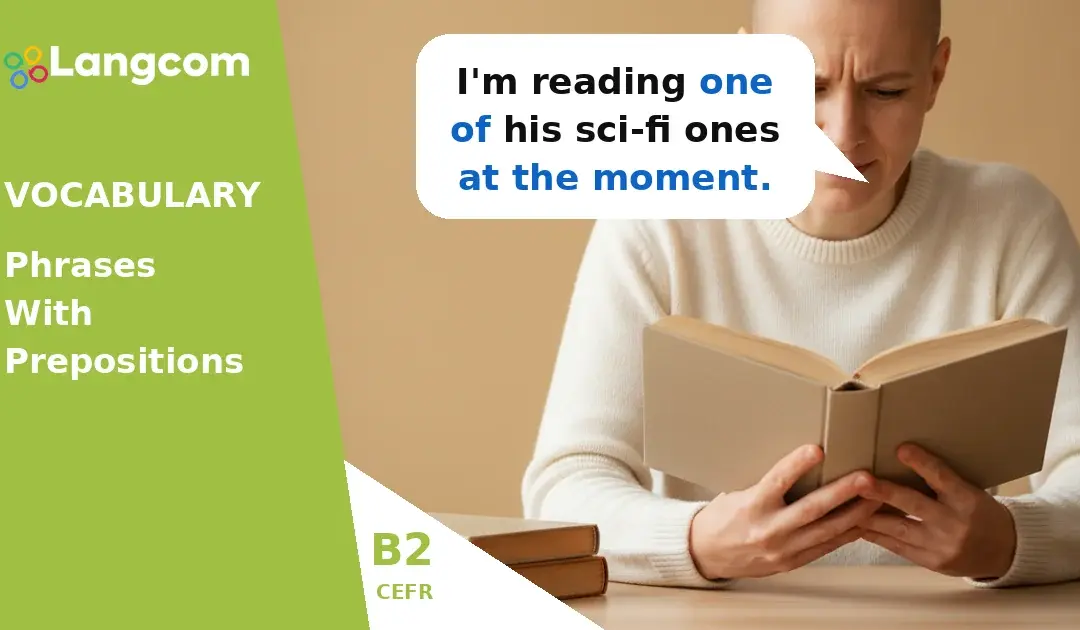
Phrases with at are common in English and express various meanings, from time and location to states and conditions. Understanding these fixed expressions is key for B2 learners to sound more natural and precise. Unlike prepositions used for simple location, phrases...

投稿者 ラウル | 9月 15, 2026 | B2 First(FCE)
English offers many ways to talk about the future, and choosing the correct form depends on the specific meaning you want to convey. At B2 level, it’s crucial to understand the subtle differences between will, be going to, the present continuous, and the present...

投稿者 ラウル | 9月 14, 2026 | B2 First(FCE)
Word formation is a powerful technique to expand your English vocabulary and significantly improve your B2 First (FCE) exam results. It involves creating new words from existing ones by adding small parts called prefixes (at the beginning) or suffixes (at the end)....

投稿者 ラウル | 9月 14, 2026 | B2 First(FCE)
When you use multiple adjectives before a noun in English, they follow a specific sequence. This order is not random; it helps English speakers understand descriptions clearly and naturally. While it might seem complex at first, there’s a general pattern that...

投稿者 ラウル | 9月 14, 2026 | B2 First(FCE)
Adjective-noun collocations are pairs of words that naturally go together in English, like heavy rain or strong argument. Learning these fixed combinations is crucial for B2 English learners because it helps you sound more natural and fluent, avoiding common errors...

投稿者 ラウル | 9月 14, 2026 | B2 First(FCE)
You use modal verbs like must, can’t, could, might, and may to express how certain you are about something. These verbs help you guess or make logical conclusions about present or past situations. For example, if you see someone yawning, you might say,...
