
投稿者 ラウル | 9月 21, 2026 | A1 子供向け英語(初心者向け)
To talk about quantities in English, use many for things you can count (like apples), much for things you cannot count (like water), and a lot of for both countable and uncountable nouns. Many and much are most common in questions and negative sentences. For example,...

投稿者 ラウル | 9月 21, 2026 | A1 英語(初級)
To ask questions about ‘he’, ‘she’, or ‘it’ in the Present Simple, we always use the helping verb does. This is different from ‘I’, ‘you’, ‘we’, or ‘they’, which use do. Remember, does...

投稿者 ラウル | 9月 21, 2026 | A1 英語(初級)
Wake up means to stop sleeping. Get up means to leave your bed. Go to bed means to enter your bed to sleep. These three common verbs are essential for talking about your daily routine in English. Understanding their differences helps you describe your morning and...

投稿者 ラウル | 9月 21, 2026 | A1 子供向け英語(初心者向け)
Some and any are essential words in English for talking about quantities, meaning ‘a certain amount’ or ‘a few’. They help us express if we have a quantity of something, or if we don’t have it at all. The main rule is simple: use some in...

投稿者 ラウル | 9月 21, 2026 | A1 子供向け英語(初心者向け)
Countable nouns are things you can count individually, like one apple or two books. They have singular and plural forms. Uncountable nouns are things you cannot count individually, like water or information. They only have a singular form and do not use numbers...
投稿者 ラウル | 9月 21, 2026 | A1 子供向け英語(初心者向け)
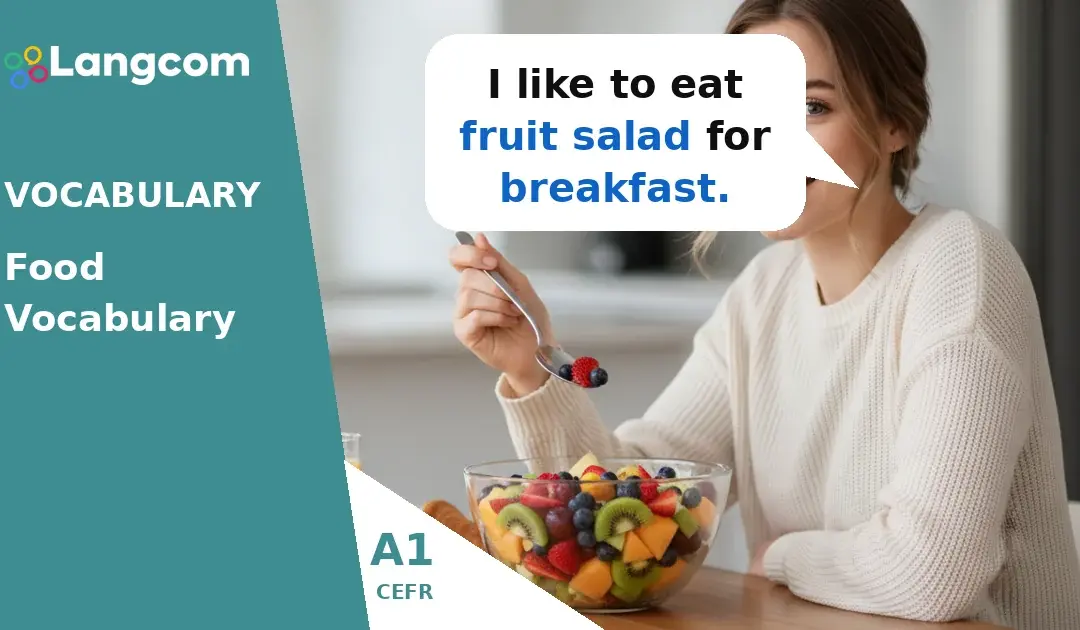
Learning basic food vocabulary is essential for A1 English learners because it helps you talk about daily life, order food, and understand simple conversations. Knowing words for common items like fruit, vegetables, and drinks makes everyday communication much easier....
