

What are Natural World Collocations?
Collocations are words that naturally go together. In English, certain words are frequently used with others, especially when discussing specific topics like the environment.
- Learning these pairs or groups of words helps you sound more natural and fluent.
- It also improves your comprehension when reading or listening to English about nature and environmental issues.
- For B2 level, knowing these collocations is essential for expressing complex ideas clearly.
✍️ Du bist dir nicht sicher, auf welchem Niveau du bist?
Machen Sie unseren kostenlosen Einstufungstest und erhalten Sie individuelles Feedback von zertifizierten Cambridge-Prüfern.
Machen Sie unseren KOSTENLOSEN EinstufungstestKey Collocations for Discussing the Environment
Let's explore some important collocations related to the natural world. These are common in news, documentaries, and everyday conversations about our planet.
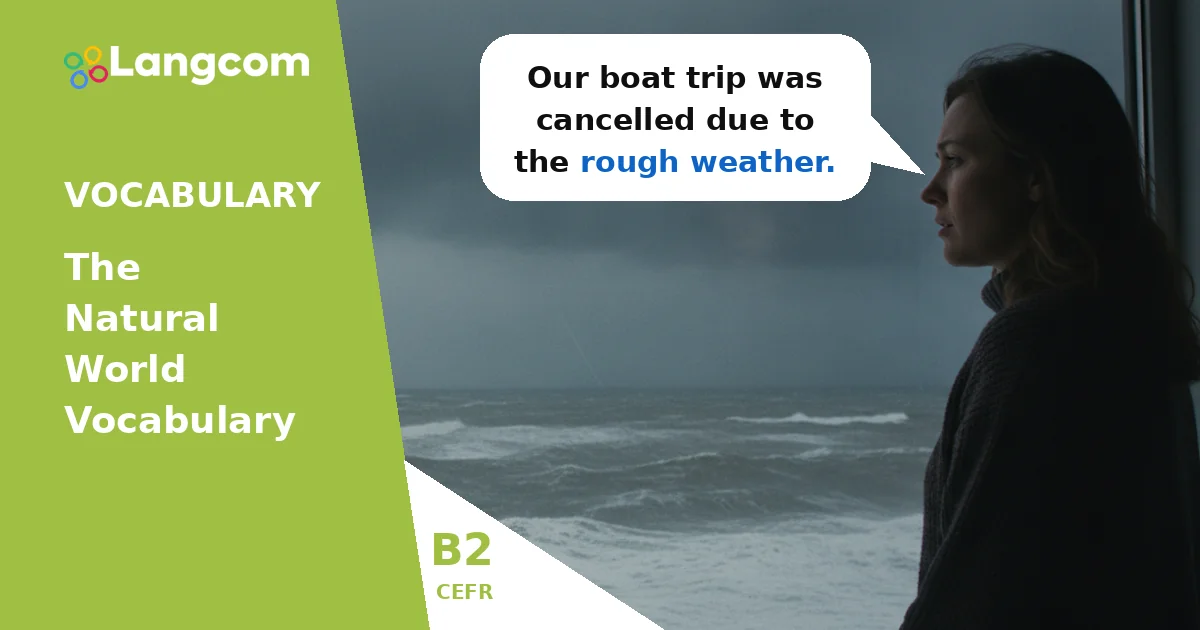
- Rough weather: This describes severe or unpleasant weather conditions, such as strong winds, heavy rain, or storms. It's more specific than just 'bad weather'.
- Global warming: This refers to the gradual increase in the Earth's average temperature, often linked to human activities. It's a major part of climate change.
- Environmentally friendly: This adjective describes products, activities, or policies that do not harm the environment. For example, recycling is an environmentally friendly action.
- Carbon footprint: This is the total amount of greenhouse gases (especially carbon dioxide) produced by an individual, event, organization, or product. Reducing your carbon footprint means producing less CO2.
- Solar energy: This is power obtained from the sun's rays, often converted into electricity using special panels. It's a clean, renewable energy source.
- Climate change: This refers to long-term shifts in temperatures and weather patterns. While some shifts are natural, the term often refers to human-caused changes.
- Fragile environment: This describes an ecosystem or natural area that is easily damaged or destroyed by human activity or natural events. Coral reefs are an example of a fragile environment.
- The Earth’s atmosphere: This is the layer of gases surrounding our planet. It protects life on Earth by absorbing harmful ultraviolet radiation and regulating temperature.
- Ecological impact: This is the effect that something (like a new building or a type of pollution) has on living organisms and their natural environment.
Why are these Collocations Important for B2 English?
At the B2 level, you need to communicate effectively about a wide range of topics, including complex global issues like the environment. Using these collocations shows a higher level of vocabulary and fluency.
- They allow you to express nuanced ideas more precisely.
- They are frequently used in academic texts, news reports, and discussions about sustainability.
- Mastering them will help you achieve better scores in exams like the B2 First (FCE) by demonstrating a richer vocabulary.
| Collocation | Bedeutung |
|---|---|
| rough weather | Severe or unpleasant weather conditions. |
| global warming | The gradual increase in the Earth's average temperature. |
| environmentally friendly | Not harmful to the environment. |
| carbon footprint | The total amount of greenhouse gases produced by an activity or person. |
| solar energy | Power obtained from the sun's rays. |
| climate change | Long-term shifts in temperatures and weather patterns. |
| fragile environment | An ecosystem or area that is easily damaged. |
| the Earth’s atmosphere | The layer of gases surrounding our planet. |
| ecological impact | The effect something has on living organisms and their environment. |
Beispiele
- Our boat trip was cancelled due to the rough weather.
- Scientists are very concerned about global warming.
- Using reusable bags is a simple way to be more environmentally friendly.
- I try to reduce my carbon footprint by cycling to work.
- Many homes now use solar energy to heat water.
- Climate change is causing more extreme weather events worldwide.
- Pollution can severely damage a fragile environment like a rainforest.
- Gases released from factories can harm the Earth’s atmosphere.
- The new dam had a significant ecological impact on the river ecosystem.
Übung
Bist du bereit, dein Zertifikat zu erwerben?
Der Kurs Langcom bereitet die Teilnehmer auf die Prüfungen von Cambridge, IELTS, TOEFL, DELE, SIELE und Michigan vor.
Erste Schritte mit LangcomHäufige Fehler bei Spanischsprechern
Common Mistakes with Natural World Collocations
Spanish speakers sometimes make common errors when using these collocations. Be careful with these points:
- Using single words instead of collocations: For example, saying bad weather statt rough weather. While bad weather is correct, rough weather is a more specific and natural collocation for strong, unpleasant conditions.
- Incorrect adverbs/adjectives: A common mistake is saying environmental friendly. Remember, the correct form is environmentally friendly, using the adverb to modify the adjective.
- Confusing similar terms: While global warming und climate change are related, they are not always interchangeable. Global warming specifically refers to the temperature increase, while climate change is a broader term for all long-term shifts in weather patterns.
- Incorrect prepositions: Pay attention to prepositions that often accompany these terms, for example, impact ON the environment, nicht impact IN the environment.
Häufig gestellte Fragen
What is the difference between 'climate change' and 'global warming'?
Global warming refers specifically to the long-term increase in Earth's average temperature. Climate change is a broader term that includes global warming, but also encompasses all other long-term shifts in weather patterns, such as changes in rainfall, sea levels, and extreme weather events.
Why is it important to learn collocations for the B2 First exam?
For the B2 First (FCE) exam, especially in the Speaking and Writing papers, using natural collocations like carbon footprint oder fragile environment demonstrates a wider range of vocabulary and greater fluency. It helps you achieve higher marks by showing you can use English in a sophisticated and natural way, similar to a native speaker.
How can I remember these natural world collocations?
To remember these collocations, try to use them actively. Create your own sentences, discuss environmental topics with friends or your teacher, or write short paragraphs. You can also make flashcards with the collocation on one side and its definition or an example sentence on the other. Reading articles or watching documentaries about the natural world in English will also expose you to these terms in context.




0 Kommentare