

What are ‘Was’ and ‘Were’?
Was و were are special words in English. They are the past forms of the verb to be.
We use them to talk about things that happened before now. For example, yesterday, last week, or a long time ago.
[langcom_cta variant=”blended”]
When Do We Use ‘Was’?
نحن نستخدم was when the subject is singular. This means we are talking about one person or one thing.
- الاستخدام was with:
- I
- He (for a boy or man)
- She (for a girl or woman)
- It (for an animal or thing)
When Do We Use ‘Were’?
نحن نستخدم were when the subject is plural. This means we are talking about more than one person or thing.
- الاستخدام were with:
- You (for one person or many people)
- We (you and other people)
- They (other people, animals, or things)
How to Make Sentences with ‘Was’ and ‘Were’
It’s easy to make sentences using was و were. Just remember the subject and the past form.
Positive Sentences
Use: Subject + was / were + information.
- I was happy.
- They were at school.
الجمل السلبية
Use: Subject + was not / were not + information.
We often use short forms: wasn’t و weren’t.
- She was not tired. (أو She wasn’t tired.)
- We were not ready. (أو We weren’t ready.)
أسئلة
To ask a question, put was أو were في بداية الجملة.
- Was he here? (Yes, he was. / No, he wasn’t.)
- Were you busy? (Yes, I was. / No, I wasn’t.)
For ‘Wh-‘ questions (like where, what), put the ‘Wh-‘ word first.
- Where was she?
- What were they doing?
| الموضوع | Past Form |
|---|---|
| I | was |
| He | was |
| She | was |
| It | was |
| You | were |
| We | were |
| They | were |
أمثلة
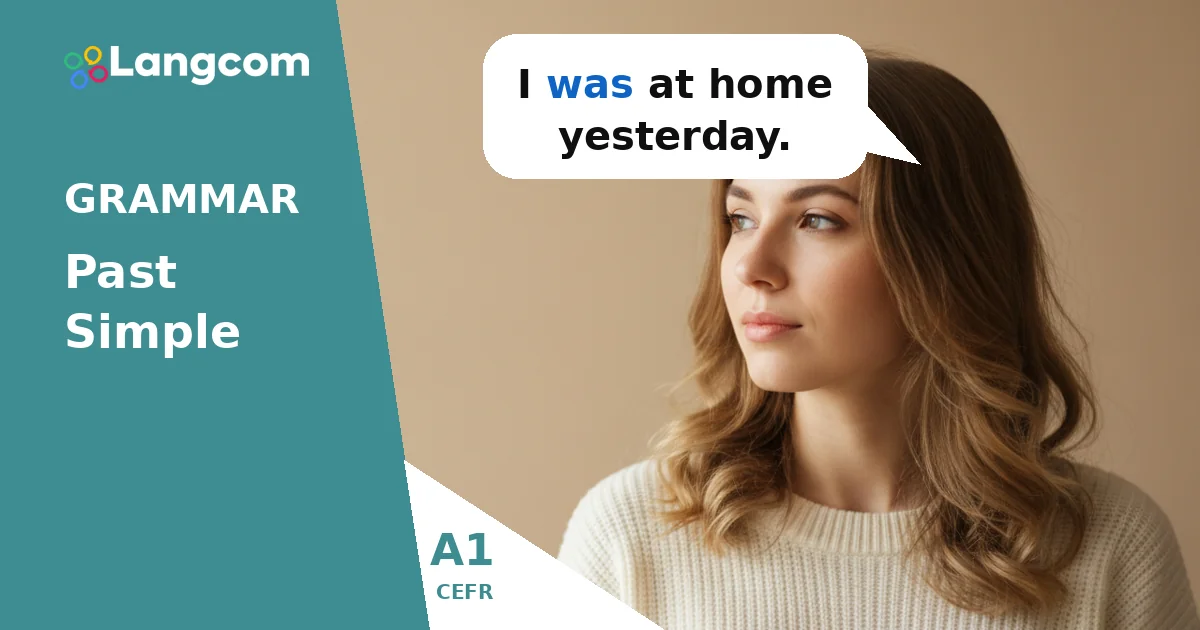
- I was at home yesterday.
- He was a good student.
- She was tired last night.
- It was sunny this morning.
- You were very kind.
- We were friends in primary school.
- They were late for the meeting.
- My cat was sleeping on the sofa.
- The books were on the table.
- Was your brother here?
- Were they happy with the results?
- I wasn’t hungry.
- We weren’t at the party.
التدريب
[langcom_cta variant=”whatsapp”]
الأخطاء الشائعة لدى المتحدثين باللغة الإسبانية
يرتكب المتحدثون باللغة الإسبانية أحيانًا الأخطاء التالية:
- Using the wrong form: تذكر،, was is for I, he, she, it و were is for you, we, they. It is incorrect to say I were happy أو You was sad.
- Forgetting ‘to be’ in the past: In English, you always need was أو were to describe a past state or location. Do not say I happy yesterday (incorrect). Say I was happy yesterday (صحيح).
- Confusing ‘ser’ and ‘estar’: In Spanish, you have ‘ser’ and ‘estar’. In English, was و were cover both ideas in the past. For example, I was a student (Yo era estudiante) and I was at home (Yo estaba en casa) both use was.
الأسئلة الشائعة
What is the difference between was and were?
الفرق يكمن في الموضوع. نحن نستخدم was for singular subjects (I, he, she, it). نحن نستخدم were for plural subjects (you, we, they).
Can was and were be used for both ‘ser’ and ‘estar’ in Spanish?
Yes, exactly! In English, was و were are the past forms of to be, which covers both the meanings of ‘ser’ and ‘estar’ in the past. For example, She was a doctor (Ella era médica) and She was in the hospital (Ella estaba en el hospital).
How do I make a question with was or were?
To make a question, you put was أو were at the beginning of the sentence, before the subject. For example, Was he busy? أو Were they ready?
What are the short forms for was not and were not?
The short form for was not هو wasn’t. The short form for were not هو weren’t. These are very common in spoken English.




0 تعليق