

What Are Collocations and Why Are They Important?
Collocations are groups of words that often go together. They sound natural to native English speakers. Learning collocations helps you speak and write more naturally.
Using the correct collocations also makes your English clearer. It helps you avoid misunderstandings and express your ideas precisely.
✍️ لست متأكدًا من مستواك؟
خُذ اختبار تحديد المستوى المجاني الخاص بنا واحصل على تعليقات مخصصة من ممتحنين معتمدين من كامبريدج.
قم بإجراء اختبار تحديد المستوى المجانيWhen Do We Use 'Do'?
غالبًا ما نستخدم do for actions, tasks, or general activities. It focuses on the action itself, not the result.
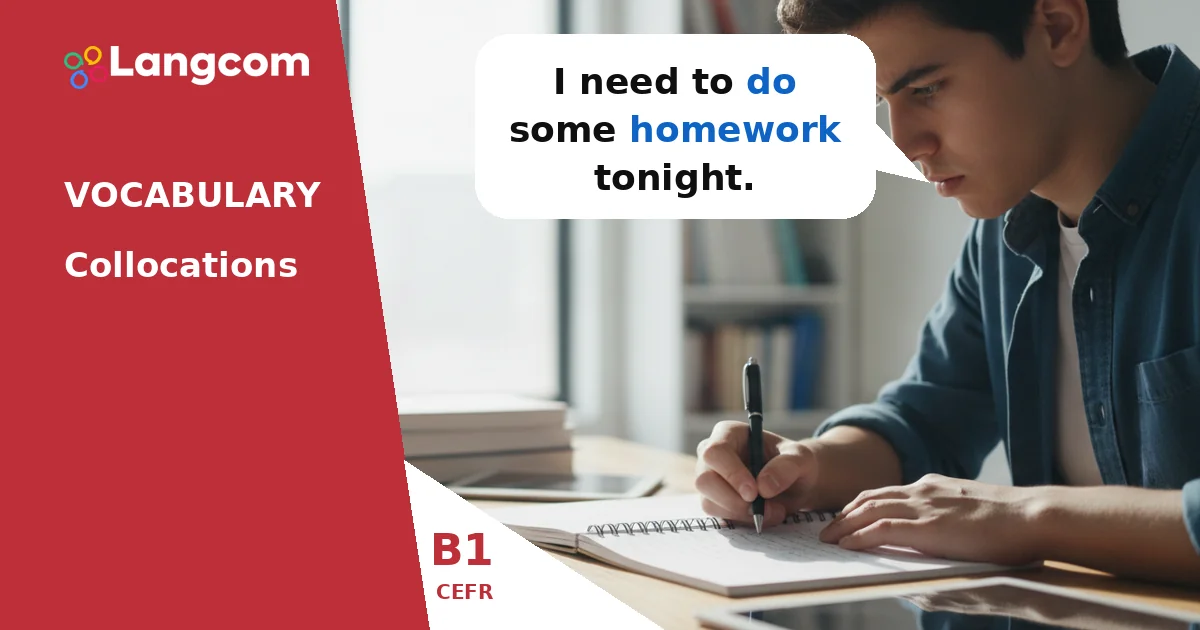
- Do homework
- Do exercise
- Do a favour
- Do the washing up
- Do business
When Do We Use 'Earn'?
نحن نستخدم earn when we receive money or something valuable as a result of work or effort.
- Earn money
- Earn a salary
- Earn a living
- Earn respect
- Earn a reputation
When Do We Use 'Have'?
Have is a very common verb with many uses. It can mean possession, experiencing something, or taking part in an activity.
- Have fun
- Have a party
- Have a break
- Have a shower
- Have a good time
When Do We Use 'Make'?
نحن نستخدم make when we create, produce, or construct something. It often focuses on the result of an action.
- Make a decision
- Make a noise
- Make friends
- Make a mistake
- Make an effort
When Do We Use 'Spend'?
Spend refers to using time or money. It means to use resources for a period or purpose.
- Spend time
- Spend money
- Spend a holiday
- Spend an afternoon
- Spend a fortune
When Do We Use 'Take'?
Take has many meanings, including carrying, moving, accepting, or performing an action. It often implies movement or an action that requires a choice.
- Take a photo
- Take a bus
- Take a break
- Take an exam
- Take a decision (less common than make a decision, but possible in some contexts)
| الفعل | Common Collocations |
|---|---|
| do | homework, exercise, a favour, the washing up, business |
| earn | money, a salary, a living, respect, a reputation |
| have | fun, a party, a break, a shower, a good time |
| make | a decision, a noise, friends, a mistake, an effort |
| spend | time, money, a holiday, an afternoon, a fortune |
| take | a photo, a bus, a break, an exam, a decision |
أمثلة
- I need to do some homework tonight.
- She hopes to earn a lot of money in her new job.
- Did you have fun at the party last night?
- It's important to make a good impression.
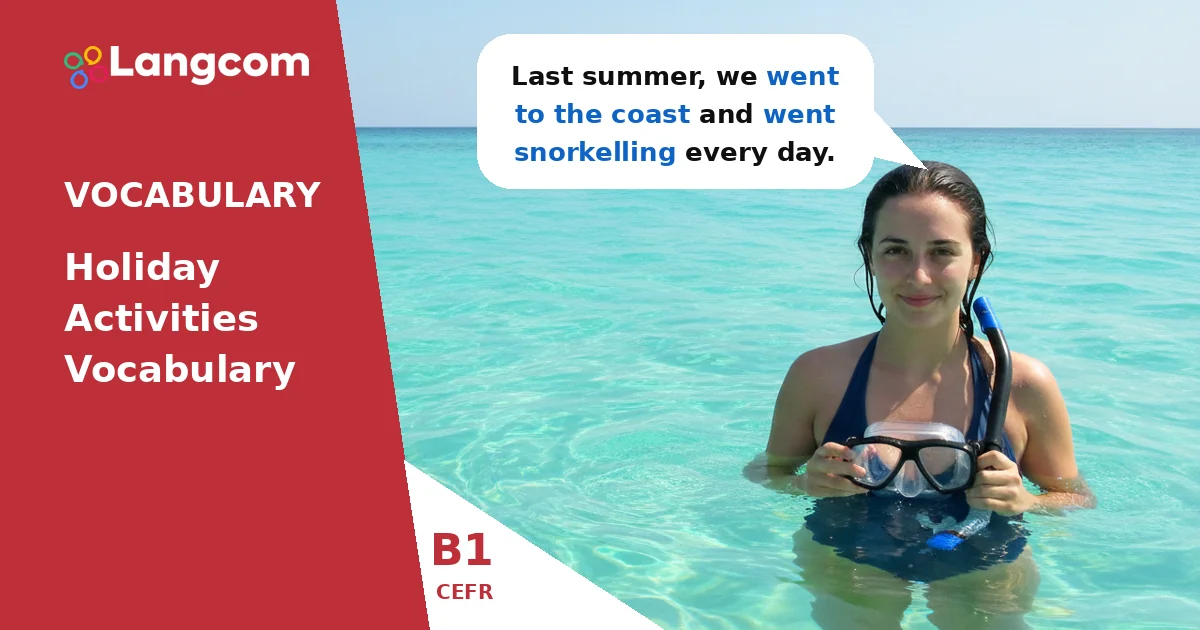
- We spent two weeks on the beach during our holiday.
- Don't forget to take a photo of the beautiful sunset.
- He always does his best at work.
- You can earn respect by being honest.
- Let's have a coffee break soon.
- I accidentally made a mistake on the form.
- How much time do you spend studying English every day?
- It takes a long time to learn a new language.
التدريب
هل أنت مستعد للحصول على شهادتك؟
يُعد برنامج Langcom الطلاب لامتحانات كامبريدج وIELTS وTOEFL وDELE وSIELE وMichigan.
ابدأ مع Langcomالأخطاء الشائعة لدى المتحدثين باللغة الإسبانية
Spanish speakers often confuse do و make because 'hacer' covers both in Spanish. Remember:
- خطأ: I need to make my homework.
- الصحيح: I need to do my homework.
- خطأ: Did you do a mistake?
- الصحيح: Did you make a mistake?
Another common error is with have و take for experiences:
- خطأ: I want to take a good time.
- الصحيح: I want to have a good time.
- خطأ: Let's have a photo.
- الصحيح: Let's take a photo.
الأسئلة الشائعة
What exactly are collocations?
Collocations are simply words that frequently appear together. They are not strict grammar rules, but rather natural pairings that sound correct to native speakers, like heavy rain, ، وليس strong rain.
How can I learn collocations effectively?
The best way to learn collocations is to notice them when you read and listen. Try to learn new vocabulary in phrases, not just single words. Keep a notebook and write down common collocations you find, for example, make a decision instead of just decision.
Are these verbs and their collocations important for the B1 Preliminary exam?
Yes, absolutely! Understanding collocations with verbs like do, earn, have, make, spend, ، و take is vital for the B1 Preliminary exam. They appear in all parts, especially in the Reading and Use of English sections (e.g., Part 1 Multiple-choice cloze) and when you need to produce natural-sounding English in the Writing and Speaking parts.
What is the main difference between 'do' and 'make'?
Generally, do refers to performing an action, task, or activity (e.g., do homework, do exercise). Make usually means to create, produce, or construct something, often with a visible result (e.g., make a cake, make a noise). However, there are many fixed collocations you simply need to learn.


0 تعليق