

Who is in your immediate family?
Your immediate family usually includes your closest relatives. These are the people you often live with or see regularly.
- Mother / Mum: Your female parent. Mum is more informal.
- Father / Dad: Your male parent. Dad is more informal.
- Parents: Both your mother و father.
- Sister: A female child of your parents.
- Brother: A male child of your parents.
- Siblings: Your brothers و sisters معًا.
- Son: A male child.
- Daughter: A female child.
- Children: Your sons و daughters.
🎓 تعلم اللغة الإنجليزية باستخدام الطريقة المختلطة
مجموعات صغيرة · مدرس ذكاء اصطناعي متاح على مدار الساعة · التحضير لامتحانات كامبريدج
خطط من $39 $79 في الشهر
What about your extended family?
Extended family includes relatives beyond your immediate family. These are people like your grandparents, aunts, uncles, and cousins.
- Grandmother / Granny / Grandma: Your mother's or father's mother. Granny و Grandma are informal.
- Grandfather / Granddad / Grandpa: Your mother's or father's father. Granddad و Grandpa are informal.
- Grandparents: Both your grandmother و grandfather.
- Aunt: Your mother's or father's sister.
- Uncle: Your mother's or father's brother.
- Cousin: The child of your aunt أو uncle. This word is used for both male and female relatives.
- Niece: The daughter of your brother أو sister.
- Nephew: The son of your brother أو sister.
How do we talk about marital status?
When discussing adults in a family, you might also talk about their marital status. These words describe relationships between partners.
- Husband: A married man.
- Wife: A married woman.
- Married: Having a husband أو wife.
- Single: Not married.
- Divorced: Legally separated from a husband أو wife.
| Formal | Informal (UK English) |
|---|---|
| Mother | Mum |
| Father | Dad |
| Grandmother | Granny / Grandma |
| Grandfather | Granddad / Grandpa |
| Siblings | Brothers and sisters |
| Children | Kids |
أمثلة
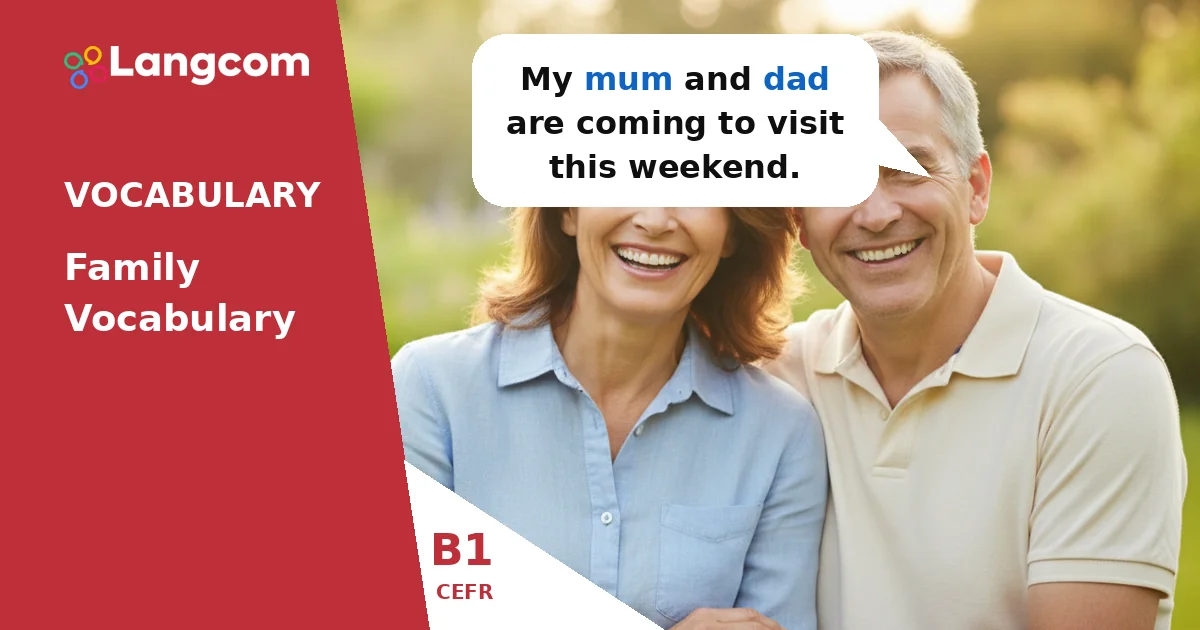
- My mum and dad are coming to visit this weekend.
- I have one brother and two sisters; we are a big family.
- My grandparents live in a small town.
- She is my aunt, and her children are my cousins.
- My uncle works as a teacher.
- They have two children, a son and a daughter.
- My niece is starting university next year.
- He is married to my sister. He is my brother-in-law.
التدريب
✍️ لست متأكدًا من مستواك؟
خُذ اختبار تحديد المستوى المجاني الخاص بنا واحصل على تعليقات مخصصة من ممتحنين معتمدين من كامبريدج.
قم بإجراء اختبار تحديد المستوى المجانيالأخطاء الشائعة لدى المتحدثين باللغة الإسبانية
Using "relatives" instead of "parents": In Spanish, "mis padres" means "my parents." However, some learners might incorrectly translate this as my relatives.
- الصحيح: My parents are visiting. (Meaning: my mother and father)
- خطأ: My relatives are visiting. (Meaning: any family member, not specifically mother and father)
Gender for "cousin": In Spanish, you have "primo" and "prima." In English, cousin is used for both.
- الصحيح: My cousin is coming. (Can be male or female)
- خطأ: My male cousin is coming. (Not necessary, just my cousin is enough unless you need to specify)
Using "grandparents" for one grandparent: Grandparents is plural.
- الصحيح: My grandmother is very kind.
- الصحيح: My grandparents are visiting.
- خطأ: My grandparent is visiting. (If referring to only one, use grandmother أو grandfather)
الأسئلة الشائعة
What is the difference between mum و mother?
Mother is the formal word for a female parent. Mum (أو Mom in American English) is an informal, affectionate term used in everyday conversation. You would use mother in formal writing or when speaking generally, but mum when talking directly to or about your own mother.
كيف أقول 'والدي' باللغة الإنجليزية؟
You simply say my parents. This refers to both your mother و father. لا تستخدم my relatives if you mean specifically your mother و father, as relatives can mean any family member.
What about 'in-laws' in English?
In-laws are your spouse's family members. For example, your husband's mother هل هو mother-in-law, and your wife's brother هل هو brother-in-law. This term is very common.
Why is learning family vocabulary important for B1 English?
At B1 level, you need to be able to describe personal experiences and talk about your life. Family is a central part of many people's lives, so knowing these words allows you to participate in common conversations, introduce your family members, and understand stories about others. It helps you build stronger connections and communicate more naturally.

0 تعليق