
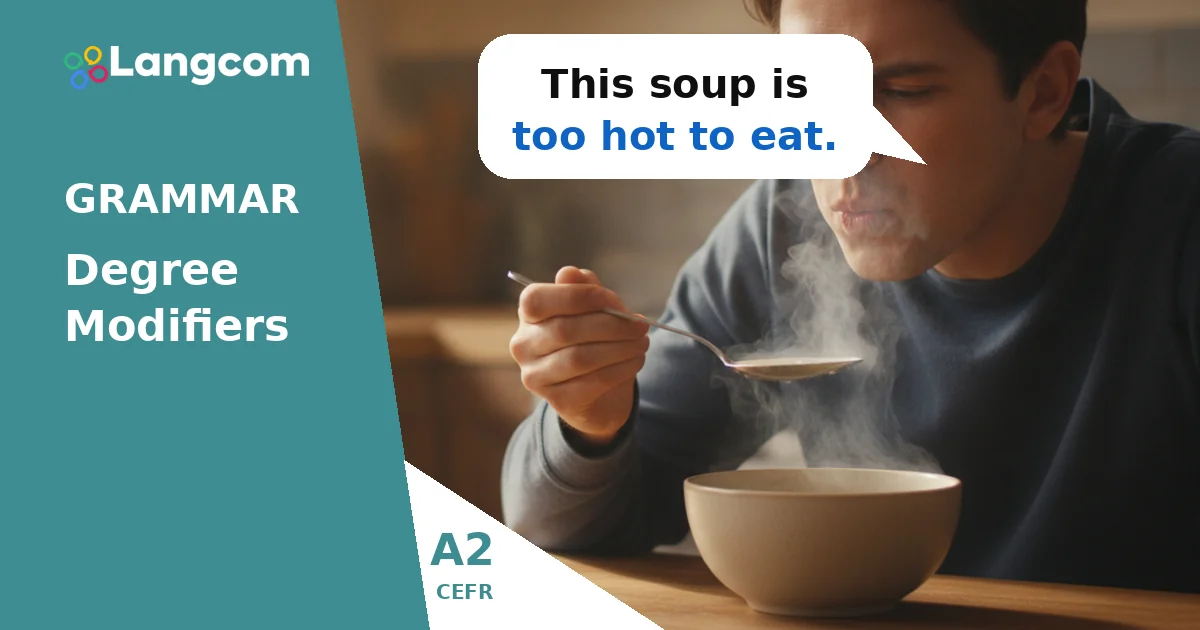

What does ‘too’ mean in English?
نحن نستخدم too to say that something is more than necessary, more than wanted, or more than possible.
- It means ‘excessively’ or ‘more than sufficient’.
- We always put too قبل an adjective or an adverb.
✍️ لست متأكدًا من مستواك؟
خُذ اختبار تحديد المستوى المجاني الخاص بنا واحصل على تعليقات مخصصة من ممتحنين معتمدين من كامبريدج.
قم بإجراء اختبار تحديد المستوى المجانيHow do we use 'enough'?
نحن نستخدم enough to say that something is sufficient, or the correct amount.
- It means 'sufficiently' or 'as much as needed'.
- We put enough بعد an adjective or an adverb.
- We put enough قبل a noun (countable or uncountable).
What about 'not enough'?
When we use not enough, it means something is less than necessary or less than wanted.
- It expresses a lack of something.
- The word order rules are the same as for enough: بعد an adjective/adverb, and قبل a noun.
Word Order: 'Too' and 'Enough' Summary
The position of too و enough is very important. Look at these patterns:
| الهيكل | مثال |
|---|---|
| too + adjective | This coffee is too hot. |
| too + adverb | You are driving too fast. |
| adjective + enough | Are you warm enough? |
| adverb + enough | He didn't run fast enough. |
| enough + noun | We have enough chairs. |
| not + adjective + enough | She isn't tall enough. |
| not + enough + noun | There isn't enough water. |
أمثلة
- This soup is too hot to eat.
- He drives too fast.
- Are you warm enough?
- She isn't old enough to vote.
- We have enough food for everyone.
- There isn't enough space in this car.
- I don't have enough time to finish this.
التدريب
هل أنت مستعد للحصول على شهادتك؟
يُعد برنامج Langcom الطلاب لامتحانات كامبريدج وIELTS وTOEFL وDELE وSIELE وMichigan.
ابدأ مع Langcomالأخطاء الشائعة لدى المتحدثين باللغة الإسبانية
Spanish speakers often make mistakes with the word order of enough, especially with adjectives.
- خطأ: I am enough strong.
- الصحيح: I am strong enough. (Adjective + enough)
تذكر ذلك enough always comes AFTER adjectives and adverbs, but BEFORE nouns.
- خطأ: We have money enough.
- الصحيح: We have enough money. (Enough + Noun)
Also, be careful not to confuse too مع very. Very just means 'a lot', but too means 'more than is good or wanted'.
- It's very cold. (Just a fact, it's very cold.)
- It's too cold. (It's so cold that I can't do something, like go outside.)
الأسئلة الشائعة
What is the main difference between 'too' and 'enough'?
The main difference is that too means 'more than necessary or desired', while enough means 'sufficient' or 'the right amount'. Not enough means 'less than necessary'.
Can I use 'too' with nouns?
لا، نحن عادةً ما نستخدم too much with uncountable nouns (e.g., too much sugar) و too many with countable nouns (e.g., too many people). نحن نستخدم too directly before adjectives and adverbs.
Is the word order for 'too' and 'enough' always the same?
No, the word order changes. Too always comes قبل adjectives and adverbs (e.g., too slow). Enough comes بعد adjectives and adverbs (e.g., slow enough) but قبل nouns (e.g., enough time).
How might 'too' and 'enough' appear in the A2 Key exam?
In the A2 Key exam, you might see too و enough in Reading and Writing Part 6 (Open Cloze) or Part 7 (Word Transformation), where you need to complete sentences or rewrite them using these words correctly to express degree.


0 تعليق