


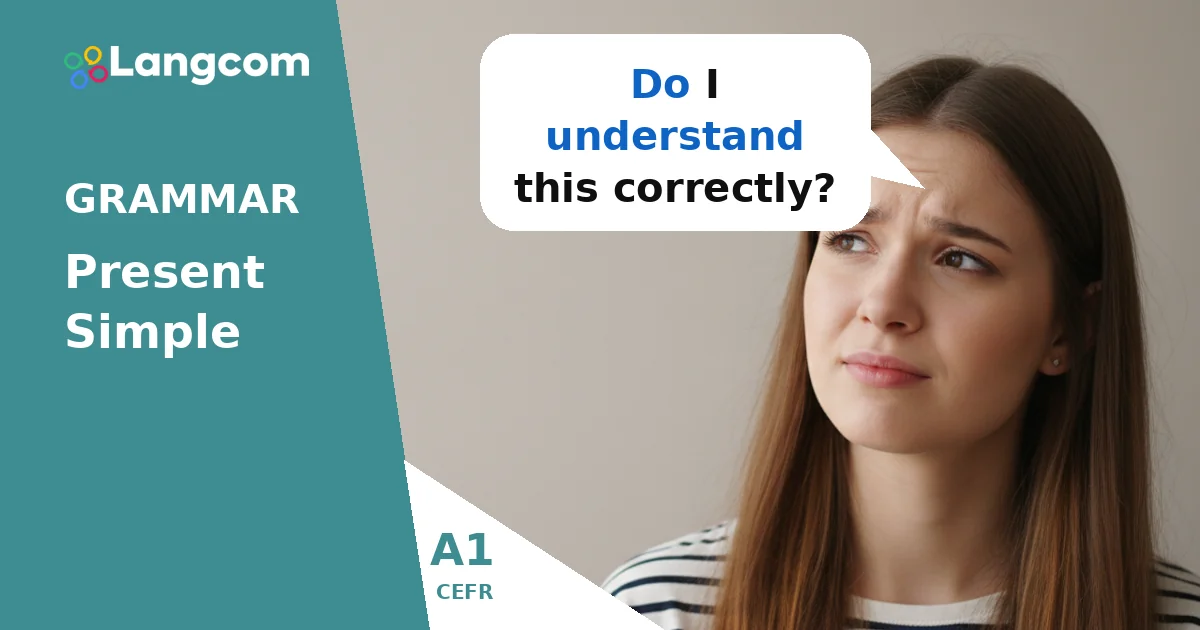
What is the Present Simple?
ال Present Simple is a basic but very important English tense. We use it to describe actions that happen regularly or situations that are generally true.
It helps us talk about our daily lives and the world around us.
🎓 تعلم اللغة الإنجليزية باستخدام الطريقة المختلطة
مجموعات صغيرة · مدرس ذكاء اصطناعي متاح على مدار الساعة · التحضير لامتحانات كامبريدج
خطط من $39 $79 في الشهر
متى نستخدم صيغة المضارع البسيط؟
نحن نستخدم Present Simple for several situations:
- العادات والروتينات: Things you do regularly. For example, I drink coffee every morning.
- General Facts: أمور صحيحة دائمًا. على سبيل المثال،, Cats like milk.
- الجداول الزمنية والمواعيد: الأحداث الثابتة. على سبيل المثال،, The train leaves at 9 AM.
How to Make Positive Sentences (I, You, We, They)
Making a positive sentence in the Present Simple is very easy for I, you, we, ، و they. You just use the base form of the verb.
- Subject + Verb (base form)
انظر إلى هذه الأمثلة:
- I eat fruit.
- You like pizza.
- We study English.
- They live in Madrid.
How to Make Negative Sentences (I, You, We, They)
To make a negative sentence, we use do not or its short form don't before the verb.
- Subject + do not / don't + Verb (base form)
Here are some examples:
- I do not eat meat. (Or I don't eat meat.)
- You do not like fish. (Or You don't like fish.)
- We do not work on Sundays. (Or We don't work on Sundays.)
- They do not speak French. (Or They don't speak French.)
Common Keywords for Present Simple
Some words often appear with the Present Simple. They help show that an action is regular or a habit.
- every day
- every week
- always
- often
- sometimes
- never
| الموضوع | Positive Form | الصيغة السلبية |
|---|---|---|
| I | I work. | I don't work. |
| You | You read. | You don't read. |
| We | We learn. | We don't learn. |
| They | They play. | They don't play. |
أمثلة
- I play football on Saturdays.
- You listen to music in the car.
- We watch TV in the evening.
- They study at the library.
- I don't like coffee.
- You don't work on weekends.
- We don't live in a big city.
- They don't eat fast food often.
التدريب
💬 هل تحتاج إلى إرشادات مخصصة؟
بصفتنا مركزًا معتمدًا للتحضير لاختبارات كامبريدج، يمكننا توجيهك نحو الدورة والشهادة المناسبتين لك. تحدث مع مستشارينا اليوم.
دردش مع مستشار على واتسابالأخطاء الشائعة لدى المتحدثين باللغة الإسبانية
يرتكب المتحدثون باللغة الإسبانية أحيانًا الأخطاء التالية:
- Using 'no' instead of 'don't': In Spanish, you might say 'Yo no como'. But in English, you need the auxiliary verb do.
- خطأ: I no eat meat.
- الصحيح: I don't eat meat.
- Forgetting the verb 'to be' in descriptions: تذكر ذلك Present Simple is for actions or facts. If you want to describe a state or characteristic, you need to be.
- خطأ: I happy.
- الصحيح: I am happy.
الأسئلة الشائعة
What is the main use of the Present Simple?
The main use of the Present Simple is to talk about habits, routines, and facts that are generally true. For example, I wake up early every day.
How do I make a positive sentence with 'we'?
بالنسبة لـ we, you use the subject plus the base form of the verb. For example, We like pizza.
How do I make a negative sentence with 'they'?
بالنسبة لـ they, ، تستخدم they + don't + base form of the verb. على سبيل المثال،, They don't speak German.
What are some common words used with the Present Simple?
Common words include every day, always, often, sometimes, ، و never. They help show frequency.

0 تعليق