

What are the main English colours?
There are many colours, but some are more common and important for A1 learners. We can group them into primary, secondary, and neutral colours.
- Primary Colours: These are the basic colours that cannot be made by mixing other colours.
- Red
- Blue
- Yellow
- Secondary Colours: These colours are made by mixing two primary colours.
- Green (from blue و yellow)
- Orange (from red و yellow)
- Purple (from red و blue)
- Neutral Colours: These colours do not appear on the colour wheel but are very common.
- Black
- White
- Grey (أو Gray)
- Brown
- Pink
🎓 تعلم اللغة الإنجليزية باستخدام الطريقة المختلطة
مجموعات صغيرة · مدرس ذكاء اصطناعي متاح على مدار الساعة · التحضير لامتحانات كامبريدج
خطط من $39 $79 في الشهر
How do we talk about colours in English?
Using colours in English is simple. You can ask about a colour, state a colour, or use a colour to describe something.
- To ask about a colour:
Use the question "What colour is it?" أو "What colour is the [noun]?"
- To state a colour:
يمكنك القول "It's [colour]."
- To describe an object with a colour:
In English, the colour word (adjective) comes قبل the noun (the thing). This is different from some other languages.
- a red apple
- a blue car
- a green tree
Can we mix colours in English?
Yes, just like in art, you can talk about mixing colours in English. This is a fun way to learn new colour words and understand how they are related.
- When you mix blue و red, you get purple.
- When you mix white و black, you get grey (أو gray).
- When you mix blue و yellow, you get green.
- When you mix yellow و red, you get orange.
- When you mix red و white, you get pink.
| Colour | Example Object |
|---|---|
| Red | a red apple |
| Blue | a blue sky |
| Yellow | a yellow sun |
| Green | a green leaf |
| Orange | an orange cat |
| Purple | a purple flower |
| Pink | a pink pig |
| Black | a black shoe |
| White | a white cloud |
| Brown | a brown bear |
| Grey | a grey mouse |
أمثلة
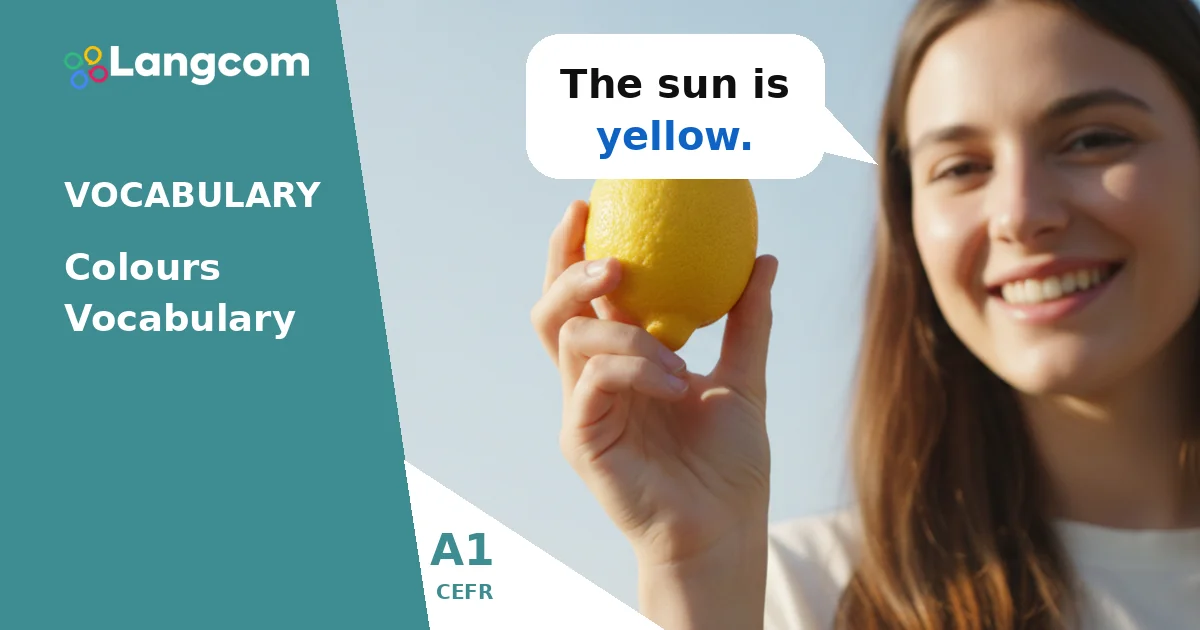
- The sun is yellow.
- My favourite colour is green.
- Look at the brown dog!
- She has a pink dress.
- What colour is your bag? It's black.
التدريب
💬 هل تحتاج إلى إرشادات مخصصة؟
بصفتنا مركزًا معتمدًا للتحضير لاختبارات كامبريدج، يمكننا توجيهك نحو الدورة والشهادة المناسبتين لك. تحدث مع مستشارينا اليوم.
دردش مع مستشار على واتسابالأخطاء الشائعة لدى المتحدثين باللغة الإسبانية
A common mistake for Spanish speakers is placing the colour word after the noun. In English, the colour always comes before the noun.
- خطأ: a car red
- الصحيح: a red car
Also, remember that both grey (British English) and gray (American English) are correct spellings for the same colour.
الأسئلة الشائعة
Why is it important to learn colours in English?
Learning colours helps you describe things, understand others, and make your English more interesting. It's a basic but very useful part of A1 vocabulary.
How do I ask about the colour of something?
You can ask "What colour is it?" أو "What colour is the [object]?" For example, "What colour is your phone?"
Is 'gray' or 'grey' correct?
Both are correct! Gray is more common in American English, and grey is more common in British English. You can use either one.
Do colours always go before the noun?
Yes, in English, when you use a colour to describe a noun, the colour word (adjective) always comes before the noun. For example, a white house, ، وليس a house white.



0 تعليق