
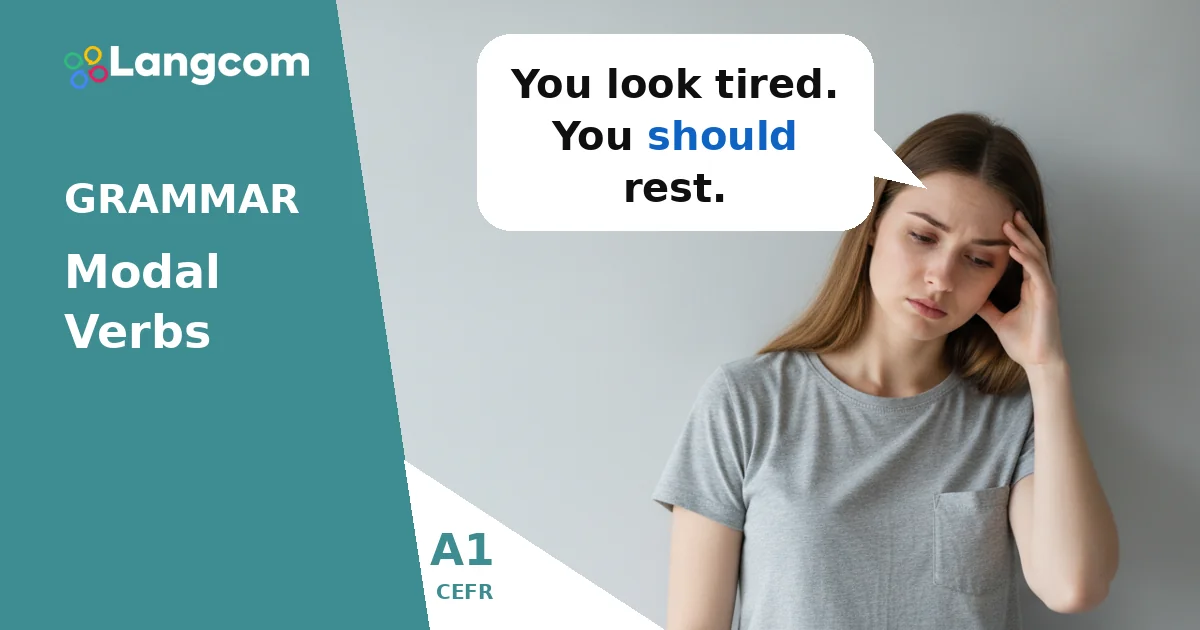

What is Should?
We use the word should to give advice or make a suggestion. It means something is a good idea or helpful.
Think of it like saying, ‘This is a good thing to do.’
- You should study for the test. (It’s a good idea to study.)
- He should go to bed early. (It’s helpful for him to sleep more.)
- We should help our friends. (It’s a good thing to do.)
🎓 تعلم اللغة الإنجليزية باستخدام الطريقة المختلطة
مجموعات صغيرة · مدرس ذكاء اصطناعي متاح على مدار الساعة · التحضير لامتحانات كامبريدج
خطط من $39 $79 في الشهر
How to Form Sentences with Should
The grammar for should is very easy. You do not change the verb after should.
- First, use the subject (I, you, he, she, it, we, they).
- ثم، أضف should.
- Finally, add the base form of the verb (the verb without 'to' and without -s or -ing).
The structure is always: Subject + should + Base Verb.
- I should call my mom.
- You should drink water.
- She should wear a coat.
- They should listen to the teacher.
When to Use Shouldn't
Shouldn't is the short form of should not. We use it to give negative advice or say that something is not a good idea.
Think of it like saying, 'This is not a good thing to do.'
- You shouldn't eat too much candy. (It's not a good idea for your health.)
- He shouldn't play with fire. (It's very dangerous.)
- They shouldn't talk loudly in the library. (It's not helpful for others.)
هيكل لـ shouldn't is the same as should: Subject + shouldn't + Base Verb.
Asking for Advice: Should I...?
You can also use should to ask for advice. To do this, you put should at the beginning of the question.
- الهيكل هو: Should + Subject + Base Verb?
على سبيل المثال:
- Should I buy this shirt?
- Should we go to the park?
- Should he tell her the truth?
To answer these questions, you can use short answers:
- Yes, you should.
- No, you shouldn't.
| النوع | الهيكل | مثال |
|---|---|---|
| Positive | Subject + should + base verb | You should rest. |
| Negative | Subject + shouldn't + base verb | You shouldn't worry. |
| Question | Should + subject + base verb? | Should I go? |
أمثلة
- You look tired. You should rest.
- It's cold outside. She should wear a warm jacket.
- He shouldn't forget his keys.
- We should be on time for the meeting.
- Should I bring a gift?
- No, you shouldn't. It's not necessary.
- They shouldn't waste food.
- You should try this new restaurant. It's very good!
التدريب
💬 هل تحتاج إلى إرشادات مخصصة؟
بصفتنا مركزًا معتمدًا للتحضير لاختبارات كامبريدج، يمكننا توجيهك نحو الدورة والشهادة المناسبتين لك. تحدث مع مستشارينا اليوم.
دردش مع مستشار على واتسابالأخطاء الشائعة لدى المتحدثين باللغة الإسبانية
Spanish speakers might sometimes confuse should with a stronger obligation like "deber". Remember, should is for advice, not a strict rule.
- Mistake 1: Using "to" after should.
- خطأ: He should to study.
- الصحيح: He should study.
- Explanation: After should, always use the base form of the verb without "to".
- Mistake 2: Changing the verb form after should.
- خطأ: She should eats.
- الصحيح: She should eat.
- Explanation: The verb after should never changes, even for he/she/it. It's always the base form.
- Mistake 3: Changing the verb form in questions.
- خطأ: Should he goes?
- الصحيح: Should he go?
- Explanation: In questions, the verb after the subject also stays in its base form.
الأسئلة الشائعة
What is the difference between should and must?
Should is for advice or suggestions; it's a recommendation. Must is for strong obligations or rules; it means something is necessary or required. For example, You should eat vegetables (good idea), but You must stop at a red light (it's a rule).
Can I use should for the past?
For A1 English, we use should to talk about advice for the present or future. For example, You should call her now أو You should visit next week. There are more complex forms for the past, but you will learn those later.
Is should formal or informal?
Should is a very common word and can be used in both formal and informal situations. It is a polite way to give advice or make suggestions to anyone.




0 تعليق