


متى نستخدم صيغة المضارع البسيط؟
We use the Present Simple to talk about things that are always true or happen regularly.
- Facts: The sun rises in the east.
- Habits or routines: I drink coffee every morning.
- Schedules: The train leaves at 7 PM.
In this lesson, we focus on using the Present Simple for he, she, ، و it in positive sentences.
🎓 تعلم اللغة الإنجليزية باستخدام الطريقة المختلطة
مجموعات صغيرة · مدرس ذكاء اصطناعي متاح على مدار الساعة · التحضير لامتحانات كامبريدج
خطط من $39 $79 في الشهر
How Do We Form Positive Sentences with He, She, It?
When the subject is he, she, ، أو it, ، نضيف -s to the end of the verb.
- بالنسبة لـ I, you, we, they, the verb stays the same: I work.
- بالنسبة لـ he, she, it, ، نضيف -s: He works.
This rule is very important for correct grammar.
Spelling Rules for -s Endings
Most verbs just add -s. However, some verbs have special spelling rules when you add -s. Look at the table below to see these rules.
What About the Verb 'Have'?
الفعل have is irregular for he, she, ، و it. It does not follow the -s rule.
- بالنسبة لـ I, you, we, they, ، نستخدم have: I have a cat.
- بالنسبة لـ he, she, it, ، نستخدم has: She has a cat.
Remember this special verb!
| Verb Ending | Rule | مثال |
|---|---|---|
| Most verbs | إضافة -s | work → works live → lives play → plays |
| Consonant + -y | Change -y إلى -ies | try → tries study → studies |
| Ends in -o, -ch, -ss, -s, -sh, -x | إضافة -es | teach → teaches go → goes do → does |
| Irregular verb have | Changes to has | have → has |
أمثلة
- My brother works in a restaurant.
- He lives in a small flat.
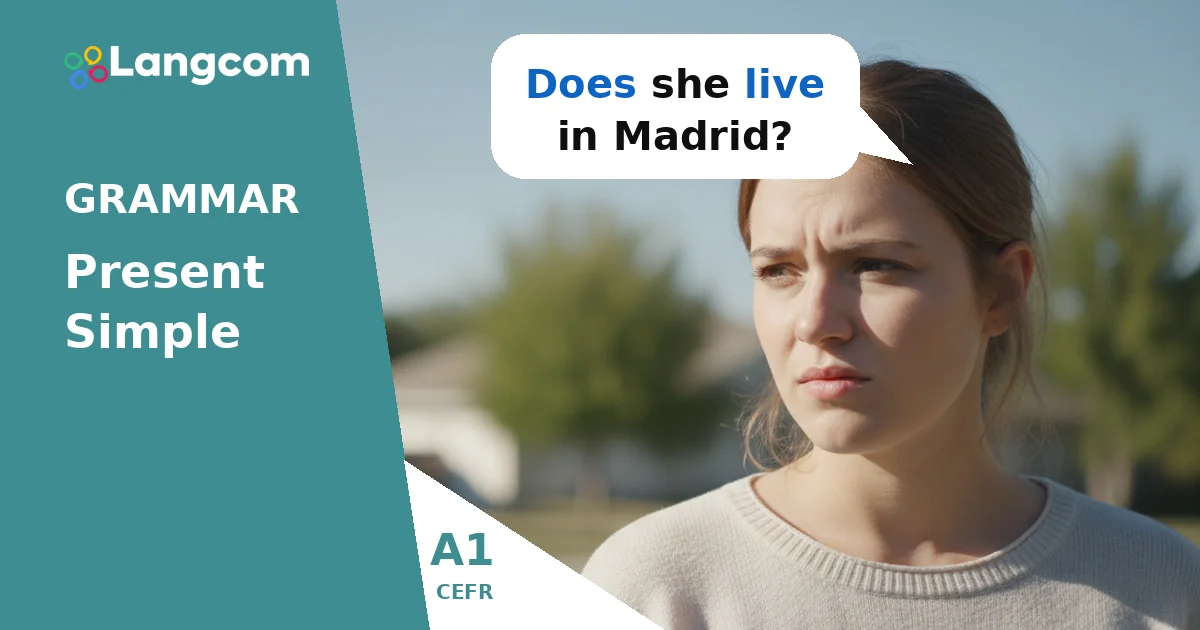
- Inez lives in Madrid.
- She studies at university.
- My house has a big door.
- It has small windows.
- He watches TV every evening.
- She goes to the gym on Tuesdays.
التدريب
💬 هل تحتاج إلى إرشادات مخصصة؟
بصفتنا مركزًا معتمدًا للتحضير لاختبارات كامبريدج، يمكننا توجيهك نحو الدورة والشهادة المناسبتين لك. تحدث مع مستشارينا اليوم.
دردش مع مستشار على واتسابالأخطاء الشائعة لدى المتحدثين باللغة الإسبانية
Forgetting the -s
Spanish verbs change a lot for different subjects. In English, for the Present Simple, only he, she, it add -s. A common mistake for Spanish speakers is to forget this -s.
- Incorrect: She live in Madrid.
- Correct: She lives in Madrid.
Using 'haves' instead of 'has'
Another mistake is trying to add -s إلى have, making it haves. تذكر،, have is irregular.
- Incorrect: He haves a car.
- Correct: He has a car.
الأسئلة الشائعة
Why do we add -s to verbs for he, she, it?
We add -s to verbs for he, she, it to show that the subject is singular (one person or thing) and the action happens in the present. It helps make sentences clear and grammatically correct.
Is 'have' the only irregular verb in the Present Simple for he, she, it?
For A1 level, have changing to has is the most important irregular verb to remember for he, she, it in positive sentences. Other verbs follow the spelling rules for adding -s أو -es.
Does the -s ending change the meaning of the verb?
No, the -s ending does not change the meaning of the verb. It only shows that the subject is he, she, ، أو it in the Present Simple tense.

0 تعليق