
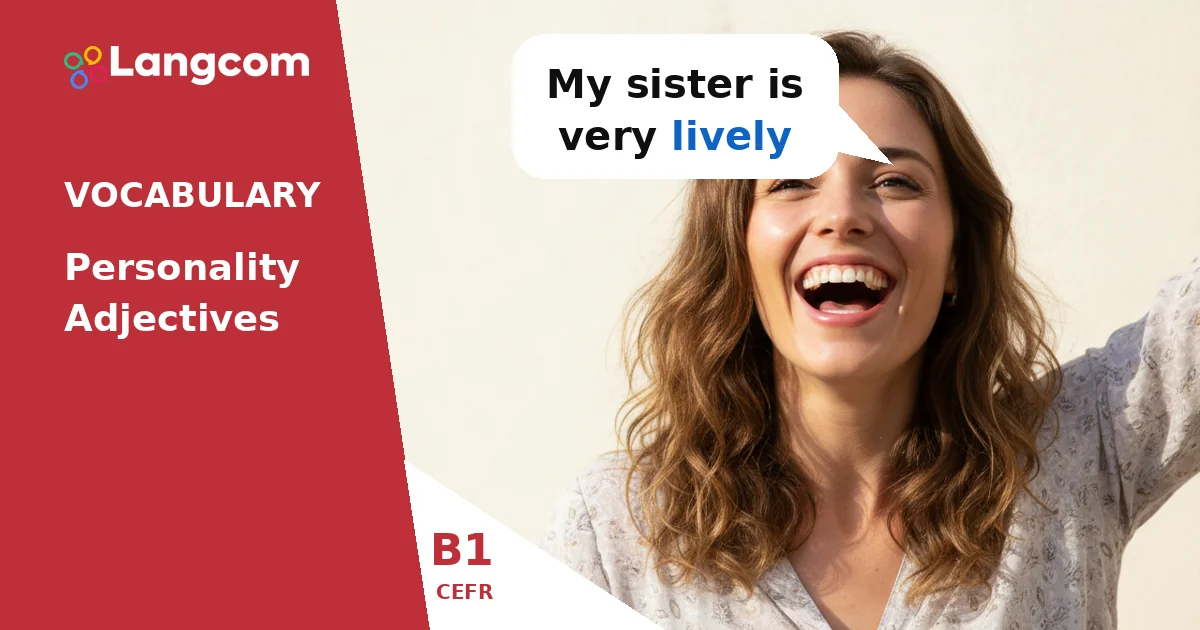

What Are Personality Adjectives?
Personality adjectives are words that describe a person’s character, feelings, and behavior. They tell us what someone is like on the inside.
Using these adjectives helps you give more detail when you talk or write about people. They make your descriptions richer and more interesting.
🎓 تعلم اللغة الإنجليزية باستخدام الطريقة المختلطة
مجموعات صغيرة · مدرس ذكاء اصطناعي متاح على مدار الساعة · التحضير لامتحانات كامبريدج
خطط من $39 $79 في الشهر
Common B1 Personality Adjectives
Here are some important B1 personality adjectives. You can use them to describe yourself, your friends, or people you read about.
-
Sociable: Someone who likes spending time with other people. They enjoy company and social activities.
-
Shy: Someone who is not confident, especially when meeting new people. They might feel uncomfortable talking a lot.
-
Lively: Someone who is full of energy and enthusiasm. They are often cheerful and active.
-
Active: Someone who does a lot of things or moves around a lot. They are often involved in sports or many activities.
-
Talkative: Someone who talks a lot. They enjoy conversations and expressing their thoughts verbally.
-
Sensitive: Someone who is easily upset or feels emotions deeply. They can also be very understanding of others' feelings.
How to Use Personality Adjectives in Sentences
You can use personality adjectives in two main ways:
-
قبل الاسم: The adjective comes before the person it describes.
على سبيل المثال: She is a sociable person.
-
After a 'be' verb (is, am, are, was, were): The adjective comes after the verb.
على سبيل المثال: My brother is shy.
Describing Introverts and Extroverts
Personality adjectives are very useful for talking about different personality types, like introverts and extroverts.
-
Extroverts often enjoy being with people. They might be described as sociable, talkative, active, ، أو lively.
-
Introverts often prefer quiet time or small groups. They might be described as shy أو sensitive. This doesn't mean they are not interesting, just that they express themselves differently.
| صفة | المعنى | جملة مثال |
|---|---|---|
| Sociable | Likes spending time with other people. | She's very sociable and loves parties. |
| Shy | Not confident, especially with new people. | He's a bit shy, but very kind once you know him. |
| Lively | Full of energy and enthusiasm. | The children were very lively at the birthday party. |
| Active | Does a lot of things or moves around a lot. | My grandfather is still very active; he walks every day. |
| Talkative | Talks a lot. | My aunt is very talkative; she can chat for hours. |
| Sensitive | Easily upset or feels emotions deeply. | He is a sensitive person, so be careful with your words. |
أمثلة
- My sister is very lively; she always has new ideas.
- He is a talkative student and always participates in class.
- Don't be too loud, my mother is very sensitive to noise.
- Even though he's shy, he's a very good listener.
- They are a very active family; they love hiking and cycling.
- She's so sociable that she knows everyone in the neighborhood.
التدريب
✍️ لست متأكدًا من مستواك؟
خُذ اختبار تحديد المستوى المجاني الخاص بنا واحصل على تعليقات مخصصة من ممتحنين معتمدين من كامبريدج.
قم بإجراء اختبار تحديد المستوى المجانيالأخطاء الشائعة لدى المتحدثين باللغة الإسبانية
Common Mistakes with Personality Adjectives
-
مربك sensitive و sensible: In Spanish, 'sensible' often means sensitive. However, in English, sensible means practical and reasonable, while sensitive means easily upset or very aware of others' feelings.
-
خطأ: My friend is very sensible and cries easily.
-
الصحيح: My friend is very sensitive and cries easily.
-
-
Direct translation of 'simpático': Many Spanish speakers translate 'simpático' directly to sympathetic. ومع ذلك،, sympathetic means you feel pity or understanding for someone's problems. For 'simpático', use friendly, nice, ، أو pleasant.
-
خطأ: My new colleague is very sympathetic. (Unless you mean they feel sorry for people.)
-
الصحيح: My new colleague is very friendly.
-
-
ترتيب الكلمات غير صحيح: Remember that adjectives usually come before the noun they describe.
-
خطأ: He is a person shy.
-
الصحيح: He is a shy person.
-
الأسئلة الشائعة
What is the difference between active و lively?
Active means someone does a lot of physical things or is busy. Lively means someone is full of energy, enthusiasm, and often cheerful. A person can be active without being lively (e.g., a serious athlete), and lively without being extremely active (e.g., a person with a bright personality).
Can I use personality adjectives for things, not just people?
Generally, no. Personality adjectives describe human characteristics. For things, you would use different adjectives. For example, you wouldn't say a shy book, but you might say an interesting book.
How can I remember new personality adjectives?
Try to connect new adjectives to people you know. For example, think: My friend Ana is very sociable. You can also use flashcards, draw pictures, or write sentences about fictional characters.
How are personality adjectives used in B1 English exams?
In B1 English exams, you might use personality adjectives in speaking tasks to describe friends, family, or people in pictures. In writing, you could use them in emails, short stories, or opinion essays to give more detail about individuals and make your descriptions more vivid.

0 تعليق