
بواسطة راؤول | 19 يوليو 2026 | اللغة الإنجليزية فوق المتوسط B2 فوق المتوسط
To talk about health in English, you need specific vocabulary for illnesses, injuries, and symptoms. Mastering words like come down with (to get sick), strain (to injure a muscle), faint (to lose consciousness), bruise (a mark on the skin), and dizzy (feeling...

بواسطة راؤول | 19 يوليو 2026 | اللغة الإنجليزية للمبتدئين (ما قبل المستوى A1) للأطفال
Adjectives are special words that describe nouns. They tell us more about people, animals, places, or things. Think of them like descriptive labels! For example, if you see a dog, you can say The dog is big. Here, big is an adjective. It tells us about the dog’s...

بواسطة راؤول | 19 يوليو 2026 | اللغة الإنجليزية للمبتدئين (ما قبل المستوى A1) للأطفال
Adjectives are words that describe nouns (people, places, things, ideas). They tell us more about what something is like, adding important details to your sentences. For example, if you see a beautiful flower, beautiful is the adjective. At the Pre-A1 level, learning...
بواسطة راؤول | 19 يوليو 2026 | اللغة الإنجليزية للمبتدئين (ما قبل المستوى A1) للأطفال
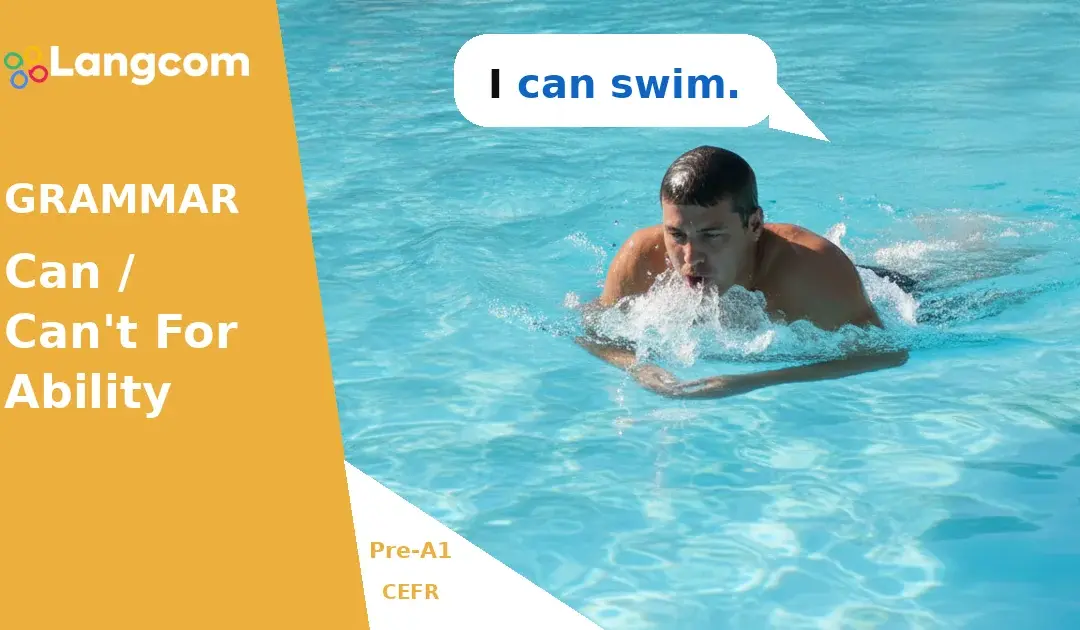
Can and can’t are essential English words to talk about abilities. You use can to say what you are able to do, like I can speak English. It means you have the skill or the possibility to do something. To express what you are not able to do, you use can’t,...

بواسطة راؤول | 19 يوليو 2026 | A1: اللغة الإنجليزية للمبتدئين
Collocations are words that naturally go together in English. Learning collocations helps your English sound more natural and fluent, just like a native speaker. Instead of saying words separately, collocations are like ready-made phrases. For example, we say do...
