
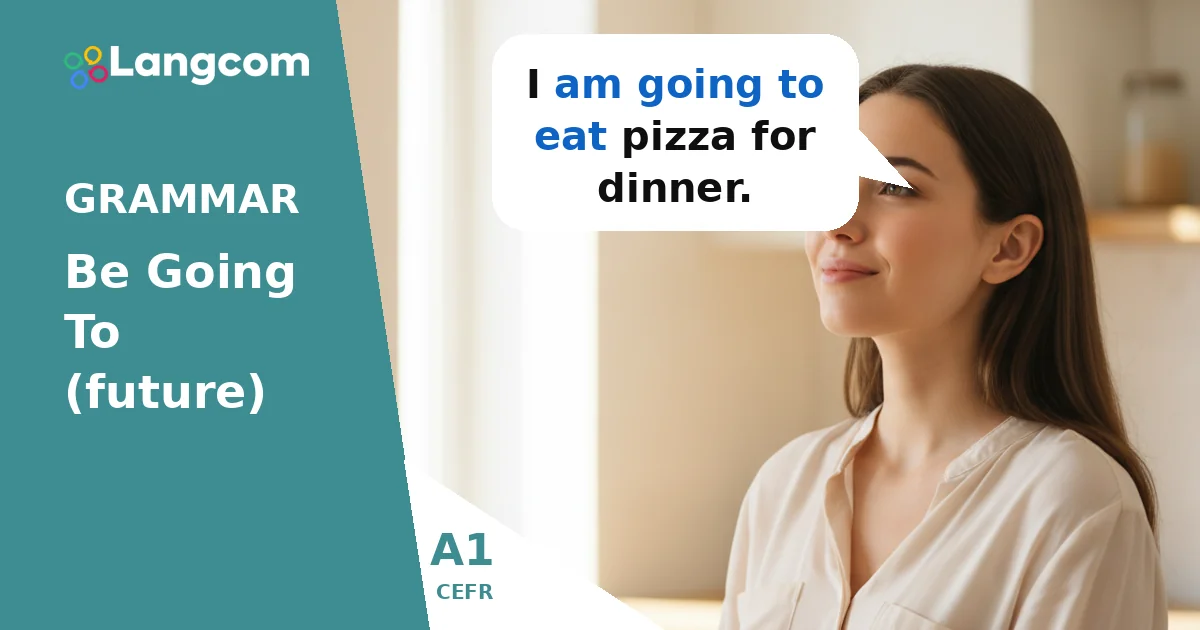

我们使用 be going to 讨论未来的计划和预测。. 这种语法结构有助于你表达自己的打算,或者你认为很快就会发生的事情。它适用于你已经做出的决定,或者根据当前情况判断即将发生的事情。例如,如果你说 I am going to visit my family next month, 你正在分享自己制定的计划。如果你望着乌云说 It is going to rain, 你是根据目前所见的情况做出预测的。请记住要使用动词的正确形式。 to be (am, is, are) 之前 going to 然后是主要动词的原形。这是英语中表达将来时的一种非常常见且实用的方式。.
‘Be Going To’是什么意思?
Be going to 是一种谈论未来的方式。它有助于我们表达计划或我们确信会发生的事情。.
- 这是针对你已经制定的计划。.
- 它还适用于基于你目前所见或所知所作的预测。.
'Be Going To'是如何构成的?
用于 be going to 很简单:
- Subject + verb 'to be' (am/is/are) + going to + base form of the main verb
动词 to be 根据主题的不同而有所变化:
- I + am going to + verb
- You/We/They + are going to + verb
- He/She/It + is going to + verb
什么时候用'Be Going To'?
我们使用它主要有两种情况: be going to:
1. 关于未来计划和打算
使用 be going to 当你谈论某件事时,其实你已经决定将来要做这件事了。.
- I am going to study English tonight. (这就是我的计划。)
- They are going to buy a new car next month. (他们已经决定了。)
2. 基于现有证据的预测
使用 be going to 当你现在看到某些迹象,预示着未来会发生什么时。.
- 快看那些乌云! It is going to rain. (你看到云了,所以预测会下雨。)
- 哎呀,宝宝在哭。. She is going to wake up her brother. (你听到了哭声,所以你预测弟弟会醒来。)
'Be Going To'的常见时间短语'
您可以使用 be going to 其中包含许多时间短语,用于说明动作发生的时间:
- tomorrow
- next week/month/year
- soon
- later
- this evening/weekend
| 主题 | 动词'to be' | 前往 | 基本动词 | 示例 |
|---|---|---|---|---|
| I | am | going to | eat | I am going to eat. |
| You | are | going to | study | You are going to study. |
| He/She/It | is | going to | sleep | He is going to sleep. |
| We | are | going to | watch | We are going to watch. |
| They | are | going to | travel | They are going to travel. |
示例
- I am going to eat pizza for dinner.
- She is going to travel to London next year.
- We are going to watch a movie tonight.
- He is going to learn to play the guitar.
- They are going to visit their grandparents this weekend.
练习
西班牙语母语者常犯的错误
讲西班牙语的人有时会犯以下错误:
- 忘记'be': 在西班牙语中,你可能只需说'voy a estudiar'。但在英语中,你需要使用动词 to be.
- 错误: I going to study.
- 正确: I am going to study.
- 主要动词的变位: “after”后的动词 going to 必须始终保持其原形(不带'to'的不定式)。.
- 错误: She is going to goes to the park.
- 正确: She is going to go to the park.
- 将'going to'与身体动作混为一谈: 请记住 going to 是一个表示未来的词,并不总是指搬到某个地方。.
- I am going to eat. (不是为了吃饭而动,只是打算吃饭。)
常见问题
'be going to'的主要用途是什么?
的主要用途是 be going to 是指谈论你已经制定的计划,或者根据当前所见情况做出的预测。.
如何用'be going to'造句?
用……造一个句子 be going to 通过使用 Subject + am/is/are + going to + base verb. 例如,, I am going to read.
对于正在发生的事情,我可以使用'going to'吗?
不,, be going to 仅用于描述未来的动作或预测。对于正在发生的动作,我们使用现在进行时,例如 I am reading.


0 条评论