
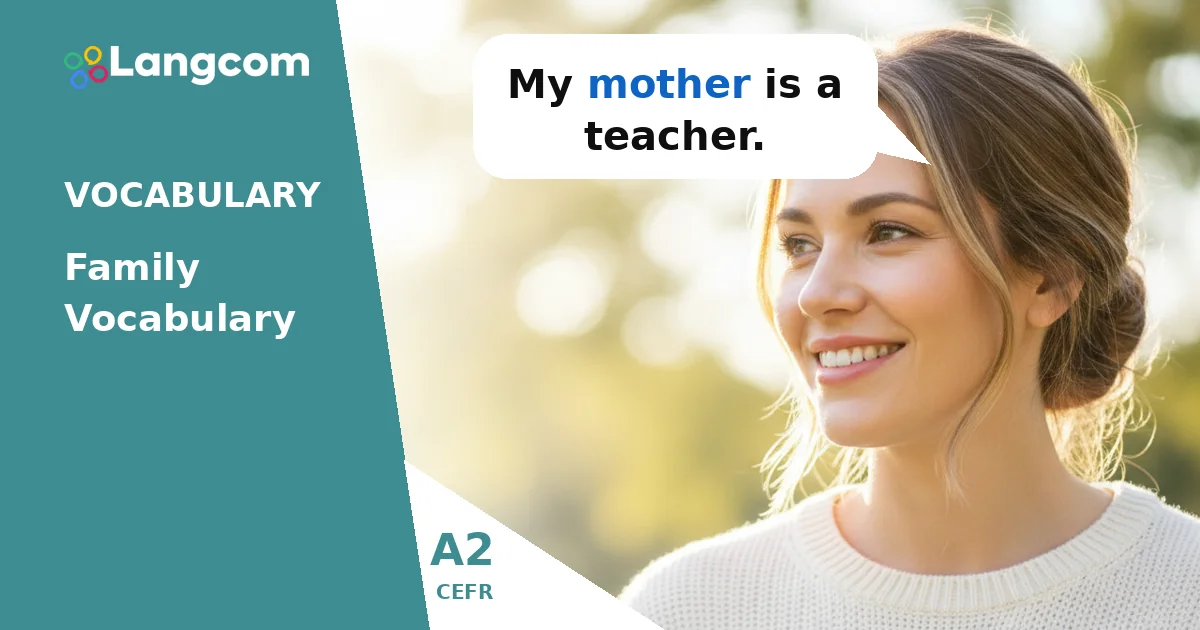

学习英语中的家庭词汇,有助于你谈论身边最亲近的人,这对A2 Key考试也很重要。. 你将学习到诸如……之类的单词 mother, father, sister, , 和 brother 针对您的直系亲属。至于您的旁系亲属,您将了解到 grandparents, aunts, uncles, , 和 cousins. 掌握这些词汇有助于你清晰、准确地描述人际关系。这些词汇对于日常对话至关重要,既能让你介绍自己的家人,也能帮助你理解他人。此外,它们还能为你应对A2 Key考试中的具体任务做好准备,例如描述家庭图片或回答关于亲属的个人问题。 掌握这些术语,能为你进行更复杂的英语交流打下坚实基础,并帮助你在谈论个人生活时更加自信。.
为什么英语中的“家庭”词汇很重要?
掌握家庭相关词汇对A2级英语学习者非常有用。这有助于你谈论自己的生活并理解他人。.
- 日常对话: 你可以介绍自己的家人,也可以询问别人的家庭情况。.
- A2 Key 考试: 在A2 Key考试的口语部分,你可能需要描述一张家庭照片,或者回答关于你自己家庭的问题。使用恰当的词汇可以体现你具备良好的沟通能力。.
你的直系亲属:核心词汇
以下是你最亲密的家庭成员:
- Mother: 你的母亲。.
- Father: 你的父亲。.
- Parents: 您的 mother 和 father.
- Son: 你的儿子。.
- Daughter: 你的女儿。.
- Children: 您的 sons 和 daughters.
- Brother: 一名与上述情况相同的男性 parents 像你一样。.
- Sister: 一名与上述情况相同的女性 parents 像你一样。.
- Siblings: 您的 brothers 和 sisters.
- Husband: 已婚男子。.
- Wife: 已婚的女性。.
您的大家庭:更多联系
以下词语描述了你家庭中的其他亲属:
- Grandmother (或 grandma, granny): 您的 mother's mother 或 father's mother.
- Grandfather (或 grandpa, grandad): 您的 mother's father 或 father's father.
- Grandparents: 您的 grandmother 和 grandfather.
- Aunt: 您的 mother's sister 或 father's sister. 此外,你的 uncle's wife.
- Uncle: 您的 mother's brother 或 father's brother. 此外,你的 aunt's husband.
- Cousin: 你孩子的 aunt 或 uncle. 这个词既指男性,也指女性。.
- Grandson: 该 son 你的 son 或 daughter.
- Granddaughter: 该 daughter 你的 son 或 daughter.
- Grandchildren: 您的 grandsons 和 granddaughters.
How to Use Possessive 's with Family Members
为了表示某物属于某位家庭成员,或者表示某种关系,我们使用 's.
- This is Maria's sister. (玛丽亚有一个妹妹。)
- My father's name is David. (这个名字是我父亲的。)
- Are these your grandparents' photos? (这些照片是你们祖父母的。)
请记住,对于以 -s, 只需加上一个撇号: my parents' house.
| 家庭成员 | 关系 |
|---|---|
| Mother | Female parent |
| Father | Male parent |
| Parents | Mother and father |
| Brother | Male sibling |
| Sister | Female sibling |
| Siblings | Brothers and sisters |
| Son | Male child |
| Daughter | Female child |
| Children | Sons and daughters |
| Husband | Married man |
| Wife | Married woman |
| Grandmother / Grandma | Parent's mother |
| Grandfather / Grandpa | Parent's father |
| Grandparents | Grandmother and grandfather |
| Aunt | Parent's sister or uncle's wife |
| Uncle | Parent's brother or aunt's husband |
| Cousin | Child of an aunt or uncle |
| Grandson | Child's son |
| Granddaughter | Child's daughter |
| Grandchildren | Grandsons and granddaughters |
示例
- My mother is a teacher.
- His father works in an office.
- They have two children, a son and a daughter.
- My brother is older than me.
- She lives with her sister.
- My grandparents live in a big house.
- My aunt and uncle are coming to visit.
- I have many cousins.
- Her husband is very kind.
- His wife likes to read.
练习
西班牙语母语者常犯的错误
关于“家庭”词汇的常见错误
讲西班牙语的人有时会犯以下错误:
- Parents vs. Relatives: In Spanish, 'parientes' means 'relatives' (family members in general). In English, parents 仅指你的 mother 和 father.
- 错误: My parents are my aunt and uncle.
- 右: My relatives are my aunt and uncle. 或 My parents are my mother and father.
- Son vs. Sun: 这些词发音相似,但含义不同。. Son 是一个男孩子。. Sun 是天上的星星。请注意发音和拼写。.
- 错误: The sun is playing in the garden.
- 右: My son is playing in the garden.
常见问题
What is the difference between 'grandma' and 'granny'?
两者 grandma 和 granny 平均 grandmother. Grandma 非常常见且友好。. Granny 也同样亲切,但听起来可能稍显老派或传统一些,常被年幼的孩子使用。这两种说法都是正确的。.
在A2 Key考试中,我该如何谈论我的家庭?
在A2 Key口语考试中,你可能会被要求描述你的家庭。请运用你在这里学到的词汇。例如,你可以这样说: I have one brother and one sister. My mother is a doctor. 或者,如果你看到一张家庭照片,你可以说: I see a mother, a father, and two children.
Are there other words for 'parents'?
对于你的情况,最常见且正确的词是 mother 和 father 是 parents. 有时,在非常随意的场合,人们可能会说 folks, ,但是 parents 对于A2级别来说,这总是最好的选择。.

0 条评论