
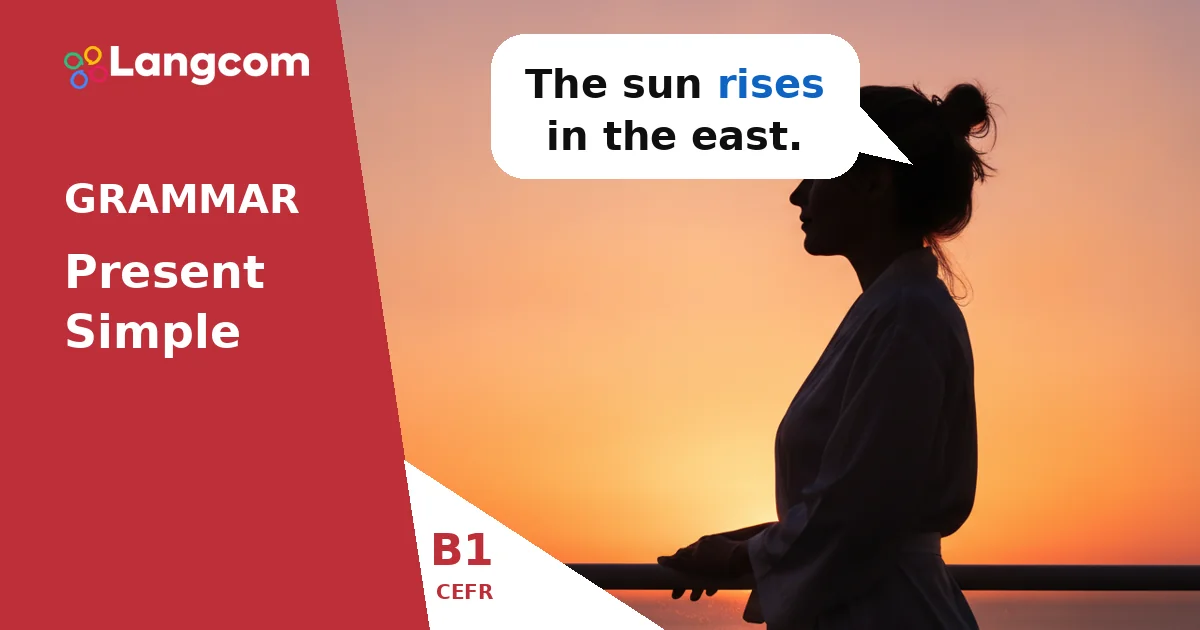

What is the Present Simple and When Do We Use It?
The Present Simple describes actions or situations that are always true, happen regularly, or are part of a schedule. It is about general facts and routines.
- General Facts or Truths: Things that are always true. For example, Water boils at 100 degrees Celsius.
- Habits and Routines: Actions you do regularly. For example, I usually wake up at 7 AM.
- Opinions and Beliefs: What you think or feel. For example, She believes in hard work.
- Schedules and Timetables: Fixed events like transport or class times. For example, The train leaves at 8:30.
The form is Subject + base form of verb (add -s 用于 he/she/it).
What is the Present Continuous and When Do We Use It?
The Present Continuous describes actions that are happening at a specific moment, are temporary, or are planned for the future. It focuses on ongoing actions.
- Actions Happening Now: What is happening at the moment of speaking. For example, What are you doing? I am reading a book.
- Actions Happening Around Now (Temporary): Actions that are in progress but not necessarily at this exact second. For example, He is studying Spanish this semester.
- Future Arrangements: Plans you have made for the future. For example, We are meeting friends tonight.
- Annoying Habits (with 'always'): To complain about something someone does too often. For example, You are always interrupting me!
The form is Subject + am/is/are + verb-ing.
What Are Stative Verbs? (Verbs Not Used in Continuous)
Some verbs describe states or conditions, not actions. These 'stative verbs' are usually not used in the Present Continuous form. They describe how things are, not what they are doing.
- Mental States: Verbs like know, understand, believe, remember, forget, think (when it means 'have an opinion'). 例如,, I know the answer. (非 I am knowing the answer.)
- Emotions: Verbs like love, like, hate, want, prefer, need. 例如,, She loves chocolate. (非 She is loving chocolate.)
- 占有: Verbs like have (when it means 'possess'), own, belong. 例如,, They have a big house. (非 They are having a big house.)
- Senses (Passive): Verbs like see, hear, smell, taste, feel (when describing how something is naturally). For example, This soup tastes delicious.
- Other States: Verbs like be, seem, appear, cost, weigh. 例如,, He seems tired. (非 He is seeming tired.)
Special Cases: Verbs with Two Meanings
Some verbs can be both stative and dynamic (action verbs), but their meaning changes depending on the tense used.
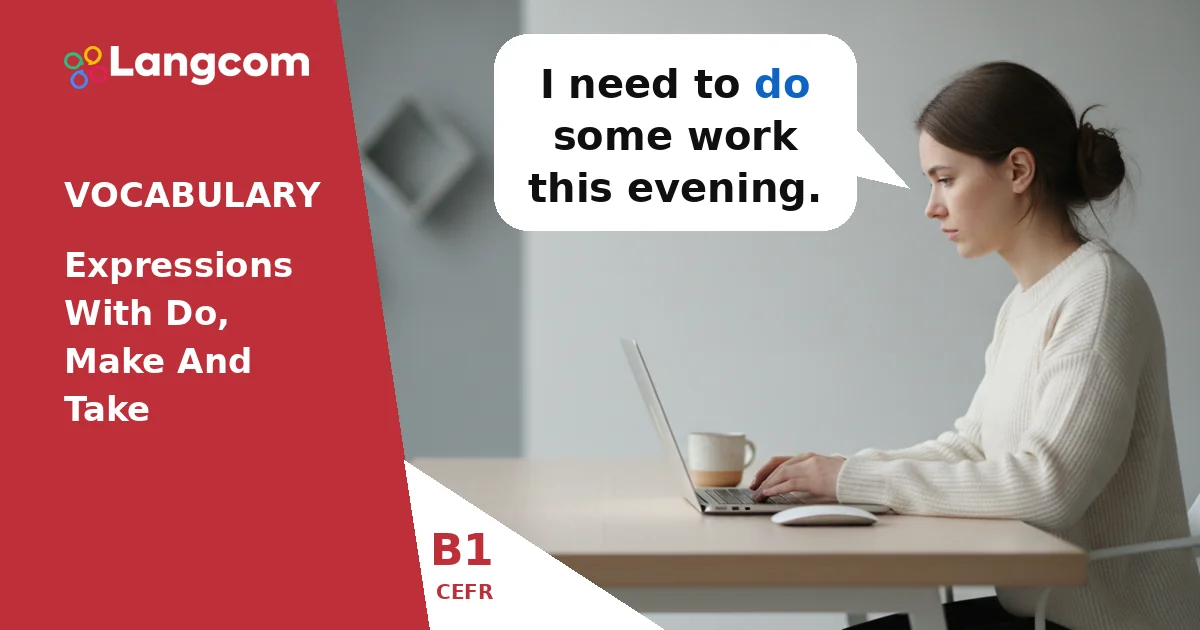
- Think:
- Stative (opinion): I think it's a good idea. (This is my opinion.)
- Dynamic (mental process): I am thinking about my holidays. (This is an active process in my mind.)
- Have:
- Stative (possession): She has a new car. (She owns it.)
- Dynamic (experience/action): They are having a great time. (They are experiencing a good time.)
- See:
- Stative (understand): I see what you mean. (I understand.)
- Dynamic (meet/visit): I am seeing the doctor tomorrow. (I have an appointment.)
- Taste, Smell, Feel:
- Stative (natural quality): This coffee smells wonderful. (It has a wonderful smell.)
- Dynamic (active action): The chef is tasting the soup. (The chef is actively trying the soup.)
| 使用 | Present Simple | Present Continuous |
|---|---|---|
| Facts / General Truths | The Earth is round. | (Not typically used) |
| Habits / Routines | She drinks tea daily. | You are always complaining! (Annoying habit) |
| Actions Happening Now | (Not typically used) | He is watching TV. |
| Temporary Actions | (Not typically used) | They are living in London this year. |
| Opinions / Beliefs | I think it's true. | (Not typically used) |
| Future (Schedules) | The bus leaves at 9 AM. | (Not typically used) |
| Future (Arrangements) | (Not typically used) | I am meeting him tomorrow. |
| Stative Verbs | I know him. | (Not usually used) |
示例
- The sun rises in the east.
- She drinks coffee every morning.
- Water boils at 100 degrees Celsius.
- I usually wake up at 7 AM.
- She believes in hard work.
- The train leaves at 8:30.
- What are you doing? I am reading a book.
- He is studying Spanish this semester.
- We are meeting friends tonight.
- You are always interrupting me!
- I know the answer.
- She loves chocolate.
- They have a big house.
- This soup tastes delicious.
- He seems tired.
- I think it's a good idea.
- I am thinking about my holidays.
- She has a new car.
- They are having a great time.
- I see what you mean.
- I am seeing the doctor tomorrow.
- This coffee smells wonderful.
- The chef is tasting the soup.
练习
西班牙语母语者常犯的错误
Spanish speakers often make these common mistakes when using the Present Simple and Present Continuous:
- Using Present Simple for actions happening now: In Spanish, you might say 'Leo un libro ahora' (I read a book now). In English, for an action happening at this moment, you must use the Present Continuous.
- 错误: I read a book now.
- 正确: I am reading a book now.
- Using Present Continuous with stative verbs: This is a very common error. Remember that verbs describing states, not actions, usually stay in the simple form.
- 错误: I am knowing the answer.
- 正确: I know the answer.
- 错误: She is wanting a new phone.
- 正确: She wants a new phone.
- Confusing habits with temporary actions: Make sure to use the correct tense for general habits versus actions happening for a limited time.
- Incorrect (for a general habit): I am working every day.
- Correct (for a general habit): I work every day.
- Correct (for a temporary habit): I am working a lot this week.
常见问题
What is the main difference between Present Simple and Present Continuous?
The Present Simple is for general truths, habits, and schedules. The Present Continuous is for actions happening now, around now, or for definite future arrangements.
Can I use the Present Simple for future events?
Yes, you can use the Present Simple for future events that are part of a fixed schedule or timetable, like The flight departs at 10 AM tomorrow.
Can I use the Present Continuous for future events?
Yes, you can use the Present Continuous for personal plans or arrangements that you have already made, such as I am meeting my friends for dinner tonight.
Why can't I say 'I am loving it'?
动词 love is a stative verb that describes an emotion, not an action. Stative verbs are usually not used in continuous forms. So, you should say I love it. (Note: In very informal or advertising language, you might hear I'm loving it, but it's not standard grammar.)
How can I remember which verbs are stative?
Think of categories: verbs describing mental states (know, believe), emotions (love, hate), possession (have, own), passive senses (see, hear), and other states (be, seem). These are usually stative.

0 条评论