


What is the difference between house and home?
In English, house 和 home are similar but have different meanings. It is important to know when to use each word.
- A house is a physical building. It is a structure made of walls, a roof, and floors. You can buy or sell a house.
- A home is the place where someone lives, often with their family. It is more about feelings, comfort, and belonging. Your home can be a house, a flat, or even a room.
试想一下 house as a noun for a building and home as a noun for a place of belonging, or an adverb meaning ‘to your home’.
What are the main rooms in a house or flat?
Every house 或 flat has different rooms for different activities. Here are some common ones:
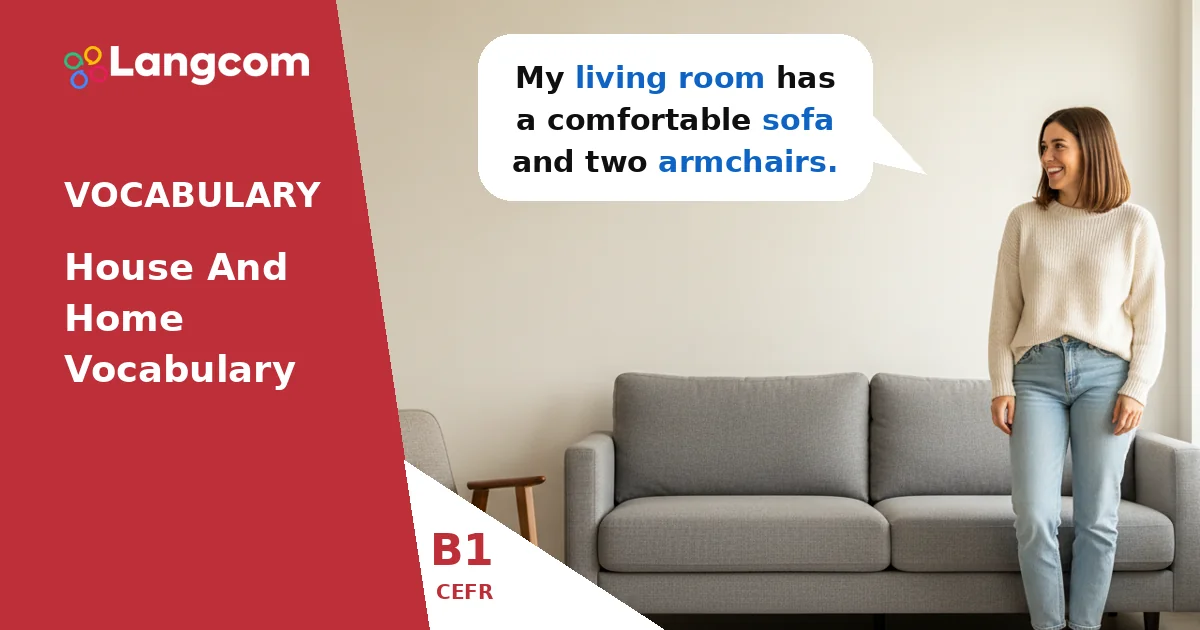
- "(《世界人权宣言》) living room: This is often the biggest room. People relax here, watch TV, or talk with family and friends.
- "(《世界人权宣言》) kitchen: This is where you cook food. It usually has a cooker, a fridge, and a sink.
- "(《世界人权宣言》) dining room: This room is for eating meals, especially dinner. Some homes have a kitchen-diner, which is a kitchen and dining room combined.
- "(《世界人权宣言》) bedroom: This is where you sleep. Most bedrooms have a bed and a wardrobe.
- "(《世界人权宣言》) bathroom: This room has a bath or shower, a toilet, and a sink.
What about other areas and outdoor spaces?
Besides the main rooms, homes often have other important areas:
- "(《世界人权宣言》) hall: This is the area just inside the front door. It connects to other rooms.
- Stairs: If a house has more than one floor, you use stairs to go up and down.
- A balcony: This is a small outdoor platform attached to an upper floor of a building. You can sit outside here.
- A garden: This is an outdoor area, usually with grass, plants, and flowers. Many houses have a garden.
- A garage: This is a building or part of a building where you keep a car.
| Room/Area | Common Items |
|---|---|
| Living Room | sofa, armchair, cushions, rug |
| Bedroom | bed, wardrobe, mirror |
| Bathroom | bath, shower, mirror, toilet |
| Kitchen | cooker, fridge, sink |
| Dining Room | dining table, chairs |
| Hall | coat rack, mirror |
示例
- Our new house has a big garden with many flowers.
- I love relaxing on the sofa in the living room after work.
- They are building a new block of flats near my home.
- My bedroom is small, but it's very comfortable.
- We eat dinner together every evening in the dining room.
- The kitchen has a new fridge and a modern cooker.
- She took a long bath to relax after her busy day.
- He keeps his car in the garage, next to his bicycle.
- The hall is usually the first place you see when you enter a house.
- There are two flights of stairs to reach the top floor.
练习
西班牙语母语者常犯的错误
讲西班牙语的人有时会混淆 house 和 home because the word 'casa' in Spanish can mean both. Remember:
- 错误: I'm going to my house. (If you mean your place of residence, not the building itself)
- 正确: I'm going home. (As an adverb, or I'm going to my home. as a noun, but home as an adverb is more common).
- 错误: My home is very big. (If you are talking about the physical building, not the feeling).
- 正确: My house is very big.
Also, do not confuse bathroom 与 toilet. A bathroom is a room with a bath or shower, while a toilet is just the fixture for waste, or a small room containing only a toilet and sink.
常见问题
What is a flat?
A flat is a set of rooms for living in, usually on one floor of a larger building. It is the British English word for what Americans call an apartment.
Can I use house and home interchangeably?
No, not always. While your home might be a house, the words carry different meanings. Use house for the physical building and home for the place of belonging or as an adverb meaning 'to your residence'.
How can I describe my home for the B1 Preliminary exam?
For the B1 Preliminary exam, especially in the Speaking Part 2 (long turn) or Writing Part 2 (email/story), you can describe your home by talking about its type (house 或 flat), the number of bedrooms, the size of the living room, if it has a garden 或 balcony, and what you like most about it. Use the vocabulary from this lesson!
What is the difference between a living room and a dining room?
"(《世界人权宣言》) living room is typically for relaxing, watching TV, and socializing. The dining room is specifically for eating meals. Some modern homes combine these or have a kitchen-diner.



0 条评论