

什么是形容词?它们为什么重要?
Adjectives are words that describe nouns. They give us more information about people, places, things, or ideas. For example, in the phrase a funny movie, the word funny is an adjective that describes the noun movie.
Using adjectives makes your English more interesting and specific. They help listeners and readers understand exactly what you mean.
Why Learn Adjective Opposites?
Learning adjectives in pairs with their opposites is a very effective way to expand your vocabulary. It helps you understand the full range of meaning for each word.
- Express Contrast: You can talk about differences more easily, for example, The exam was difficult, but the homework was easy.
- Improve Fluency: Knowing opposites helps you find the right word quickly when speaking or writing.
- Understand Nuance: It deepens your understanding of how words relate to each other.
How to Use Adjectives in Sentences
Adjectives usually appear in two main positions in English sentences:
- Before a Noun: The adjective comes directly before the noun it describes. She has a positive attitude.
- After a Verb like 'Be': The adjective comes after verbs such as be, seem, feel, look, sound, taste, 或 smell. He feels relaxed.
Tips for Remembering New Adjectives
Learning new vocabulary takes practice. Here are some tips to help you remember adjectives and their opposites:
- Use Them in Context: Try to create your own sentences with new words.
- Flashcards: Write the adjective on one side and its opposite on the other.
- Group by Topic: Learn adjectives related to feelings, personality, or descriptions of things together.
- Read and Listen: Pay attention to adjectives when you read books, watch movies, or listen to podcasts in English.
| 形容词 | Opposite |
|---|---|
| fantastic | awful |
| funny | serious |
| generous | selfish |
| complicated | simple |
| miserable | happy |
| ordinary | special |
| positive | negative |
| relaxed | stressed |
示例
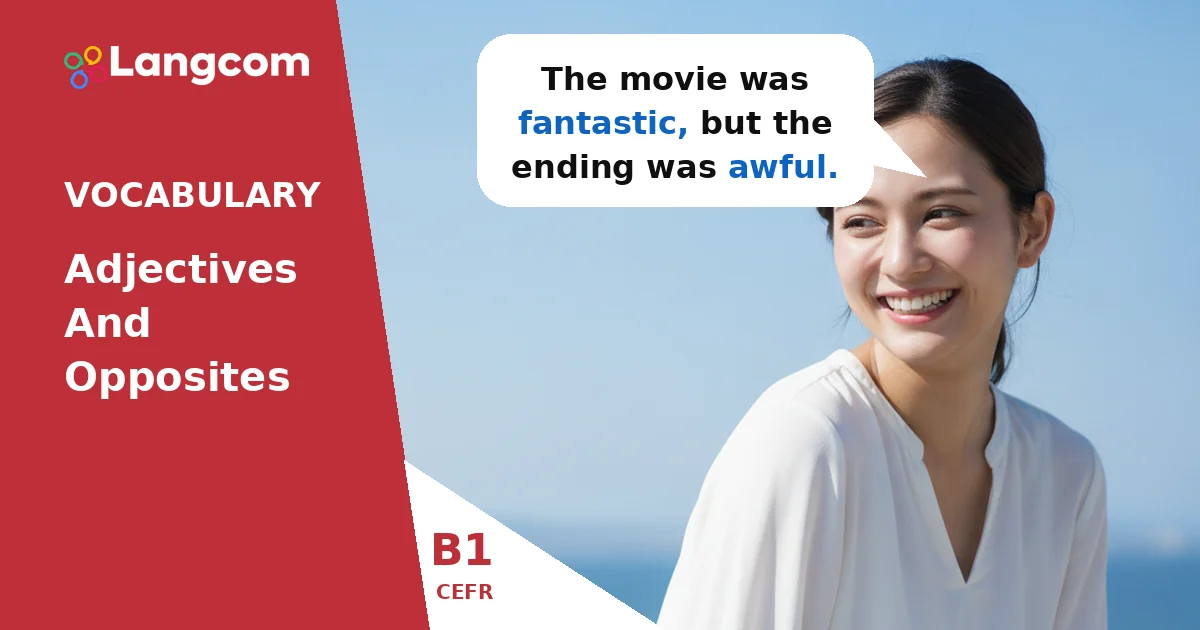
- The movie was fantastic, but the ending was awful.
- He told a funny joke, and everyone laughed.
- She is very generous with her time, unlike some selfish people.
- The instructions were complicated, so I asked for a simple explanation.
- He felt miserable after losing the game, but now he is happy.
- It was an ordinary day, nothing special happened.
- Try to stay positive, even when things are negative.
- After the exam, I felt relaxed, not stressed.
练习
西班牙语母语者常犯的错误
Common Mistakes with Adjectives for Spanish Speakers
Spanish speakers sometimes make specific mistakes when using English adjectives:
- False Friends: Be careful with words that look similar but have different meanings. For example, Spanish sensible 意为 sensitive in English, not sensible (which means practical or reasonable).
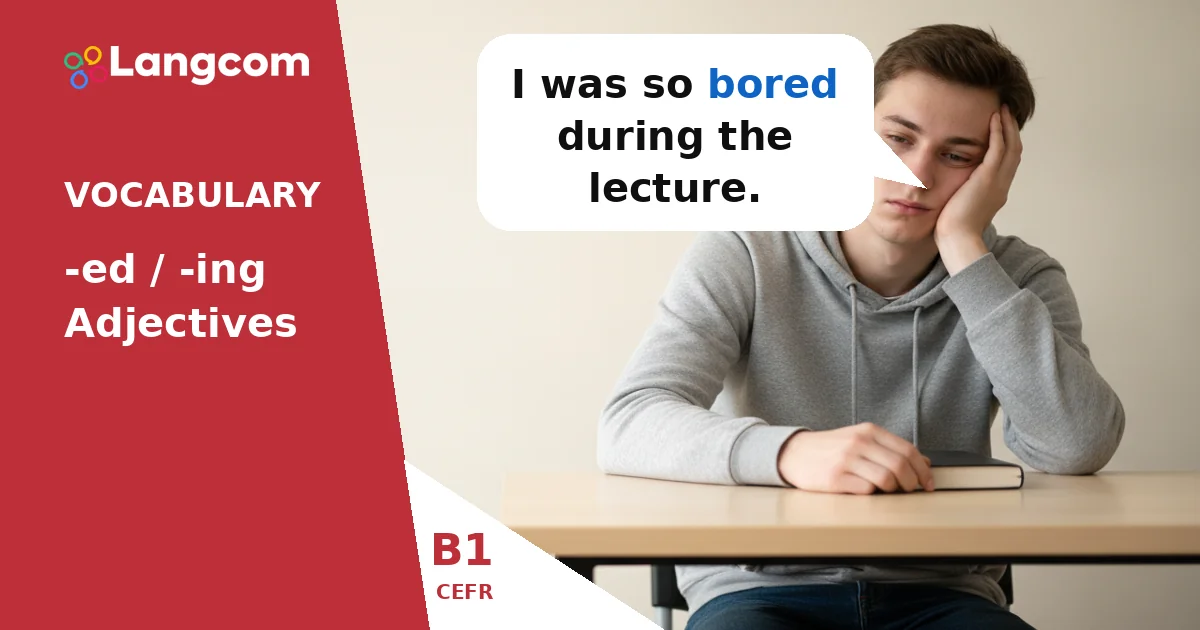
- Confusing -ed and -ing Adjectives: Remember that adjectives ending in -ed describe feelings (I am bored), while those ending in -ing describe the thing that causes the feeling (The movie is boring).
- Incorrect Placement: In Spanish, adjectives often come after the noun. In English, they usually come before the noun (a red car, 而不是 a car red).
常见问题
什么是形容词?
An adjective is a word that describes a noun or pronoun. It gives more information about its quality, size, color, or other characteristics. For example, big, happy, , 和 blue are adjectives.
How can I remember new adjectives and their opposites?
Try to use new adjectives in your own sentences, create flashcards, or group them by topic. Reading and listening to English will also help you see them in context and remember them better.
Why are opposites important for B1 English learners?
Learning opposites helps B1 learners to express a wider range of ideas, understand nuances in meaning, and improve fluency. It makes your vocabulary richer and more precise for everyday communication.
Will I need to use adjectives and opposites in the B1 Preliminary exam?
Yes, adjectives are very common in the B1 Preliminary exam. You might need them in the Speaking part to describe people or experiences, in the Writing part to express your opinions, or in the Reading and Use of English parts to understand texts or complete gaps in sentences.


0 条评论