

What are character adjectives?
Character adjectives are words that describe a person’s personality or behavior. They tell us what kind of person someone is.
- 例如,, kind describes someone who is nice and helps others.
- Lazy describes someone who does not like to work.
These words are very useful for talking about people.
How to use character adjectives in sentences?
You usually use character adjectives with the verb to be (am, is, are).
- 使用 I am + adjective: I am confident.
- 使用 He is / She is + adjective: He is funny. She is shy.
- 使用 They are / We are + adjective: They are friendly. We are hard-working.
It is simple to make sentences about people's personalities.
Common A1 Character Adjectives
Here are some important adjectives to describe people at an A1 level:
- Shy: Someone who is nervous or uncomfortable talking to new people. She is shy and doesn't talk much.
- Confident: Someone who believes in themselves and is not afraid to speak or act. He is confident and speaks loudly.
- Lazy: Someone who does not like to work or do things. My brother is lazy; he never cleans his room.
- Hard-working: Someone who works a lot and tries very hard. She is hard-working and always finishes her tasks.
- Mean: Someone who is unkind or not nice to others. The boy was mean to his sister.
- Friendly: Someone who is nice and easy to talk to. Our neighbor is very friendly; she always says hello.
- Kind: Someone who is good and cares about others. He is a kind person and helps everyone.
- Generous: Someone who likes to give things to others, like money or gifts. My aunt is generous; she always shares her food.
- Serious: Someone who does not laugh or smile much and thinks deeply. The teacher is serious in class.
- Funny: Someone who makes people laugh. My friend is very funny; he tells good jokes.
- Talkative: Someone who likes to talk a lot. She is talkative and loves long conversations.
- Quiet: Someone who does not talk much or makes little noise. He is quiet and prefers to read alone.
| 形容词 | 含义 |
|---|---|
| Shy | Does not like talking to new people. |
| Confident | Believes in oneself, not afraid. |
| Lazy | Does not like to work or do things. |
| Hard-working | Works a lot and tries hard. |
| Mean | Unkind or not nice to others. |
| Friendly | Nice and easy to talk to. |
| Kind | Good and cares about others. |
| Generous | Likes to give things to others. |
| Serious | Does not laugh much, thinks deeply. |
| Funny | Makes people laugh. |
| Talkative | Likes to talk a lot. |
| Quiet | Does not talk much or makes little noise. |
示例
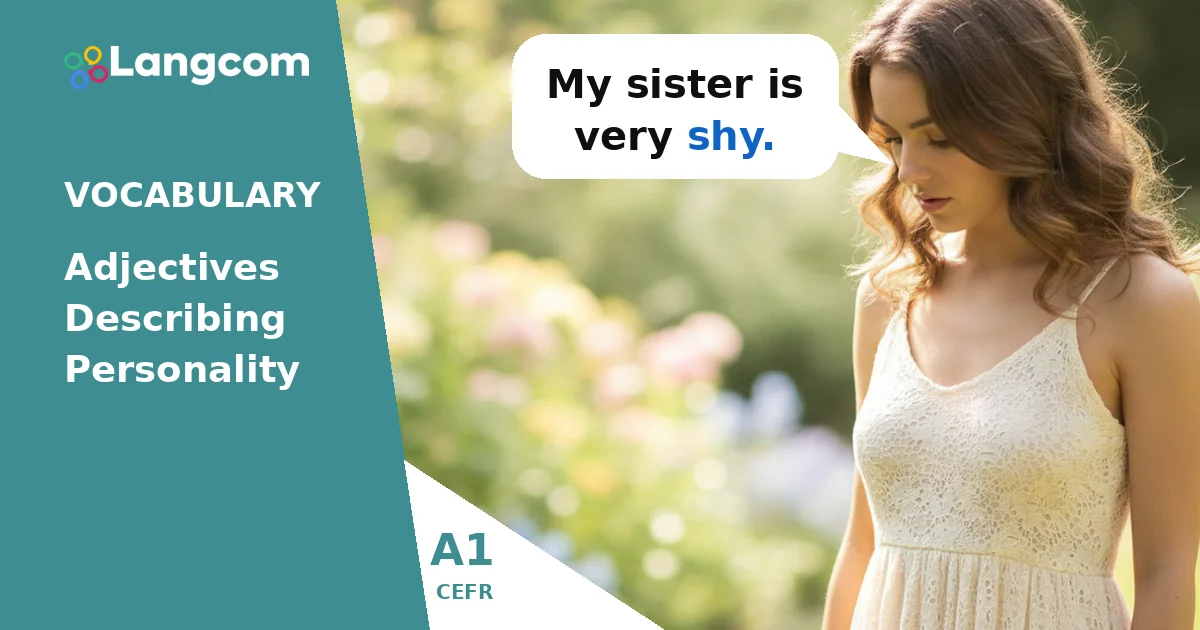
- My sister is very shy.
- Our new manager is confident and speaks well.
- He is a lazy student.
- She is a hard-working doctor.
- Don't be mean to your friends!
- The dog is very friendly.
- My grandmother is a kind woman.
- He is generous with his time.
- The professor is a serious person.
- She is so funny; she always makes me smile.
- My cousin is very talkative.
- He is a quiet boy in class.
练习
西班牙语母语者常犯的错误
Many learners make small mistakes with character adjectives. Here are two common ones:
- 令人困惑 Funny 和 Fun:
- Funny means someone makes you laugh. My friend is funny. (正确)
- Fun describes an activity or experience that is enjoyable, not a person's personality. The party was fun. (正确) My friend is fun. (Incorrect for personality, means they are enjoyable to be with, but funny is for personality)
- He is a funny person. (正确)
- He is a fun person. (Possible, but funny is about making people laugh, fun is about being enjoyable to be around. For A1, stick to funny for personality.) - 使用 Friendly vs. 'Simpático':
- In Spanish, 'simpático' can mean nice, friendly, or pleasant. In English, friendly is about being open and easy to talk to. Kind 或 nice are better for general pleasantness.
- She is very friendly. (Correct: She talks to everyone, smiles.)
- He is a kind person. (Correct: He is good and helps others.)
常见问题
What is a character adjective?
A character adjective is a word that describes a person's personality or how they behave. For example, shy, friendly, 或 hard-working.
How do I use these adjectives in a sentence?
You use them with the verb to be. 例如,, She is confident 或 They are generous.
Can I use these words for animals?
Yes, sometimes! You can say My dog is very friendly 或 My cat is quiet.
What kind of exercise will I do with these words?
You will practice matching these character adjectives to pictures or descriptions in a drag-and-drop exercise. This helps you connect the word to its meaning.


0 条评论