

英语中‘would’的主要用法有哪些?
Would 是一个功能多样的强大情态动词。它通常帮助我们表达不真实、不确定或发生在过去的事情。.
- 它可以用来描述过去反复发生的行为,就像一种习惯一样。.
- 我们用它来让请求或提议听起来更礼貌。.
- Would 这是讨论假想或假设情境的关键。.
- 它在转述某人的言论或想法时也起着作用。.
在描述过去的习惯时,我们该如何使用'would'?
我们使用 would 用于描述过去经常或反复发生的动作。这类似于 used to, ,但是 would 通常用于表示动作,而非状态。.
- 它描述了过去某个时期的典型行为。.
When I was a child, my grandmother would always bake cookies on Sundays. - 我们在讲故事时经常用它来营造场景或描述日常活动。.
Every summer, we would go to the beach and spend hours playing in the sand.
请记住,我们通常不使用 would 对于过去的状态(例如,, I would live in Madrid 这是错误的;请使用 I used to live in Madrid).
在什么情况下,我们会在礼貌的请求和提议中使用'would'?
Would 使请求和提议听起来更加礼貌,也更不那么直白。这是正式和非正式礼貌英语中的一种常见特征。.
- 在提出礼貌请求时,我们通常会使用 Would you...? 或 Would you mind...?
Would you mind closing the window, please?
Would you be able to help me with this box? - 对于礼貌的提议,我们可以使用 Would you like...?
Would you like some more coffee?
I would be happy to assist you.
在条件句和假设情境中,'would'是如何使用的?
Would 在描述非现实或假想情境的第二条件句和第三条件句中,这一点至关重要。.
- 在第二条件句中,, would 描述了一种不太可能或虚构的当前/未来状况所可能产生的假设结果。.
If I won the lottery, I would travel the world. (我大概赢不了) - 在第三条件句中,, would have + past participle 描述了一种不存在的过去状况的假设结果。.
If you had studied harder, you would have passed the exam. (你没复习,所以没通过) - 我们还使用 would 用来谈论与事实相悖的愿望或偏好。.
I wish he would listen to my advice.
间接引语中的'would'该怎么处理?
Would 是……的过去式 will 当我们转述某人的话或想法时。这是间接引语中“时间倒移”的一部分。.
- 直接引语: She said, "I will call you tomorrow."
- 间接引语: She said she would call me the next day.
- 这一点也适用于问题。.
直接引语: He asked, "Will you come?"
间接引语: He asked if I would come.
'would'能表达意愿或拒绝吗?
是的,, would 尤其是 wouldn't 可以表达过去时态下的意愿或拒绝。.
- Would 可以表明过去的意愿。.
He said he would help, and he did. - Wouldn't 通常表示过去时态的"拒绝"或"无法"。.
The car wouldn't start this morning. (它拒绝启动/无法启动)
I asked him to apologize, but he wouldn't. (他拒绝道歉)
'would'如何用来表达典型行为或观点?
Would 可以描述某种情况下典型的或预期的情形,或礼貌地表达观点。.
- 描述典型行为:
It's just like him that he would forget his keys. (这很像他)
Who would have thought she would win? (对某件出乎意料但现在已知的事情表示惊讶) - 用来表达礼貌的意见或判断:
I would say that's a fair assessment.
I wouldn't recommend eating there.
'would'还有哪些其他高级用法?
在C1级别,你可能会遇到 would 在更具体的语法结构中:
- Would rather: 用于表达偏好。.
I would rather stay home tonight.
I'd rather you didn't tell anyone. - Would have + past participle (不带'if'从句):用于表达过去某项本应发生或可能发生但最终未发生的动作。.
I would have called you, but my phone battery died. - It would appear/seem that...: 用于表达礼貌或试探性的看法。.
It would appear that we have a problem.
| 使用 | 示例 |
|---|---|
| Past Habit / Repeated Action | Every summer, we would visit my grandparents. |
| Polite Request / Offer | Would you like another slice of cake? |
| Hypothetical / Conditional | If I had more time, I would learn a new language. |
| Reported Speech (Past of 'will') | He said he would call me later. |
| Past Refusal / Inability | The old machine wouldn't work anymore. |
| Polite Opinion / Expectation | I would say that's a reasonable price. |
| Preference ('would rather') | I'd rather go out tonight. |
示例
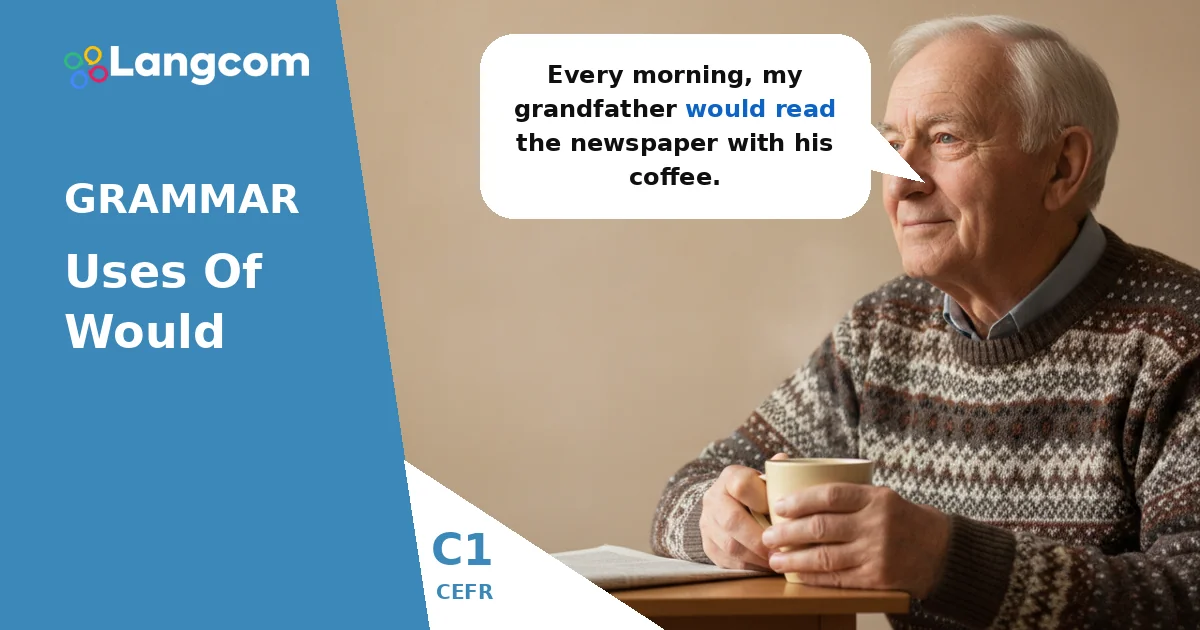
- Every morning, my grandfather would read the newspaper with his coffee.
- Would you mind helping me carry these bags?
- If I were you, I would accept the job offer.
- She promised she would be there by 7 PM.
- The old engine just wouldn't turn over.
- I would imagine it's quite difficult to learn Japanese.
- We would often spend our holidays at the lake.
- He asked if I would like to join them for dinner.
- If they had known, they would have told us immediately.
- I would rather have tea than coffee right now.
练习
西班牙语母语者常犯的错误
西班牙语使用者在使用时经常会遇到一些特定的困难 would 由于与西班牙语条件式存在相似之处和差异(例如,, -ría).
- 过度使用 would 关于以往的状态: 在西班牙语中,如果要表达条件语气,可能会说"Yo viviría en Madrid",但若要描述过去曾有过的居住习惯,则应使用未完成时。在英语中,, would 用于表示重复的动作,而非状态。.
❌ When I was young, I would live in a small town.
✅ When I was young, I used to live in a small town. (指一个州)
✅ When I was young, I would play in the park every day. (用于重复动作) - 令人困惑 wouldn't 使用简单否定: Wouldn't 通常暗示拒绝或无力,而不仅仅是"没有"。"
❌ I wouldn't go to the party yesterday. (如果你只是没去的话)
✅ I didn't go to the party yesterday.
✅ I asked him to come, but he wouldn't. (他拒绝了) - 条件句的直译: 虽然 would 通常翻译为 -ría, 它用于描述过去习惯或典型行为的适用范围比西班牙语的条件式更广。.
❌ He would be very happy to see you. (如果描述的是普遍情况,请使用一般现在时或将来时)
✅ He would be very happy to see you if you came. (条件句)
✅ He is very happy to see you. (一般现在时)
常见问题
'would' 总是指过去吗?
不,并非总是如此。虽然 would 既可以指过去的习惯,也可以指……的过去时 will, ,它还用于描述现在或未来的假设情境(例如,, If I had time, I would help you). 这往往会让人感到与现实或确定性之间存在一种距离感。.
在表达过去的习惯时,'would'和'used to'有什么区别?
两者都表示过去的习惯。不过,, used to 既可以描述过去的动作,也可以描述过去的状态(例如,, I used to live there). Would 通常仅用于描述过去反复发生的动作,而不用于描述状态(例如,, We would play outside every day, ,但不是 We would be happy there).
在'would'后面可以使用缩写形式吗?
是的,, would 通常缩写为 'd, ,特别是在口语和非正式写作中。例如,, I would like 变成 I'd like, , 和 they would have 变成 they'd have. 否定形式 would not 合同至 wouldn't.
在提出请求时,'would'比'will'更正式吗?
是的,通常来说 would 使请求比……更礼貌、更委婉 will. 例如,, Would you open the door? 比……更礼貌 Will you open the door?, ,尤其是和不太熟悉的人交谈时。.


0 条评论