

量词是用来表示某事物数量或多少的词。. 它们用于回答‘多少钱?’或‘有多少?’这类问题。掌握量词的正确用法对于用英语进行清晰表达至关重要,尤其是在B1级别。你经常会用到它们来谈论食物、金钱或人等日常事物。.
你需要掌握的主要量词有 some, any, no, none, much, many, , 和 a lot of / lots of. 你的选择取决于该名词是可数名词还是不可数名词,以及句子是肯定句、否定句还是疑问句。例如,我们使用 many 与可数名词如 books, ,但是 much 与不可数名词如 water. A lot of 它很灵活,可以同时与这两者配合使用。.
英语中的量词是什么?
量词是置于名词之前的词。它们告诉我们某事物有多少或有多少个。.
- 例如,, some, many, a lot of 都是量词。它们帮助我们描述数量。.
什么时候用"some",什么时候用"any"?
Some 和 any 既可用于可数名词,也可用于不可数名词。.
- 使用 some:
- 在肯定句中: I have some friends.
- 在提出建议或请求时(即你希望得到'是'的回答的问题): Would you like some tea?, Can I have some water?
- 使用 any:
- 在否定句中: I don't have any money.
- 在大多数问题中: Do you have any brothers or sisters?
如何用"No"和"None"表达零数量?
你可以使用以下方式表示零金额: no 或 none.
- 使用 no:
- 在肯定句结构中,置于名词之前以表达否定含义: There is no milk in the fridge. (这意味着 There isn't any milk.)
- 使用 none:
- 作为代词,意为"没有哪个"或"一个也没有"。它单独使用: How many cookies are left? None.
- 使用 of + 一个代词或一个定冠词引导的名词短语: None of my friends could come.
"Much"、"Many"和"A Lot Of / Lots Of":大量
这些量词表示大量。具体选择取决于名词的类型。.
- 使用 many:
- 可数名词(复数): many books, many people.
- 主要出现在疑问句和否定句中: How many students are there?, She doesn't have many hobbies.
- 使用 much:
- 与不可数名词搭配时: much water, much time.
- 主要出现在疑问句和否定句中: How much sugar do you need?, I don't have much patience.
- 使用 a lot of / lots of:
- 既包括可数名词,也包括不可数名词。.
- 主要体现在积极的表述中: We have a lot of food., There are lots of cars.
- 它们很常见且用途广泛,常被用来代替 much 或 many 在肯定句中。.
快速指南:如何选择合适的量词
- 这个名词是可数名词还是不可数名词?
- 可数名词(例如,, apples, chairs): 使用 many, some, any, a lot of.
- 不可数名词(例如,, water, information): 使用 much, some, any, a lot of.
- 这个句子是肯定句、否定句还是疑问句?
- 积极方面: some, a lot of / lots of, no.
- 否定: any, not much (不可数名词),, not many (可数名词),, not a lot of (两者)。.
- 问题: any, much, many, some (用于报价/请求)。.
| 量词 | 名词类型 | 典型用途 |
|---|---|---|
| Some | Countable & Uncountable | Positive statements, offers/requests |
| Any | Countable & Uncountable | Negative statements, most questions |
| No | Countable & Uncountable | Positive sentence structure for negative meaning |
| None (of) | Countable & Uncountable (as pronoun) | To mean 'not any' or 'not one' |
| Much | Uncountable | Questions, negative statements |
| Many | Countable (plural) | Questions, negative statements |
| A lot of / Lots of | Countable & Uncountable | Positive statements (most common) |
示例
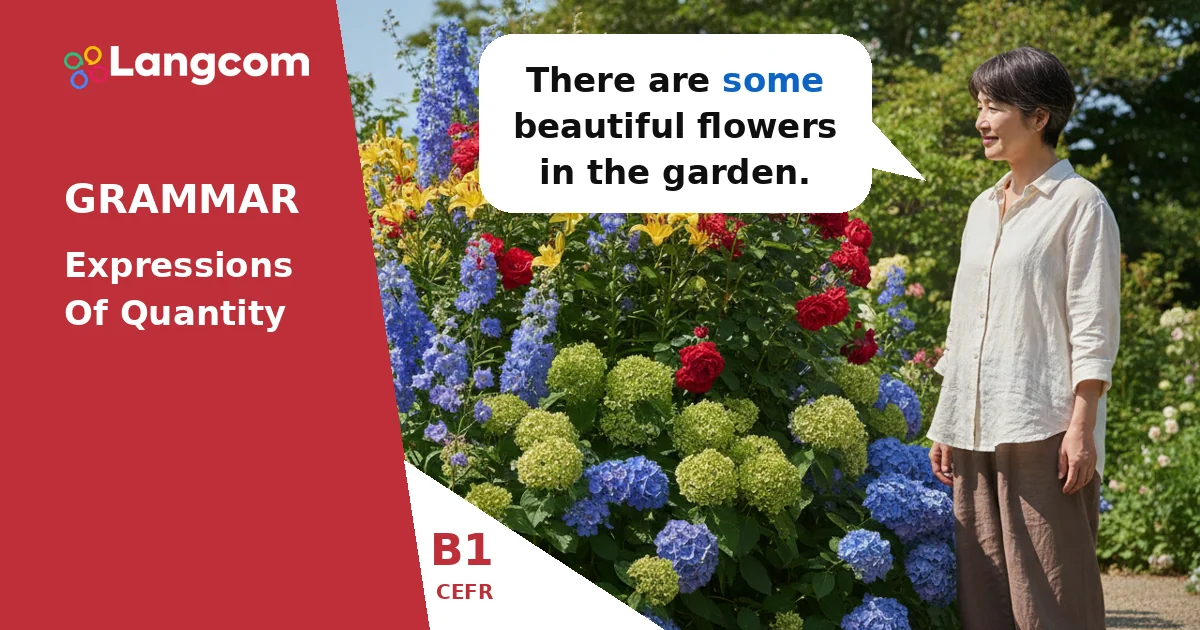
- There are some beautiful flowers in the garden.
- Do you have any plans for the weekend?
- I don't have any free time today.
- Would you like some help with that?
- There is no problem; everything is fine.
- How many people are coming to the party?
- She doesn't drink much coffee.
- We saw a lot of interesting animals at the zoo.
- None of the students failed the exam.
- He has lots of energy in the mornings.
练习
西班牙语母语者常犯的错误
- 双重否定: 讲西班牙语的人有时会使用 no 与否定动词搭配,例如 I don't have no money. 这句话在英语中是不正确的。.
- 正确: I don't have any money. 或 I have no money.
- 令人困惑 Much 和 Many: 一个常见的错误是使用 much 与可数名词搭配使用。请记住:
- Much 对于不可数名词(例如,, much information).
- Many 对于可数名词(例如,, many ideas).
- 错误: I have much books.
- 正确: I have many books.
- 使用 Some 在“一般问题”版块中: 虽然 some 可用于提出报价/请求,也可用于一般性咨询,, any 通常是正确的。.
- 错误: Do you have some questions?
- 正确: Do you have any questions? (除非你期待得到'是'的回答,比如老师在讲完课后问学生有没有问题。).
常见问题
在否定句和疑问句中可以使用"a lot of"吗?
是的,你可以,但是 much 和 many 在正式的疑问句和否定句中更为常见。例如,, Do you have a lot of work? 是可以接受的,但 Do you have much work? 这种说法也是正确的,而且通常更受青睐。你也可以说 I don't have a lot of time.
"a lot of"和"lots of"有什么区别?
两者的含义没有显著差异。. Lots of 比……稍微更不正式一些 a lot of, ,但这两种说法在日常英语中都很常见。.
什么时候应该用"none of"代替"no"?
使用 no 紧接在名词之前(例如,, no money). 使用 none of 在代词之前(例如,, none of them) 或一个定名词短语(例如:no-translation>没有一个学生). None 也可以单独作为代词使用。.
量词在B1考试中重要吗?
是的,量词在B1级英语考试中非常重要。在写作任务(如作文或电子邮件)和口语任务中,你需要正确使用它们,以便准确描述数量。.



0 条评论