
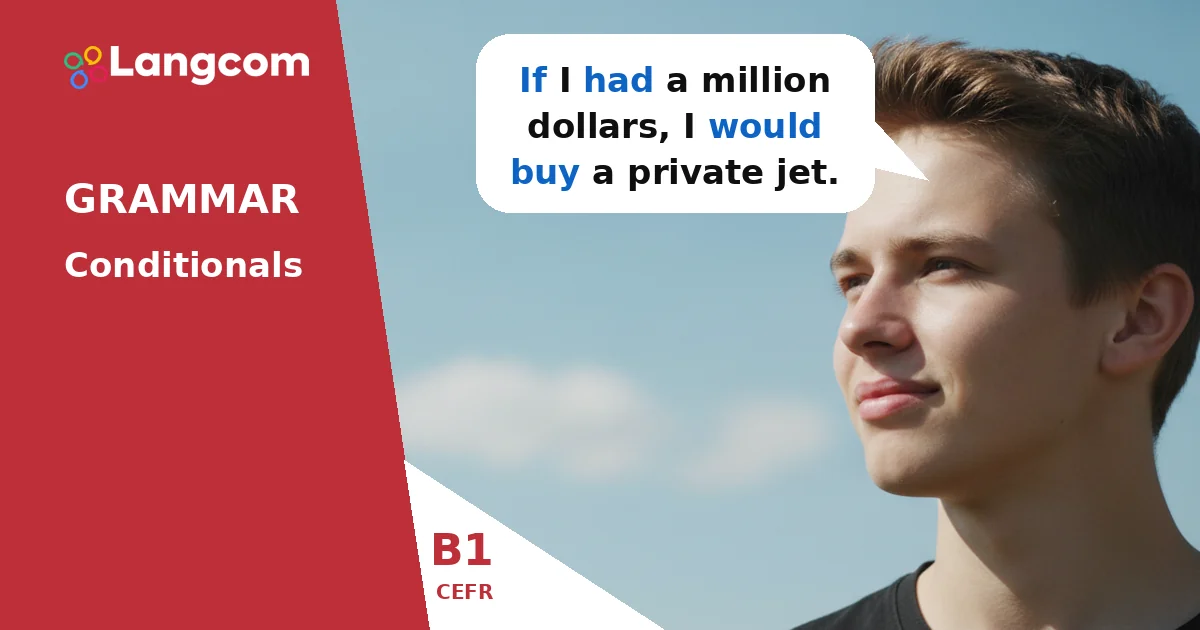

第二条件句有助于你描述现在或未来中假想或不太可能发生的情况,以及由此会产生什么结果。. 这种语法结构非常适合讨论梦想、假设性情境或提供建议。例如,, If I won the lottery, I would buy a big house. 在这里,中彩是一种极不可能发生的事情。其基本形式是 If + past simple, would/could/might + base verb. 在‘if’部分,你需要使用一般过去时,即使所谈论的是现在或将来。而‘would’部分则描述了结果。它能让你表达那些不真实或不太可能发生的情况。.
什么是第二条件句?
我们用第二条件句来谈论目前并不存在的事情,或者将来极不可能发生的事情。.
- 他们描述了一个假想的情景及其假想的结果。.
- 不妨将它们视为关于梦想、愿望或不太可能发生的事情的‘如果……会怎样’式句子。.
如何构成第二条件句?
第二条件句主要由两部分组成:
- "(《世界人权宣言》) if-clause: 本部分描述了虚数情况。我们使用 past simple 这里的时态。.
- "(《世界人权宣言》) main clause: 本部分描述了虚部结果。我们使用 would, could, 或 might 随后是 base form of the verb (不带'to'的不定式)。.
你可以把 if-clause 第一或第二。如果 if-clause 如果前者在前,则在 main clause.
什么时候使用第二条件句?
第二条件句在以下几种情况下很有用:
- 假想的当下情境: 谈论目前并不属实的事情。例如,, If I were taller, I would play basketball. (我个子不高。)
- 不太可能发生的未来事件: 讨论一些可能不会发生的事情。例如,, If I won the lottery, I would travel the world. (中彩票的可能性很小。)
- 提供建议: 我们经常使用这个短语 If I were you... 提供建议。例如,, If I were you, I would study more.
- 表达可能性: 您可以使用 could 或 might 而不是 would 以展示结果中不同层次的可能性。例如,, If I had more money, I might buy a new car. (是有可能的,但并非确定。)
'were'能用于所有主语吗?
没错!在第二条件句中,使用 were 所有科目,甚至 I, he, she, , 和 it.
- 这种特殊用法是 were 强调了这种情况的虚构性。.
- 例如,, If I were rich, I would buy an island. (不是 If I was rich...)
- 虽然 was 有时在非正式场合中使用,, were 这种说法总是正确的,而且听起来更正式。.
| if子句(条件) | 主句(结果) |
|---|---|
| If + past simple | would / could / might + base verb |
| If I had more money, | I would buy a new car. |
| If she were here, | she could help us. |
| If they studied harder, | they might pass the exam. |
示例
- If I had a million dollars, I would buy a private jet.
- She would be happier if she lived closer to her family.
- If it weren't raining, we could go for a walk.
- What would you do if you saw a ghost?
- If I were you, I wouldn't tell him the secret.
- They might travel more if they had more vacation time.
练习
西班牙语母语者常犯的错误
西班牙语使用者在使用第二条件句时,有时会出现一些特定的错误:
- 在'if从句'中使用'would': 一个常见的错误是说 If I would have more time, I would learn French. 请记住, if-clause 使用 past simple: If I had more time, I would learn French.
- 在描述非现实情况的'if从句'中使用现在时: 你可能会说 If I have more money, I would buy a new car. 对于一个假想的情境来说,这是不正确的。正确的写法是 If I had more money, I would buy a new car.
- 并非所有主语都使用'were': 虽然 If I was... 虽然有时会听到这种说法,但通常还是最好使用 If I were... 用于假想的情境。例如,, If he were here, he would help us. (不是 If he was here...)
常见问题
第一条件句和第二条件句的主要区别是什么?
主要区别在于可能性。第一条件句描述的是真实或极有可能发生的未来事件(If it rains, I will stay home.). 第二条件句用于描述现在或未来中假想的、不真实的或极不可能发生的情况(If it rained, I would stay home. ——不过没下雨)。.
在第二条件句中,可以用'could'或'might'代替'would'吗?
是的,你可以!使用 could 或 might 而不是 would 在主句中,该表达表示可能性,而非确定的结果。例如,, If I had more time, I might visit my friends.
在第二条件句中,'If I was'这种表达方式正确吗?
虽然你可能会听到 If I was... 在口语中,第二条件句中所有主语在语法上更推荐且更正式的表达方式是 If I were..., ,就像……一样 If I were you, I would take that job.
'if子句'可以放在句子的第二位吗?
是的,当然!从句的顺序并不影响意思。如果 main clause 如果“comes first”排在前面,则不需要逗号。例如,, I would travel the world if I won the lottery.

0 条评论