
作者 劳尔 | 2026年7月19日 | B2 高级中级英语
To talk about health in English, you need specific vocabulary for illnesses, injuries, and symptoms. Mastering words like come down with (to get sick), strain (to injure a muscle), faint (to lose consciousness), bruise (a mark on the skin), and dizzy (feeling...

作者 劳尔 | 2026年7月19日 | 儿童英语预备A1级(初级)
Adjectives are special words that describe nouns. They tell us more about people, animals, places, or things. Think of them like descriptive labels! For example, if you see a dog, you can say The dog is big. Here, big is an adjective. It tells us about the dog’s...

作者 劳尔 | 2026年7月19日 | 儿童英语预备A1级(初级)
Adjectives are words that describe nouns (people, places, things, ideas). They tell us more about what something is like, adding important details to your sentences. For example, if you see a beautiful flower, beautiful is the adjective. At the Pre-A1 level, learning...
作者 劳尔 | 2026年7月19日 | 儿童英语预备A1级(初级)
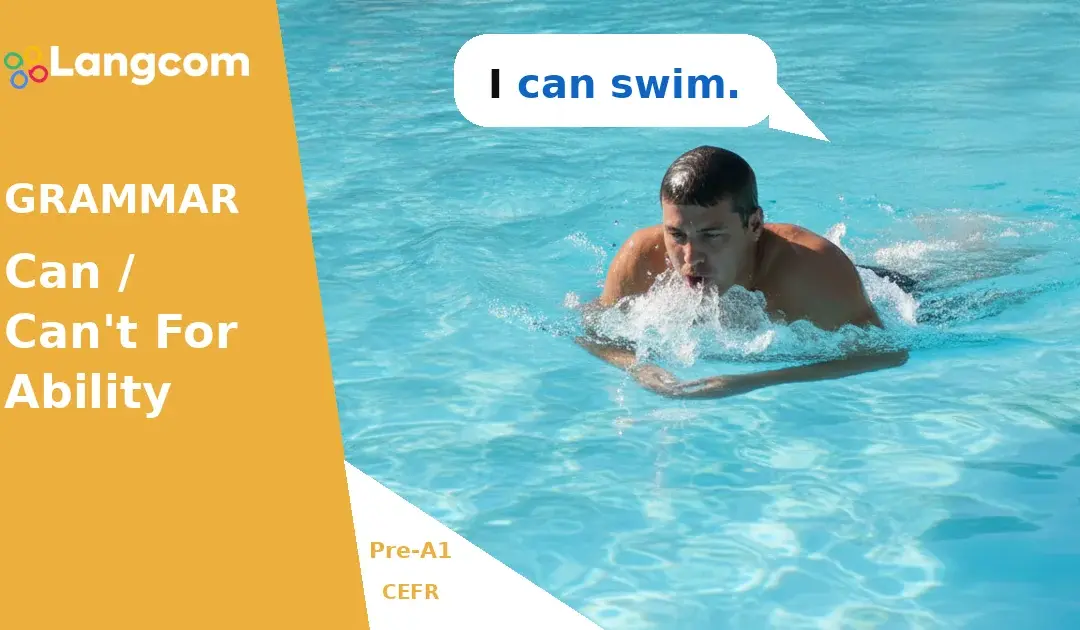
Can and can’t are essential English words to talk about abilities. You use can to say what you are able to do, like I can speak English. It means you have the skill or the possibility to do something. To express what you are not able to do, you use can’t,...

作者 劳尔 | 2026年7月19日 | A1 英语入门
Collocations are words that naturally go together in English. Learning collocations helps your English sound more natural and fluent, just like a native speaker. Instead of saying words separately, collocations are like ready-made phrases. For example, we say do...
