
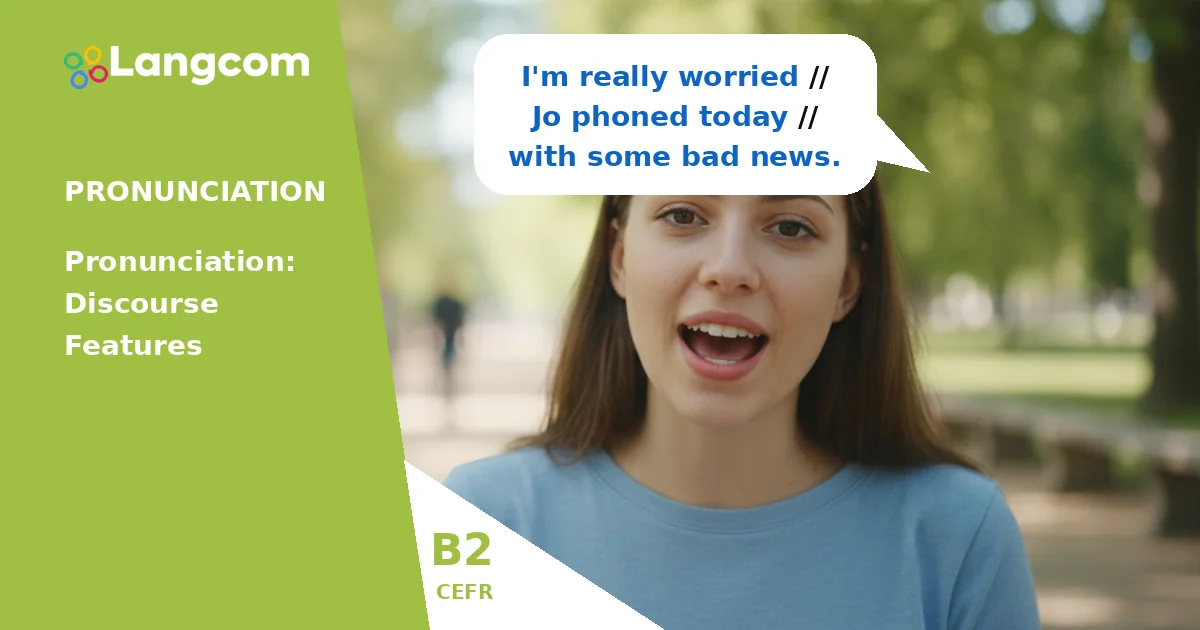

In English, word groups are small units of words that we speak together without pausing. These groups are often called ‘thought units’ because they represent a single idea or piece of information. Learning to group words correctly and use natural pauses is essential for clear communication and sounding more fluent at a B2 level.
When you speak, you don’t say every word separately. Instead, you link words together into these groups. Pauses then occur between these word groups. This helps your listener understand your message easily. It also makes your speech sound more natural, like a native speaker. Without correct word grouping and pausing, your speech can sound choppy or difficult to follow, even if your individual word pronunciation is perfect.
What Are Word Groups in English Pronunciation?
A word group is a collection of words that belong together grammatically and semantically. This means they form a complete idea or a part of a sentence that makes sense on its own.
- Think of them as small ‘chunks’ of information.
- Speakers usually say these words together in one breath, without stopping.
- For example, in I want to go home, the entire phrase is often one word group.
Why Are Pauses Important in English Speech?
Pauses are short silences in your speech. They are just as important as the words you say. Pauses help your listener understand your message.
- Clarity: Pauses mark the end of one word group and the beginning of another. This helps separate ideas.
- Meaning: Sometimes, a pause can change the meaning of a sentence.
- Rhythm: Natural pauses give English its rhythm and flow.
- Breathing: Pauses also give you a chance to breathe naturally while speaking.
How Do We Form Word Groups and Use Pauses?
There are some general rules for forming word groups and deciding where to pause:
- Grammar: We often pause at grammatical boundaries, such as:
- After a comma, period, or other punctuation mark.
- Between clauses (e.g., main clause // subordinate clause).
- Before or after a long phrase (e.g., a very interesting book // about history).
- Meaning: Pause to separate different ideas or pieces of information. If a phrase expresses a complete thought, it's likely a word group.
- Emphasis: You might pause before a word or phrase you want to emphasize.
- Length: Word groups are usually not too long. If a sentence is very long, you will naturally break it into smaller groups.
Listening for Word Groups and Pauses
The best way to improve your use of word groups and pauses is to listen carefully to native English speakers. Pay attention to:
- Where they take small breaths.
- Where their voice slightly drops or rises before a brief silence.
- How they connect words within a group but separate groups with a pause.
Try to imitate these patterns when you speak. This will make your English sound much more natural and easier for others to understand.
例
- I'm really worried // Jo phoned today // with some bad news.
- The student // who studied hard // passed the exam easily.
- If you want to improve // you need to practice // every day.
- She bought // a beautiful red dress // for the party.
- Although it was raining // we decided to go // for a walk.
練習
スペイン語話者がよく犯す間違い
Spanish speakers sometimes make common mistakes with word groups and pauses:
- Pausing too often: Breaking sentences into too many small parts, like I // want // to // go // home. This makes speech sound unnatural and choppy. In English, we link words more.
- Not pausing enough: Trying to say very long sentences without any pauses. This can make your speech sound rushed and difficult to understand, like I'mreallyworriedJophonedtodaywithsomebadnews.
- Pausing in the wrong places: Sometimes, pauses might occur in the middle of a natural word group, which can confuse the listener. For example, The beautiful // car is parked outside. (Incorrect pause after 'beautiful'). The correct way is The beautiful car // is parked outside.
よくある質問
What is the main purpose of word groups and pauses?
The main purpose is to make your speech clear and easy to understand for your listener. They help organize your thoughts and give your English a natural rhythm, making you sound more fluent.
Can a pause change the meaning of a sentence?
Yes, absolutely! For example, Let's eat, Grandma! (meaning: let's have a meal with Grandma) is very different from Let's eat Grandma! (meaning: let's eat Grandma herself!). The comma, which indicates a pause, is crucial here.
How can I practice word groups and pauses effectively?
Listen to English audio (podcasts, movies, news) and try to identify where speakers pause. Then, practice reading aloud. Read sentences, consciously trying to group words together and pause at natural points. Record yourself and compare it to native speakers.
Are word groups and pauses important for B2 English exams?
Yes, for B2 speaking exams, clear pronunciation, including natural rhythm, stress, and intonation, is assessed. Using word groups and pauses correctly helps you achieve a higher score for fluency and coherence.


コメント 0 件