
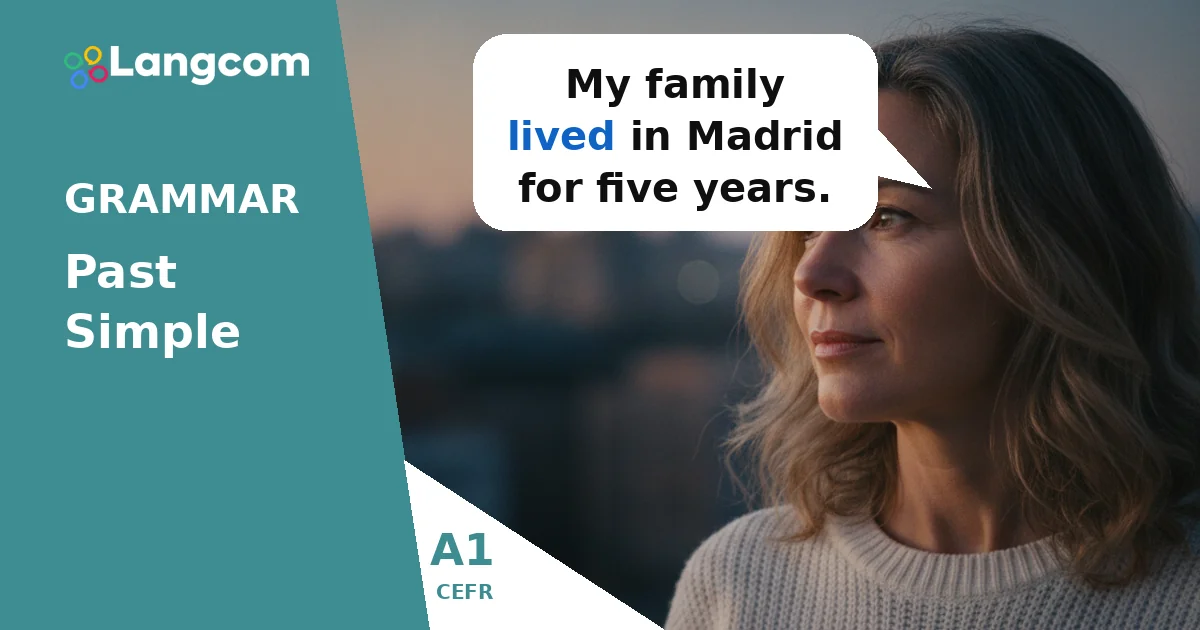

過去形の肯定形は、過去に始まり、過去に終わった行動について表します。. これは、完全に終わった出来事を表す際に使います。例えば、 I visited my friend yesterday. または She ate pizza last night. 物語を語ったり、その日の出来事を話したり、過去の経験を共有したりする上で、これは欠かせません。ほとんどの動詞には、 -ed 基本形に、例えば、, walk ~になる walked. 。しかし、多くの一般的な動詞は不規則であり、形が完全に変化します。例えば、 go ~になる went. 過去形を理解することは、A1レベルの英語コミュニケーション能力を身につける上で重要なステップです。.
過去単純形の肯定形とは何ですか?
過去形(肯定形)は、過去に起こってすでに終わった出来事について話す際に役立ちます。.
- 完了した行動や出来事を表します。.
- 私たちはよく、次のような特定の時刻を表す言葉と一緒に使います。 yesterday, last week, two years ago, 、または in 2022.
過去形(肯定形)はどのように作るのでしょうか?(規則動詞)
英語の動詞のほとんどは規則動詞です。これらを過去形(肯定形)にするには、 -ed 動詞の末尾まで。.
- ほとんどの動詞:「追加」 -ed
work → worked
play → played - 末尾が -e: 追加 -d
live → lived
love → loved - 子音+で終わる動詞 -y: 変更 -y ~へ -i, その後、以下を追加します -ed
study → studied
try → tried - CVC(子音・母音・子音)で終わる短い動詞:最後の子音を2倍にし、その後に -ed
stop → stopped
plan → planned
過去形(肯定形)はどのように作るのでしょうか?(不規則動詞)
一般的な動詞の中には不規則動詞もあります。これらは -ed ルール。.
- それらの過去形は、それぞれ異なる変化を見せます。.
- これらの形を暗記する必要があります。.
以下に、重要な不規則動詞をいくつか挙げます:
- be → was / were
- go → went
- have → had
- do → did
- eat → ate
- see → saw
- make → made
過去形(肯定形)はいつ使うのですか?
以下のことを話す際には、過去単純形の肯定形を使います:
- 過去に完了したアクション: これらのアクションは、特定の時刻に開始され、特定の時刻に終了しました。例えば、, I watched a movie last night.
- 一連の完了したアクション: 次々と起こった出来事を説明するとき。例えば、, She woke up, ate breakfast, and left for work.
- これまでの習慣やルーティン: もしこれらの習慣がもはや当てはまらない場合。例えば、, When I was a child, I played outside every day.
| 基本形 | 過去形 |
|---|---|
| be | was / were |
| go | went |
| have | had |
| do | did |
| eat | ate |
| see | saw |
| make | made |
| come | came |
| take | took |
| get | got |
例
- My family lived in Madrid for five years.
- She studied English at university.
- We stopped the car at the red light.
- He went to the cinema yesterday evening.
- They had a big party last Saturday.
- I was very happy when I saw my old friend.
- The concert started at 8 PM and finished at 10 PM.
- My brother bought a new phone last month.
練習
💬 個別のアドバイスが必要ですか?
当校はケンブリッジ試験の公認準備センターとして、皆様に最適なコースや資格取得への道をご案内いたします。ぜひ今すぐアドバイザーにご相談ください。.
WhatsAppでアドバイザーとチャットスペイン語話者がよく犯す間違い
スペイン語話者は、母語では似たような形が異なる意味を持つため、過去形(Past Simple)で間違いを犯すことがあります。.
- 単純過去形の代わりに現在完了形を使う: In Spanish, you might say 'He comido' (I have eaten) even for a specific past time like 'yesterday'. In English, for a finished action with a specific past time, always use Past Simple.
INCORRECT: I have eaten breakfast yesterday.
CORRECT: I ate breakfast yesterday. - ~を忘れて -ed 規則動詞の語尾: 忘れずに追加してください -ed.
INCORRECT: She play tennis last week.
CORRECT: She played tennis last week. - 紛らわしい不規則動詞の活用形: Irregular verbs need memorization. Don't try to add -ed 彼らに。.
INCORRECT: I goed to the shop.
CORRECT: I went to the shop.
よくある質問
過去形と現在完了形の一番大きな違いは何ですか?
過去形は、過去の特定の時点で完全に終了した行動を表すもので、例えば I visited Paris last year. 現在完了形は、過去と現在をつなぐもので、多くの場合、現在もなお当てはまる行動や、時間が特定されていない場合に使われます。例えば、 I have visited Paris many times.
不規則動詞はどうやって覚えればいいですか?
一番いいのは、定期的に練習することです!フラッシュカードを作ったり、英語の物語を読んだり、歌を聴いたりして、それらを自分の文章で使ってみましょう。まずは、次のような最もよく使われる表現に焦点を当てて、 be, go, have, 、および do.
「was」は過去単純形(Past Simple)の動詞ですか?
はい、, was は、動詞の過去形です to be 単数主語(I、he、she、it)の場合。複数主語(we、you、they)の場合、過去形は were.




コメント 0 件