

「第二条件文」とは何ですか?
第二条件法は、現在現実ではないことや、将来起こる可能性が極めて低いことについて話すときに使います。
- 彼らは架空の状況とその架空の結果について述べている。
- これらは、夢や願い、あるいはありそうもない出来事に対する「もし~だったら」という仮定の文だと考えてください。
第二条件文はどのように作るのでしょうか?
第二条件文は、主に2つの部分から構成されています:
- について if-clause: この部分では、架空の状況を説明します。ここでは、 past simple ここでの時制。
- について main clause: この部分では、虚数解について説明します。ここでは、 would, could, 、または might その後に続くのは base form of the verb (「to」を伴わない不定詞)。
ここに if-clause 1番か2番。もし if-clause が先の場合は、その前にコンマを付けます。 main clause.
第二条件文はいつ使うのか?
第二条件文は、次のようなさまざまな場面で役立ちます:
- 想像上の現在の状況: 現時点では事実ではないことについて話すこと。例えば、 If I were taller, I would play basketball. (私は背が高くない。)
- ありそうもない未来の出来事: おそらく起こらないであろうことについて話し合うため。例えば、 If I won the lottery, I would travel the world. (宝くじに当たる可能性は低い。)
- アドバイスをする: 私たちはよくこのフレーズを使いますが、 If I were you... アドバイスを提供するためです。例えば、 If I were you, I would study more.
- 可能性の表現: 以下の方法をご利用いただけます could または might ~の代わりに would 結果に別の可能性のレベルを示すためです。例えば、 If I had more money, I might buy a new car. (可能性はあるが、確実ではない。)
「were」はどんな主語にも使えますか?
そうです!第二条件文では、~を使うのが非常に一般的であり、しばしば好まれます。 were すべての科目において、たとえ……であっても I, he, she, 、および it.
- この特別な用法は were その状況が想像上のものだということを強調している。
- 例えば、, If I were rich, I would buy an island. (ではない If I was rich...)
- 一方で was 非公式な場面で時々使われることがあり、 were は常に正しく、よりフォーマルな響きがあります。
| if節(条件) | 主節(結果) |
|---|---|
| If + past simple | would / could / might + base verb |
| If I had more money, | I would buy a new car. |
| If she were here, | she could help us. |
| If they studied harder, | they might pass the exam. |
例
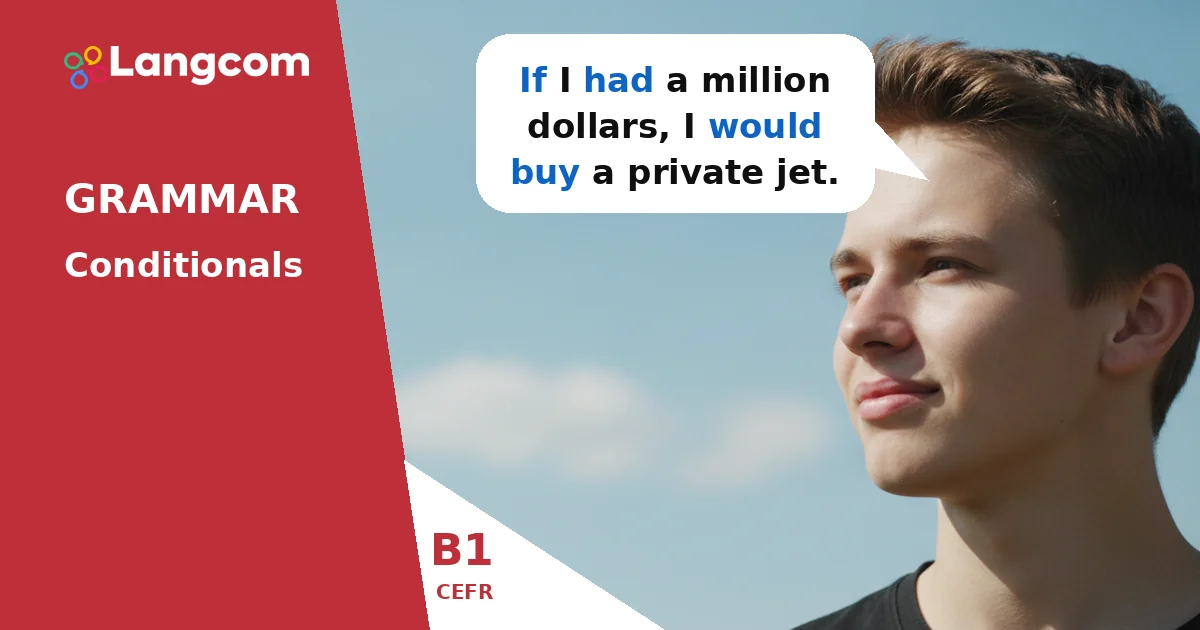
- If I had a million dollars, I would buy a private jet.
- She would be happier if she lived closer to her family.
- If it weren't raining, we could go for a walk.
- What would you do if you saw a ghost?
- If I were you, I wouldn't tell him the secret.
- They might travel more if they had more vacation time.
練習
スペイン語話者がよく犯す間違い
スペイン語話者は、第二条件法を使う際に特定の誤りを犯すことがあります:
- 「if節」での「would」の使い方: よくある間違いは、こう言うことです。 If I would have more time, I would learn French. 忘れないでください、その if-clause は、 past simple: If I had more time, I would learn French.
- 非現実的な状況における「if節」での現在形の使い方: こう言う人もいるかもしれませんが If I have more money, I would buy a new car. これは架空の状況においては誤りです。正しい形は If I had more money, I would buy a new car.
- すべての主語に対して「were」を使わない: 一方で If I was... is sometimes heard, it's generally better to use If I were... for imaginary situations. For example, If he were here, he would help us. (ではない If he was here...)
よくある質問
第一条件法と第二条件法の主な違いは何ですか?
The main difference is about likelihood. First conditionals talk about real or very likely future events (If it rains, I will stay home.). Second conditionals talk about imaginary, unreal, or very unlikely situations in the present or future (If it rained, I would stay home. – but it's not raining).
第二条件文で、「would」の代わりに「could」や「might」を使ってもいいですか?
Yes, you can! Using could または might ~の代わりに would in the main clause expresses possibility rather than a definite outcome. For example, If I had more time, I might visit my friends.
第二条件文において、「If I was」という表現は正しいでしょうか?
While you might hear If I was... in informal speech, the grammatically preferred and more formal option for all subjects in second conditionals is If I were..., 、つまり If I were you, I would take that job.
「if節」は文の2番目に置くことはできますか?
Yes, absolutely! The order of the clauses does not change the meaning. If the main clause comes first, you do not need a comma. For example, I would travel the world if I won the lottery.

コメント 0 件